|
Hill Stations
In India
Mussoorie
MUSSOORIE
(Introduction)
Mussoorie,
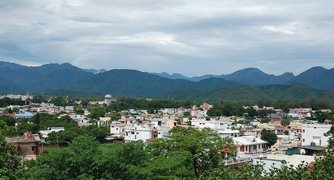
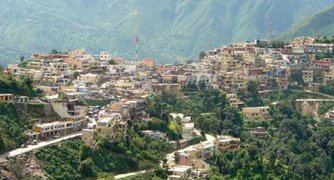
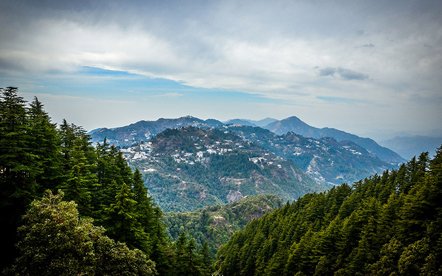
Popularly known as the Queen of Hills, this charming
hill station, 34 kms from Dehradun is situated
at an altitude of 2003 mts in the Garhwal hills.
above sea-level. Mussoorie is one the beautiful
hill stations in India and the
most frequently visited. It provides excellent respite to people
who want relief from the hot sultry conditions of the plains, especially
since it is close enough to the capital to make just weekend trip.
Also, major Hindu pilgrimage sites like Kedarnath, Badrinath, Gangotri,
Yamunotri, Haridwar, Rishikesh are not far from this place.
In
1820, Captain Young of the British army was influenced by the beauty
of this place and made it his residence. The name, Mussoorie is
derived from plants of 'Mussoorie' which were found
in abundance here. After its discovery, this hill station gradually
developed as a centre of education, business, tourism and beauty.
MUSSOORIE(Places
to See)
Gun Hill
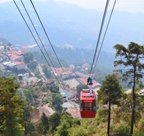
Enjoy a Ropeway ride to the second highest peak of Mussoorie.
It can also be negotiated by bridles path which forks-off from Mall
Road near Kutchery and to reach takes about twenty minutes. The
Ropeway distance is only 400 mtrs. And the sheer thrill of the ride
is memorable.
Gun
Hill offers a beautiful panoramic view of the Himalayan ranges namely
Bunderpunch, Srikantha, Pithwara and Gangotri group etc. and a bird's
eye view of Mussoorie town and Doon Valley. During
pre-independence days a gun mounted on this top used to be fired
heralding mid-day to enable people to adjust their watches and hence
this name.
Municipal Garden:
A picnic spot having a beautiful garden and an artificial mini lake
with boating facilities. It is located at a distance of 4kms by
cycle rickshaw, pony or by car and only 2 kms on foot via Waverly
Convent Road.
Childer's Lodge:
Highest Peak of Mussoorie near Lal Tibba. It is
about 5 kms from the Tourist Office and one can go on horse back
or on foot. Snow view from this spot is exhilarating.
Camel's Back Road:
It starts from Kulri Bazar near Rink Hall and ends at Library Bazar
covering a total distance of about 3 kms. The main charm of this
froad is horse riding and wlking. Sunset view of the Himalayas is
superb. Camel's Rock with a life like resemblace can be seen from
the spot near Mussoorie Public school.
Jharipani Fall:
8.5 kms from Mussoorie on Mussoorie- Jharipani
Road. Visitors can go by bus or by car upto 7 kms to Jharipani from
where the fall is 1.5 kms, on foot.
Bhatta Fall:
7 kms from Mussoorie on Mussoorie-Dehradun road.
Access by car or bus upto Balta village from where the fall is 3kms
by car or foot. An ideal spot for bathing anf picnics.
Kempty Fall:
15 kms from Mussoorie on the Yamunotri Road having
an altitude of 4500 ft. It has the distinction of being the biggest
and prettiest waterfall located in a beautiful valley and is surrounded
by high mountains. Bath at the foot of the falls is refresshing

and enjoyabled for children and adults alike.
Nag Devta Temple:
An ancient temple situated on Cart Mackenjie Road and is about 6
kms from Mussoorie. Vehicles can go right upto
the spot. It Provies a charming view of Doon Valley as well as of
Mussoorie.
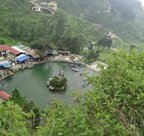
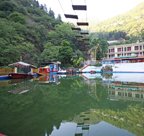
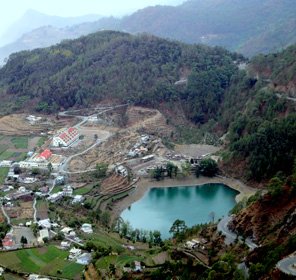
Mussoorie Lake:
A newly developed picnic spot, situated on Mussoorie- Dehradun road
and is about 6 kms from Mussoorie. It is a delightful
spot. Pedal boats are availble. It commands an enchanting view of
Doon Valley and nearby villages.
Van Chetna Kendra:
At a distance of about 2 kms on Tehri bye pass road, this place
is developed as a picnic spot and has a park surrounded with pine
forest and flowering shrubs, and is approachable by foot or taxi/car.
The main attraction is the wildilife of the park like Ghurar, Kanankar,
Himalayan Peacock, Monal etc.
Sir George Everest House:
6kms The Park Estate of sir George Everest, First Surveyor General
of India, Who had his offce and residence here, is approachable
by road. The highest peak in the world, Mount Everest, is named
after him.
Jwalaji Temple (Benog Hill):
9 kms 6to the west of Mussoorie and at an altitude
of 2104 mtrs. Is the Jwalaji Temple. It is situated on the top of
the Benog Hill and has an idol of Mata Durga in it. The temple is
surrounded by thick forests and offers a panoramic view of the Himalayan
peaks, Doon valley and Yamuna valley.
Clous End:
The bungalow built in 1838 by a British Major was one of the First
Four buildings of Mussoorie. The bungalow has since
then been converted into a hotel called Clouds End, and is situated
at the extreme west of Mussoorie Hill, 8 kms from Library. The resort
is surrounded by thick forest, offers a wide variety of flora and
fauna besides a panoramic view of snow clad Himalayas, and Yamuna
river. The most ideally suited resort for fireigners and honeymoon
couples.
MUSSOORIE
(Institution)
Rich in history and beauty, Mussoorie has given birth to many
institutions that are known virtually all over the country. Since
1959, the Lal Bahadur Shastri National Academy of Administration
has been training and molding batch after batch of raw probationers
into the country's finest bureaucrats, foreign service officers,
and police officers.
Today,
the Academy, situated at Charleville, continues to train officers
for the Indian Administrative Service and the Indian Police
Service. A fire broke out in the Academy some years ago and
destroyed, among other buildings and papers, its precious library
rated amongst the best in the country. While many of the books destroyed
in the fire are difficult to replace, a new beginning has already
been made by acquiring a fine collection of books.
While
the Academy belongs to the post-Independence period, most of Mussoorie's
institutions date back more than a century. The Waverley Convent,
a school for girls, was established in 1845 and has commemorated
150 years of distinguished existence. While some of its buildings
were destroyed in an earthquake in the early years of this century,
then by a fire, and then again in the recent earthquake, Waverley
still retains much of the old-world architectural charm.
Wynberg
Allen School was founded in 1888. Saint George's, Woodstock, Hampton
Court - all these schools have traditions hallowed by time. They
belong to a different genre, of course, but the creeper festooned
Savoy Hotel, Hakman's Grand Hotel with its wood flooring, and Mullingar
Hotel - the oldest only extant building built in 1829, have become
institutions by themselves over the years.
The
Indo-Tibetan Border Police Academy is of relatively recent vintage,
but of strategic importance, as is the Defense Institute of Work
Studies.
ason,
the cable cars swing between the Hall and Gun Hill more than 100
times a day.
MUSSOORIE
(Excursion)
Naga
Tibba
About 55km, an ideal spot for trekking. Naga Tibba is the highest
peak around Mussoorie at 10,000 feet and is covered by thick forests.
Dhanolti
On Mussoorie-Tehri Road 25km away, it has deodhar forests and mountainscapes.
Surkhanda Devi
Surkhanda
Devi Temple at 10,000 feet, 35 km down the Mussoorie - Tehri
road. Perched on a peak, the temple demands a stiff two-km climb
form devotees. The temple, goes the legend, was built on the site
where the head of Shiva's consort (Shiva is the destroyer in the
Hindu trinity) fell after it was chopped off to stop Shiva's terrifying
dance of death that was shaking the universe to its very core.
Lakha Mandal
80km away on the Mussoorie-Yamunotri Road. Linked with the Mahabharata
with idols of archaeological importance.
MUSSOORIE (When to visit )
Mussoorie
is a hill station which has pleasant climate around the year. It
is a very cool place with greenery at its full bloom during September
to November. The best seasons to visit Mussoorie is between April
to June and again during September to November. When the plains
of North India experience heat waves, Mussoorie provides a welcome
break. September - November is spring time here. During this season
Himalayas are clearly visible. It is better to avoid monsoons as
the roads to Mussoorie are in bad shape. Same thing applies for
the winter when roads are blocked due to snowfallMUSSOORIE
(Travel Information)
There are regular flights from Delhi to Doon Valley (Jolly
Grant). From the Jolly Grant airport, taxis and buses ply to Dehradun,
from where they go up to Mussoorie (2¼ hours, 60 km).
The
overnight Mussoorie Express links Delhi to Dehradun, the railhead
for Mussoorie.
Delhi
to Mussoorie is 290 km by road. Dehradun to Mussoorie is
35 km. There are direct buses from Delhi to Mussoorie, along with
private taxis. Buses ply every half hour from Dehradun to Mussoorie.
Private taxis and shared taxis are favored by a majority of visitors.
MUSSOORIE
- LOCAL TRANSPORT
Hand pulled rickshaws, taxis and cars are not allowed on the
Mall, but can move in other motorable parts of Mussoorie.
MUSSOORIE
(Accommodation)
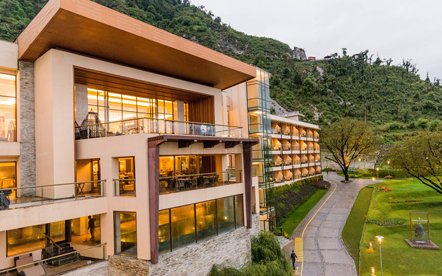
Mussoorie has more than a hundred hotels to choose.
MUSSOORIE(What
to Wear)
In summer, light woolens are advisable while heavy woolens
are a necessity during winter.
The
summer season extends from April to June. The winter season is from
September to December.
Area
: 65 sq km
Altitude : 2005.5 m
Temperature in Summer : 31.2°C(max);7.2°C(min)
Temperature in Winter : 7.2°C(max);1.1°C(min)
Languages : Hindi and English
Best Time to Visit : April-June and September-October
STD : 0135
>>>>>>>
For More Information On Mussoorie Click Here >>>>>>>

|