|
Hill Stations
In India
Kullu
KULLU
(Introduction)
The
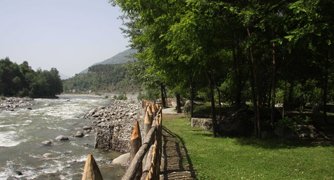
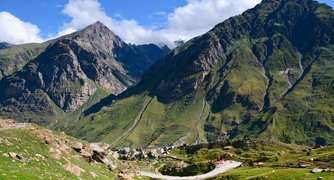
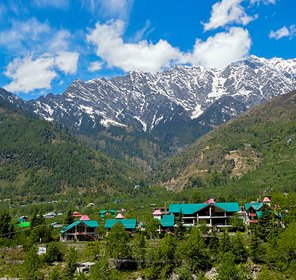
most charming and beautiful Kullu valley spreads out its
charm on either side of river Beas.Kullu was once known as
Kulanthpitha, which means the end of the habitable world. Beyond
rose the forbidding heights of the Greater Himalayas, and by the
banks of the shining river Beas, lay the fabled 'Silver Valley'.
The valley runs north to south of Beas river and is 80 kms. long
and about 2kms wide.
This
town is famous for its temples and the annual Dussehra festival,
both of which attract thousands of tourists.the town of Kullu
has long been a centre of faith. In the 17th century, Raja Jagat
Singh installed here an idol of Lord Raghunathji, which he brought
from Ayodhya. As a mark of his penance, he placed the idol on his
throne and it became the presiding deity of the valley.
KULLU
(History)
Formerly, the Kullu valley was known as Kulanthapitha, meaning
the end of the habitable world. The earliest recorded information
of this area goes back to 1st century AD, when this valley began
to be inhabited. In the medieval period, Kullu and the area around
it was ruled by a number of local rulers. The Kullu valley was isolated
from other parts of the country for many centuries until it came
under British rule.
KULLU
(Location)
Kullu is located in the central part of the state of Himachal
Pradesh ,India. It is located at an altitude of 1200 m above
sea level at the confluence of Beas and Sarvari rivers. It is 240
km north of Shimla.
KULLU (Weather)
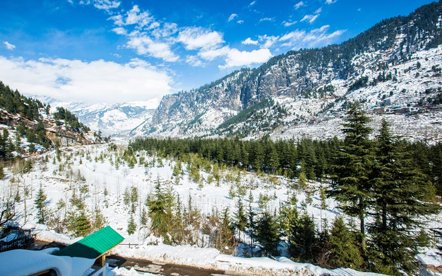
The weather in Kullu is alpine. Summers (April-June) are
mild and winters are cold (November-February). It experiences southwestern
monsoon rains in July-September.
KULLU (Places to See)
Raghunath
Temple
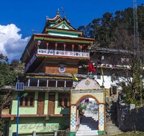
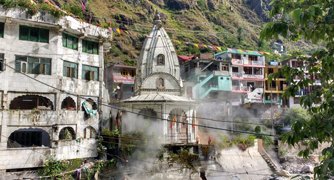
Kullu is famous for its temples and festivals. The main tourist
attraction of Kullu is the Raghunath Temple, dedicated to
Lord Ram. Raja Jagat Singh, the ruler of Kullu, built this temple
in 1660 to atone for his wrongdoing. He obtained a statue of Lord
Ram from Ayodhya and established it within this temple.
Jagannathi
Devi Temple
Jagannathi Devi Temple or
the Bekhli temple is 3 km from Kullu and is located
in the village of Bekhli. It is a stiff 1½-hour climb to
reach this temple, but it provides a panoramic view of Kullu.
The
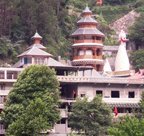
Bijli Mahadev Temple
The Bijli Mahadev Temple is located on a spur at a height of 2460
m. True to its name, the temple is often stuck by lightning (bijli,
lightning).
KULLU
(Excursion)
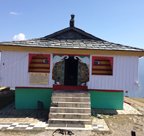
The Basheshwar Mahadev Temple
The Basheshwar Mahadev Temple at Bajura (15 km) from
Kullu is famous for its exquisite carvings.
There
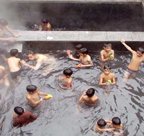
are a number of tourist spots as well. The small town of Manikaran
(45 km) is famous for its hot sulphur springs. It is located at
an altitude of 1737 m in the Parvati River valley. These hot springs
are famous for their healing powers. This place is both revered
by the Hindus and the Sikhs.
Kaisdhar
(15 km) and Kasol (42 km), the latter located amidst
pine forest, are important picnic spots.
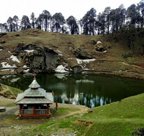
Shoja
(69 km), at an altitude of 2692 m, offers the traveler a breathtaking
view of the entire Kullu valley.
Raisan
(13 km), on the banks of river Beas, is a good site for trekking.
The
town of Naggar (23 km) was the erstwhile capital of the state
of Kullu for more than 1,400 years. There are number of historic
monuments and temples in this town.
Kullu
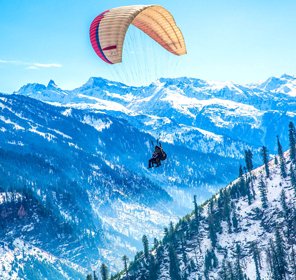
attracts the adventure-seeking tourist by offering trekking
and hiking trails in and around the valley. Stretches of River Beas
are also used for white-water rafting.
KULLU (When To Visit)
The best time to visit Kullu is in summers, between
April and June. It is also visited in October during the Dussehra
festival.
KULLU
(Fairs & Festivals)
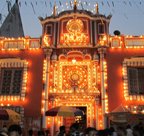
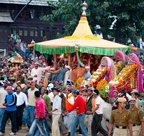
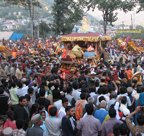
The festival of Dussehra, which marks the victory of good over
evil, is celebrated all over India in the month of October. However,
Dussehra in Kullu valley is special. It begins when Dussehra festivities
in other parts of the country are over. The main event of this festival
is taking out of Lord Raghunath's (local version of Lord Ram) idol
through the streets on a palanquin carried by pilgrims. The procession
also has villagers dancing in traditional attire.
KULLU
(Shopping)
The entire Kullu valley, along with the town of Kullu,
is famous for its woolen shawls. Making of these shawls has now
become a local industry. Shawls made from the hair of Angora rabbits
and Pashmina goats are quite expensive. Other woolen items produced
here are colorful Kullu caps and blankets.
KULLU
( Travel Information)
Air:
The nearest airport is at Bhuntar, which is 10 km south of Kullu.
Bhuntar is well connected to Delhi by air, and there are daily flights
between them operated by Archana Airlines and Jagson Airlines with
a stopover at Shimla
Train:The
nearest railway sataion is at Jogindernagar (95 km).
Road:
The bus station is located near the banks of river Sarvari. Kullu
has a good bus service for Shimla, Delhi, Chandigarh, Mandi,
Manali, Manikaran, Nagar, Bajura, and Dharamsala.
The Taxi stand is located near the National Highway 21, and one
can get taxi for Delhi, Shimla, Manali, Mandi, Manikaran,
and Dharamsala.
Population
: 16,000
Languages : Hindi and Himachali
Best Time to Visit : April. June
Std : 01902
>>>>>>
For More Information On Kullu Valley Click Here >>>>>>

|