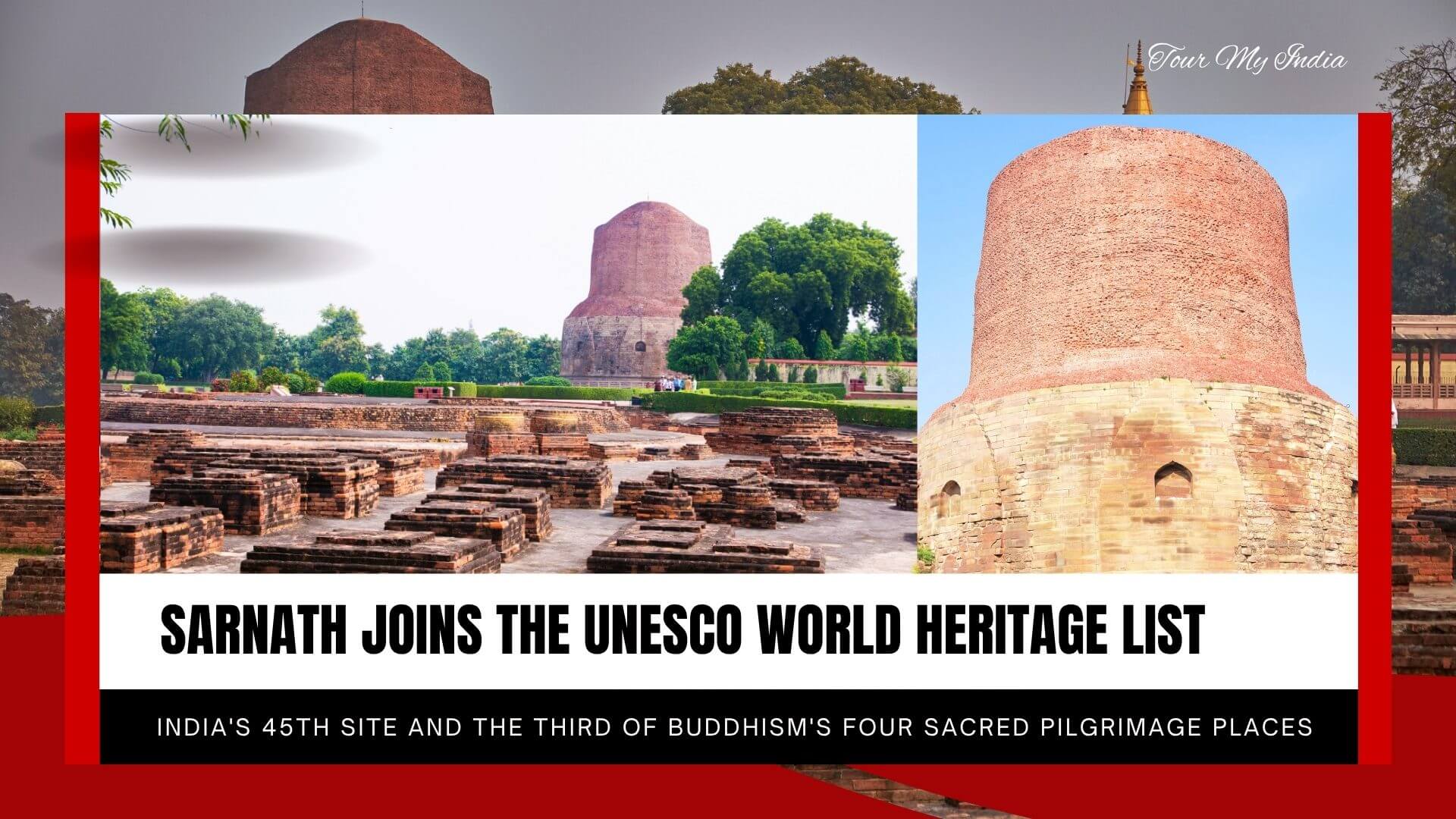
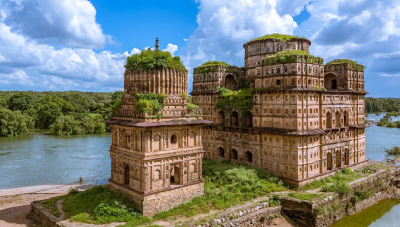
Inscribed at the 48th Session of the World Heritage Committee in Busan, the ancient Deer Park where the Buddha delivered his first sermon now sits alongside Lumbini and Bodh Gaya’s Mahabodhi Temple on the world list, leaving Kushinagar as the only one of the four principal pilgrimage sites still outside it.
The Ancient Buddhist Site of Sarnath, on the outskirts of Varanasi in Uttar Pradesh, was inscribed on the UNESCO World Heritage List on July 25, 2026, at the 48th Session of the World Heritage Committee in Busan, Republic of Korea. The decision makes Sarnath India’s 45th World Heritage property, placing the country sixth globally and second in the Asia-Pacific for inscribed sites.
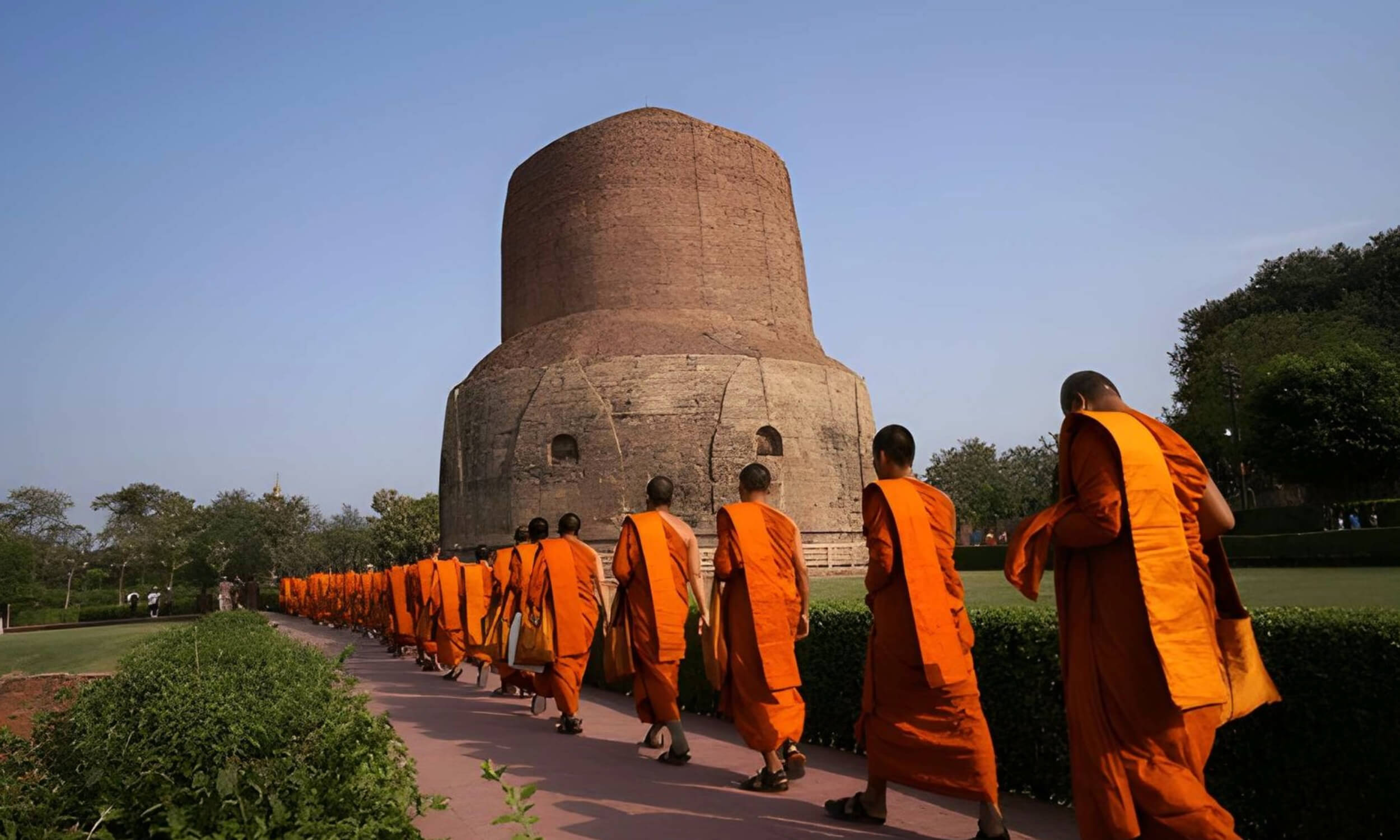
The inscription is a serial property covering two components. The first is the Chaukhandi Stupa, a terraced brick mound topped by a later Mughal-era octagonal tower, traditionally identified as the spot where the Buddha met his first five disciples. The second is the Archaeological Remains of Sarnath, a larger enclosure that includes the Dhamek Stupa (long identified as the exact site of the first sermon), the Dharmarajika Stupa (originally raised by Emperor Ashoka in the 3rd century BCE), the Mulagandhakuti Vihara, and the remains of the Ashokan Pillar, whose Lion Capital is India’s National Emblem. The property spans 8.05 hectares with a 72.2-hectare buffer zone, and was inscribed under UNESCO criteria (iii) and (vi) for its testimony to Buddhist civilization and its direct association with the Buddha’s life and teachings.
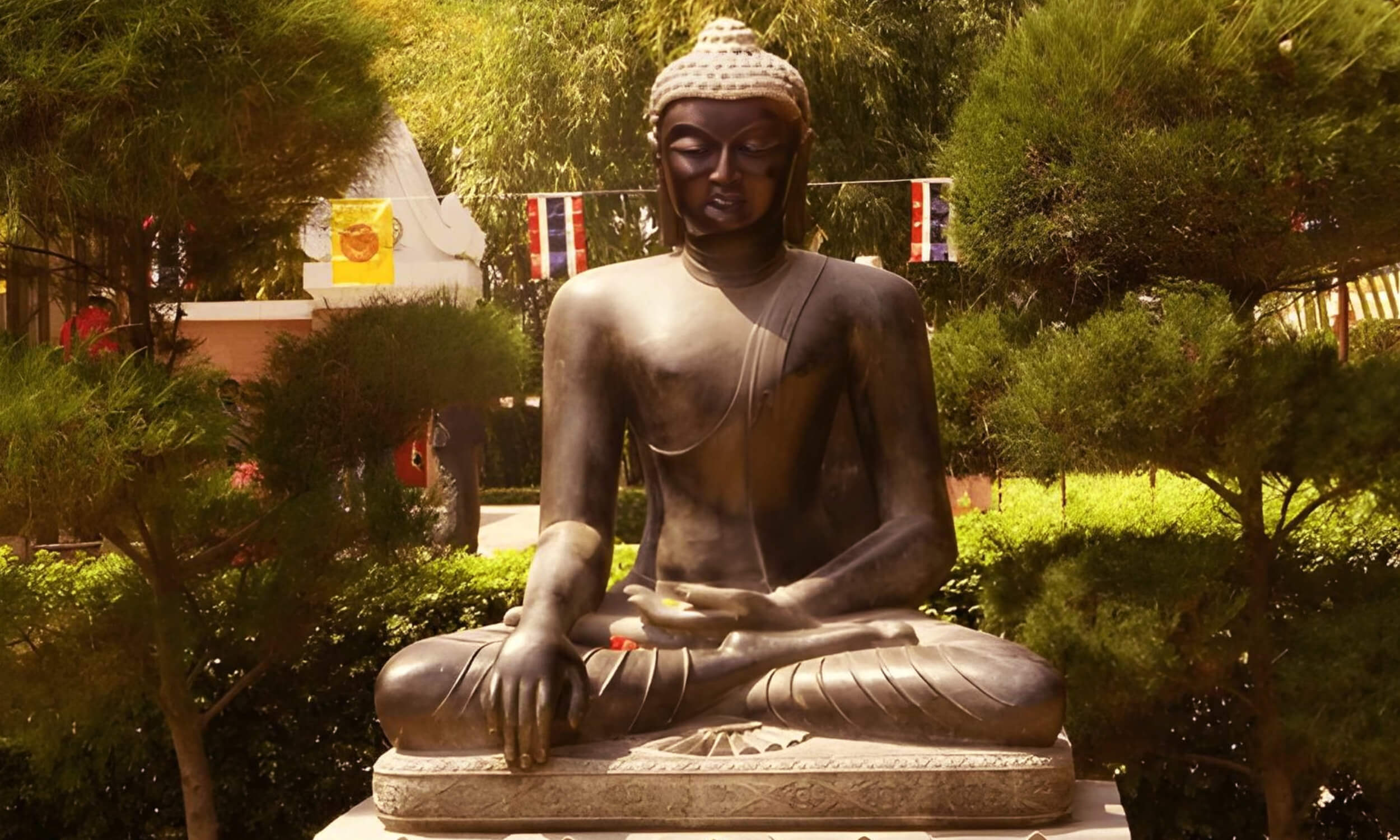
Sarnath is where, in the 6th century BCE, the Buddha delivered the sermon known as Dharmachakra Pravartana, or the Turning of the Wheel of the Law, an event that marked the founding of the Buddhist Sangha and the first teaching of the Noble Eightfold Path. Ancient Buddhist texts refer to the site as Rishipatana, Isipatana, or Mrigadava, all names for the Deer Park landscape that has drawn pilgrims for more than 2,500 years.
Prime Minister Narendra Modi called the inscription a proud moment for every Indian, citing Sarnath’s association with the Buddha’s message of wisdom, compassion, and harmony. External Affairs Minister Dr. S. Jaishankar described the recognition as an acknowledgment of India’s civilizational and spiritual legacy. Tim Curtis, Director of the UNESCO Regional Office for South Asia, welcomed the decision, noting that Sarnath has been a site of pilgrimage and inspiration for Buddhists for more than two-and-a-half millennia.
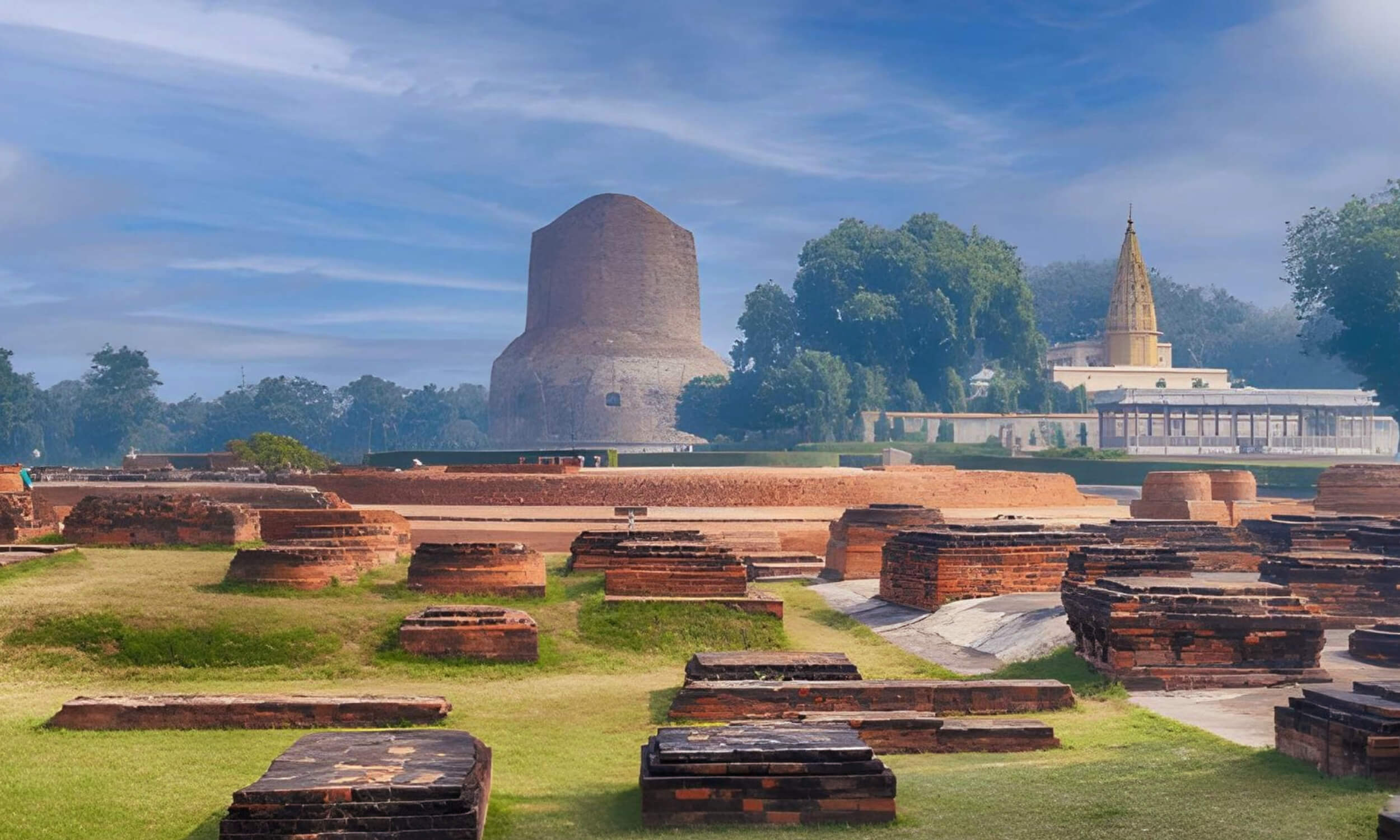
The inscription closes a nomination arc that began in 1998, when Sarnath was first added to India’s UNESCO Tentative List. The formal dossier was submitted in January 2025 for the 2025-26 cycle, followed by an 18-month evaluation led by ICOMOS experts. Under UNESCO’s 2024 Operational Guidelines, India can nominate only one property per cycle, which made Sarnath the country’s sole entry for the current round.
The decision also reshapes the Buddhist Circuit, the pilgrimage and travel route linking the four sites the Buddha himself identified as principal places of pilgrimage. Three of the four are now World Heritage inscribed: Lumbini in Nepal (his birthplace), the Mahabodhi Temple Complex at Bodh Gaya in Bihar (site of his enlightenment), and now Sarnath (site of his first sermon). The fourth, Kushinagar in Uttar Pradesh, where the Buddha attained mahaparinirvana, remains outside the list, though it continues to draw pilgrims from Sri Lanka, Thailand, Japan, Myanmar, South Korea, and Vietnam alongside the other three.
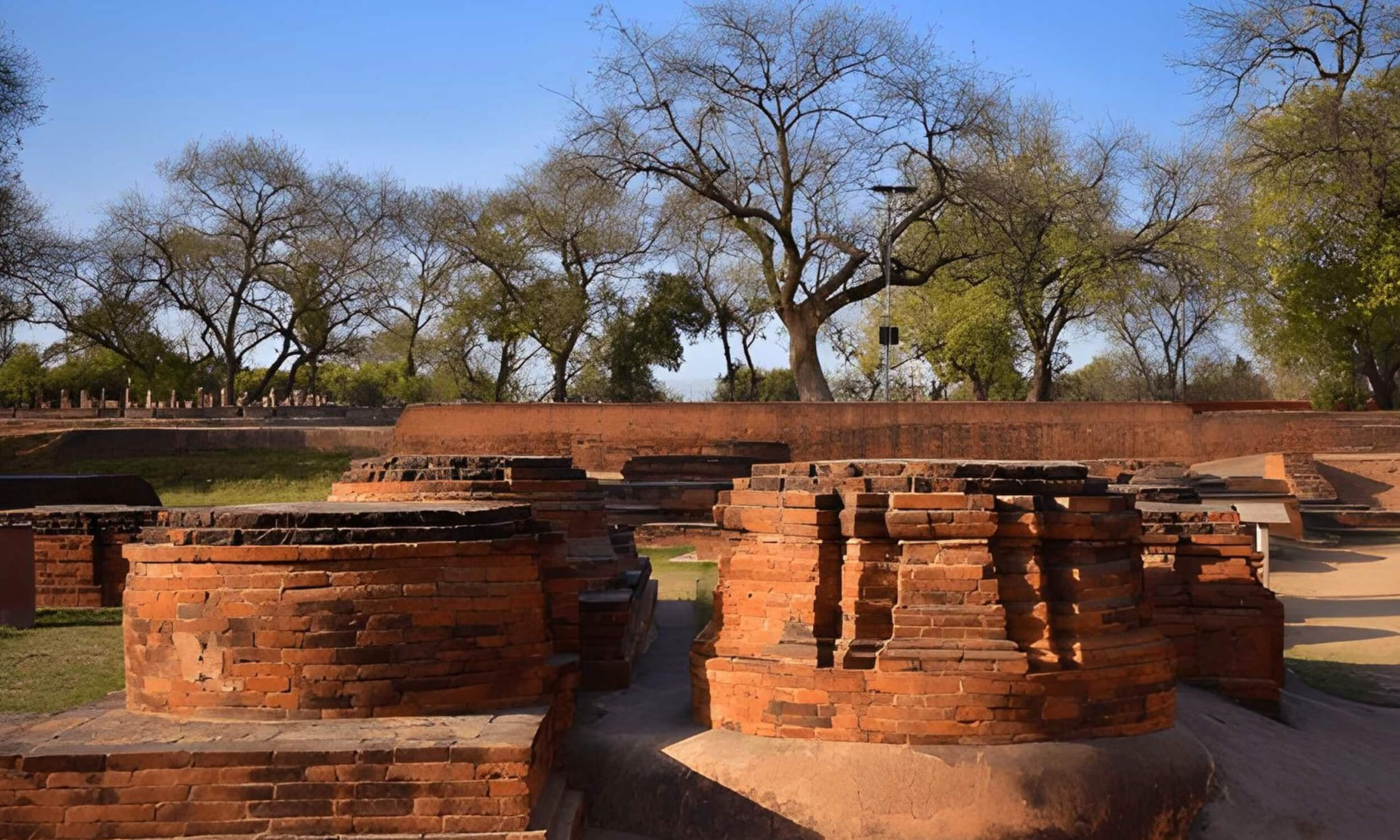
Located roughly 10 kilometers from Varanasi, Sarnath is administered by the Archaeological Survey of India. With the inscription secured, ASI has signaled its readiness to support sustainable tourism at the site, which is expected to see increased footfall from international Buddhist pilgrimage traffic and from the India-side Buddhist Circuit.
Other Interesting Blogs to Read


 +91-9212777225
 Plan Your trip