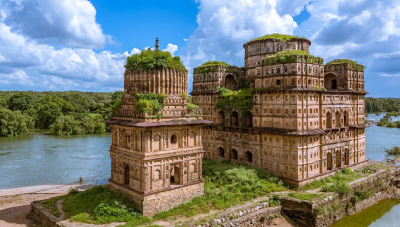
Every holidaymaker includes spectacular beaches, snow-clad mountains, and beautiful hill stations on their travel wish list. But have you ever thought of adding a national park to that list? Visiting the national parks and wildlife sanctuaries in India is not only one of the best ways to witness the country’s unique wildlife but also an excellent opportunity to experience nature at its finest.
Home to majestic tigers, lions, elephants, rhinos, and an incredible variety of bird species, India boasts a rich and diverse wildlife heritage. The country’s remarkable geographical diversity makes it a haven for exotic flora and fauna. A journey through India’s national parks offers the perfect opportunity to spot some of the rarest and most fascinating animals in their natural habitat.
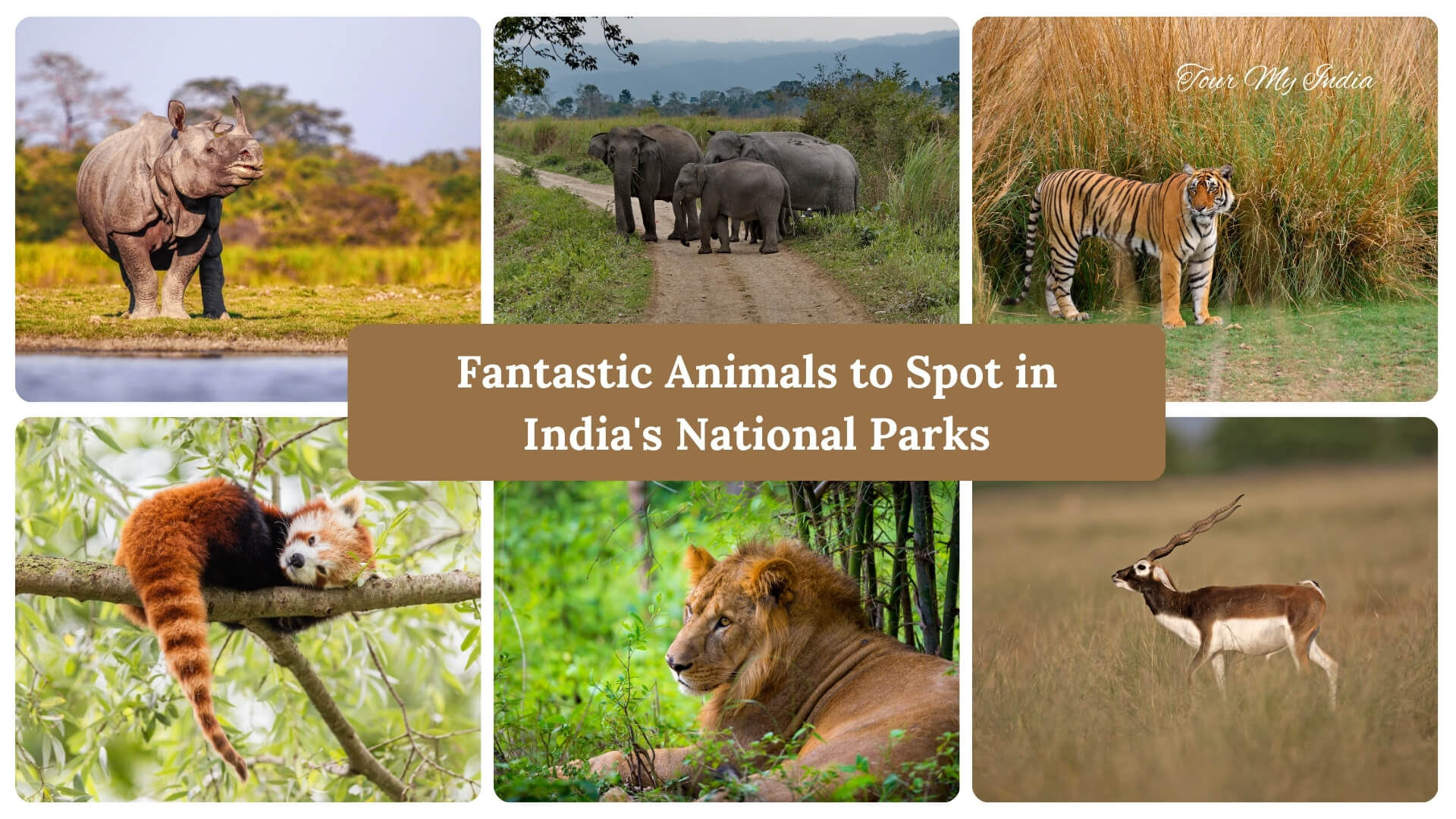
Below is a list of 12 incredible animals that make India’s national parks so appealing.
- Royal Bengal Tiger
- Nilgiri Tahr
- Greater One-Horned Rhinoceros
- Asiatic Lion
- Snow Leopard
- Blackbuck
- Lion-Tailed Macaque
- Red Panda
- Kashmir Red Stag (Hangul)
- Indian Bison (Gaur)
- Asian Elephant
- Chinkara
Check Out: Popular Wildlife Tour Packages
01: Royal Bengal Tiger
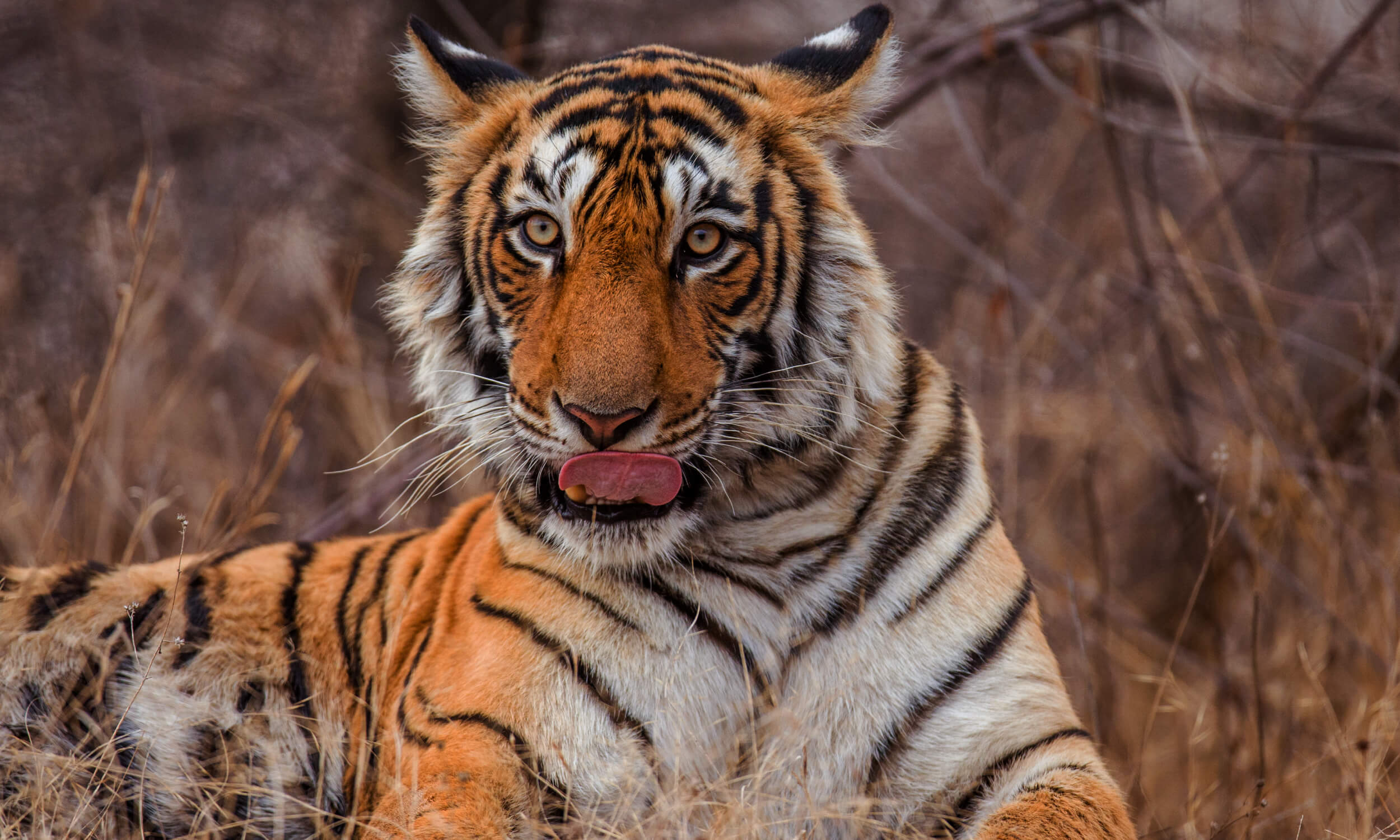
A tiger safari is a dream experience for many wildlife enthusiasts visiting India’s renowned tiger reserves. Several national parks across the country offer exciting safari experiences, allowing visitors to witness the majestic Bengal Tiger in its natural habitat. Exploring the wilderness in a 4×4 safari jeep in search of this magnificent predator is an unforgettable adventure.
Often referred to as the “Big Cat,” the Bengal Tiger is the national animal of both India and Bangladesh. Although more than 70% of the world’s wild tigers are found in India, the species remains endangered. Poaching and habitat destruction have significantly reduced the population of this powerful animal over the years.
Appearance
The Bengal Tiger has a striking light orange coat with distinctive dark brown or black stripes, giving it a majestic and captivating appearance.
Where to Spot Bengal Tigers in India?
Ranthambore National Park and Jim Corbett National Park are among the best places for wildlife enthusiasts hoping to spot this iconic animal. Other renowned national parks and tiger reserves where Bengal Tigers can be seen include Bandipur Tiger Reserve, Sundarbans National Park, Tadoba National Park, Sariska Tiger Reserve, Kanha National Park, and Bandhavgarh National Park.
Also Read: Where to Go for Photography Tours in India
02: Nilgiri Tahr
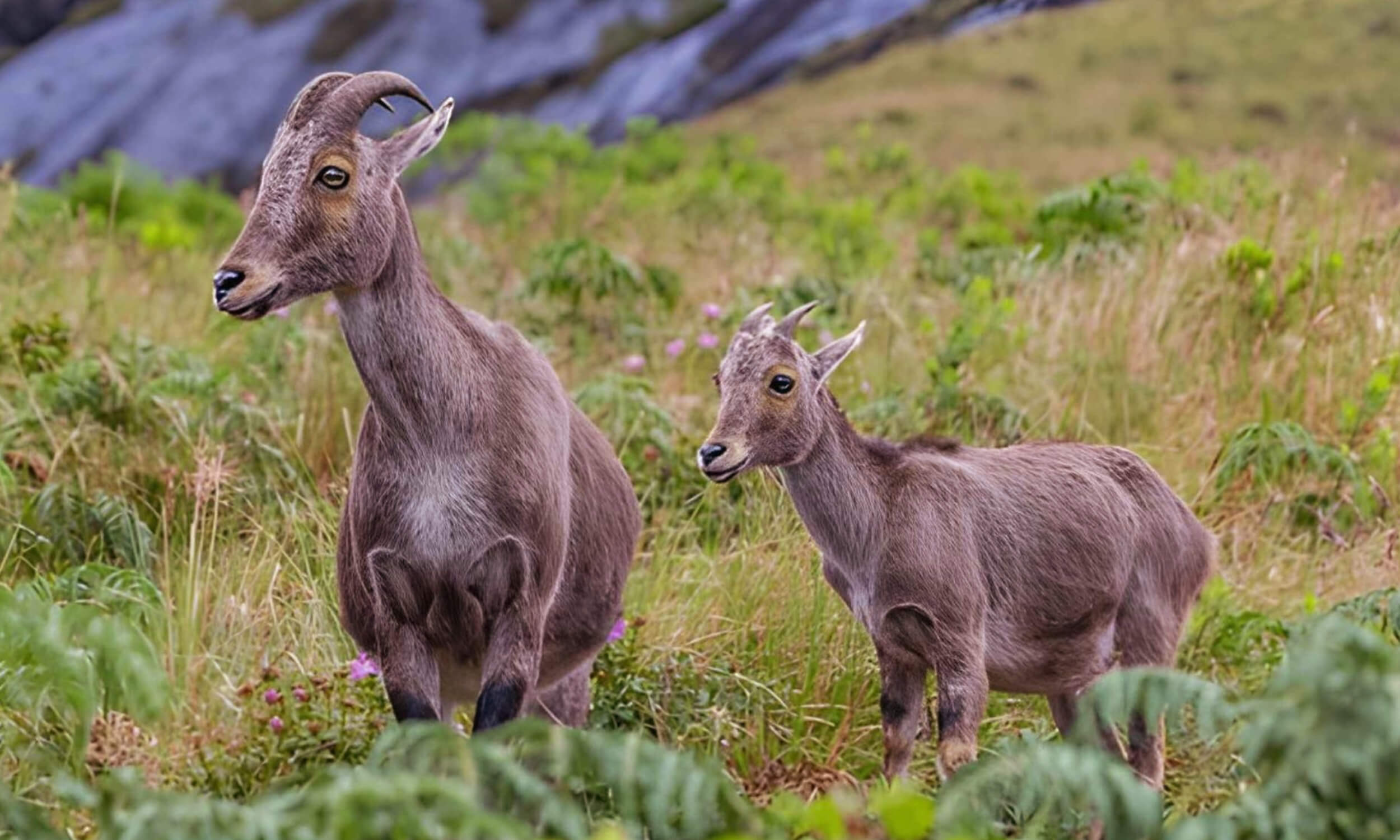
A holiday trip to Eravikulam National Park can leave you with unforgettable memories. The park is home to the endangered Nilgiri Tahr, a unique mountain goat found only in the Western Ghats of India. Spotting this remarkable animal in its natural habitat is one of the highlights of visiting the park.
Appearance and Habitat
The Nilgiri Tahr is known for its coarse, short coat and gracefully curved horns. It inhabits the tropical montane grasslands and forested slopes of the Western Ghats, making it one of the region’s most iconic wildlife species.
Distribution and Conservation
The Nilgiri Tahr is the state animal of Tamil Nadu and can be spotted in the Palani Hills, Nilgiri Hills, and Annamalai Hills. However, its population has declined significantly due to habitat loss caused by eucalyptus plantations and persistent poaching, making conservation efforts essential for its survival.
Also Read: Lesser-Known Wildlife Destinations in India Worth Exploring
03: Greater One-Horned Rhinoceros
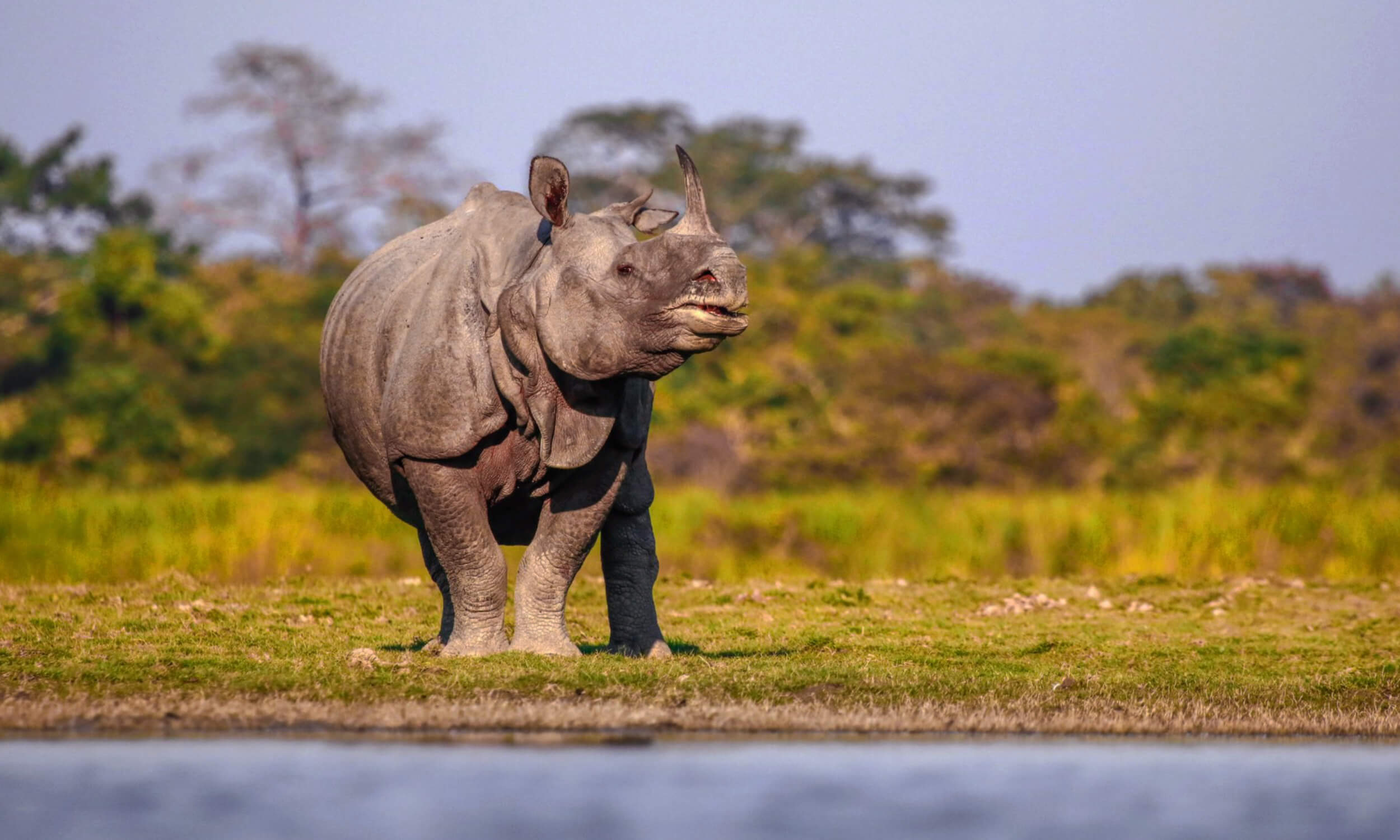
A holiday trip to Kaziranga National Park is a wonderful way to reconnect with nature while enjoying the opportunity to spot some of India’s rare and exotic wildlife. One of the park’s most iconic inhabitants is the Greater One-Horned Rhinoceros, a magnificent animal that every wildlife enthusiast hopes to see during their visit.
Habitat and Conservation
Also known as the Indian Rhinoceros, the Greater One-Horned Rhinoceros is a large herbivore that primarily inhabits the grasslands and floodplains along the foothills of the Himalayas. The International Union for Conservation of Nature (IUCN) has listed the species as Vulnerable. Although conservation efforts have helped improve its population in recent decades, poaching for its horn remains one of the biggest threats to its survival.
Where to Spot the Greater One-Horned Rhinoceros
In India, the Greater One-Horned Rhinoceros can be spotted mainly in Kaziranga National Park, Pobitora Wildlife Sanctuary, Manas National Park and Dudhwa Tiger Reserve.
Also Read: Amazing Facts About Jim Corbett National Park That Every Wildlife Lover Should Know
04: Asiatic Lion
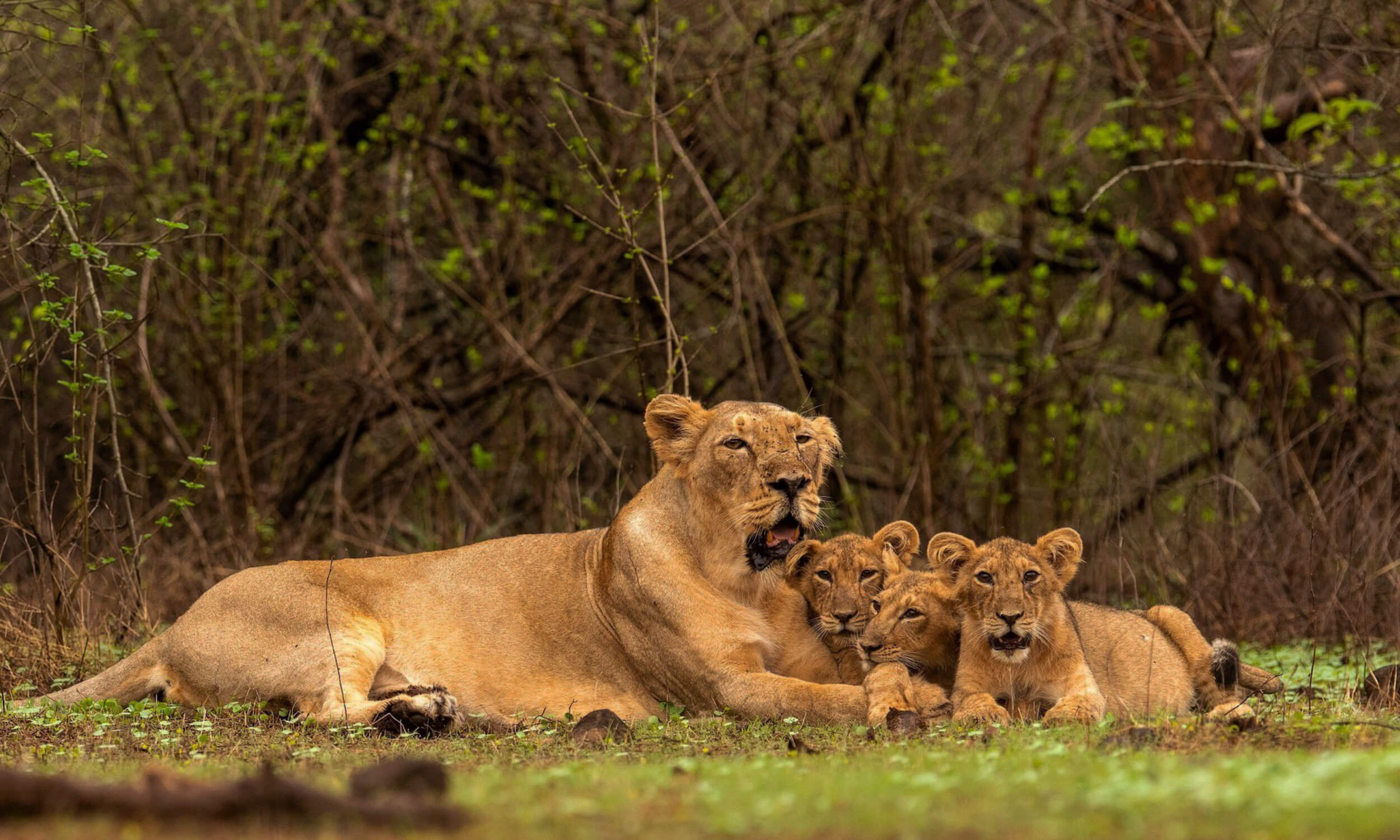
A jungle safari is a memorable experience, especially when it takes you through the rugged landscapes of Gir National Park, popularly known as Sasan Gir. This renowned wildlife destination offers nature lovers a rare opportunity to spot the majestic Asiatic Lion in its natural habitat.
Habitat and Significance
Gir is the only natural habitat of the Asiatic Lion, making it one of India’s most remarkable wildlife destinations. Visitors from across the country and around the world come here for a chance to catch a glimpse of this magnificent animal.
The Asiatic Lion is one of the largest members of the cat family and is found only in India. Its restricted distribution makes it one of the country’s most treasured wildlife species.
Best Time to Spot the Asiatic Lion
Summer is considered one of the best times to spot Asiatic Lions, as they are frequently seen near water sources while searching for relief from the intense heat.
Also Read: Why Wildlife Conservation Matters: 11 Reasons to Protect Wildlife
05: Snow Leopard
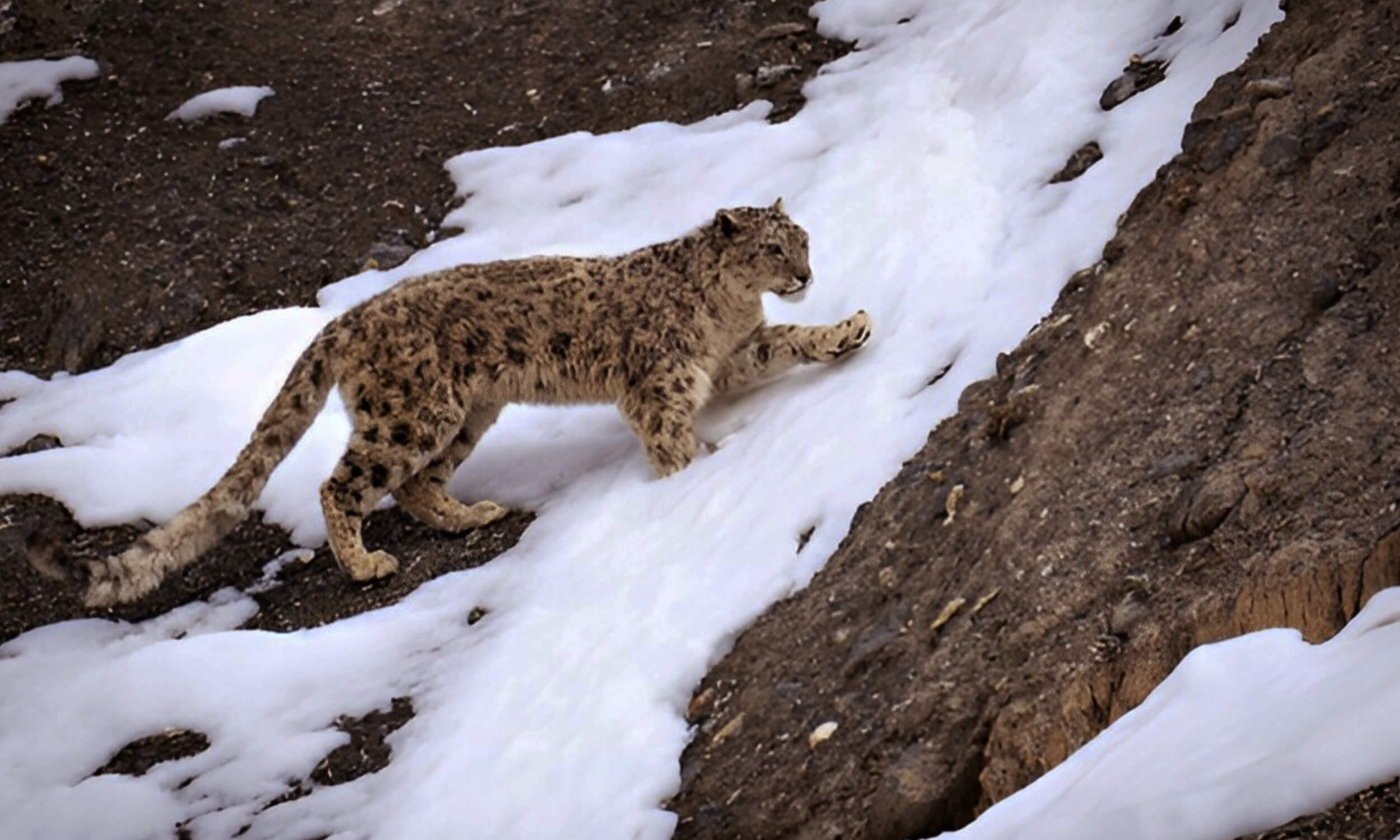
Spotting a Snow Leopard in its natural habitat is a magical experience, as this elusive big cat is extremely difficult to find in the wild. Winter is considered the best time to see Snow Leopards, as they are more frequently spotted in the rocky, steep landscapes of the Himalayas.
Appearance and Behaviour
The Snow Leopard has long, thick fur that helps it survive the harsh mountain climate. Its coat ranges from pale yellowish-tan to smoky grey, providing excellent camouflage against rocky terrain. One of its most distinctive features is its long, bushy tail, which makes it easy to identify and also helps the animal maintain balance on steep slopes while keeping itself warm during cold weather.
Unlike lions and tigers, the Snow Leopard cannot roar, making it unique among the big cats.
Conservation and Where to Spot Snow Leopards
The population of Snow Leopards continues to decline due to habitat loss and illegal hunting. In India, some of the best places to spot this magnificent animal include Hemis National Park, Dibang Wildlife Sanctuary, Nanda Devi National Park, Great Himalayan National Park, Kibber Wildlife Sanctuary, and Pin Valley National Park.
Also Read: Vantara Animal Rescue and Wildlife Conservation Center in Jamnagar, Gujarat
06: Blackbuck
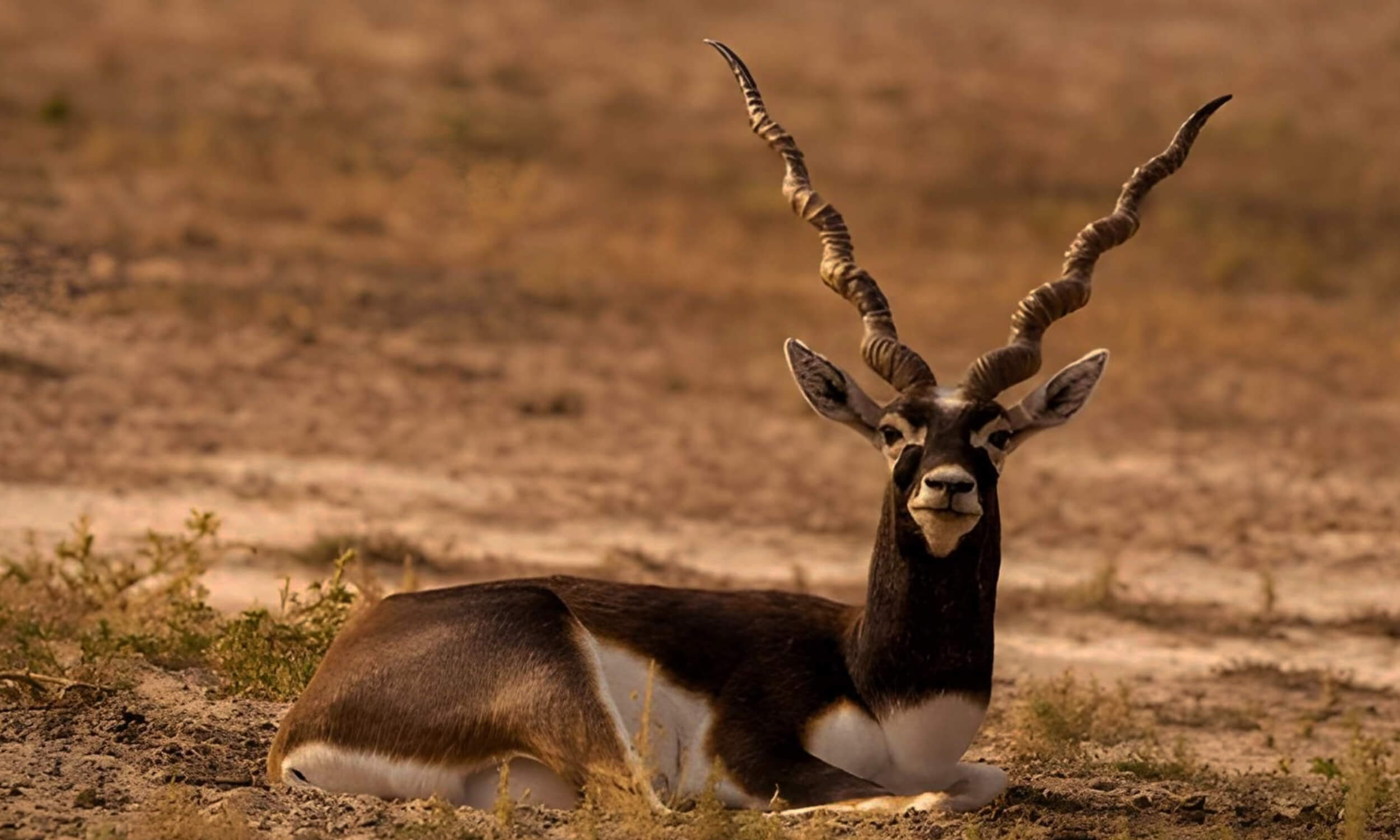
Visiting India’s national parks, such as Velavadar Blackbuck National Park, Jim Corbett National Park, Kanha National Park, Ranthambore National Park, Gir National Park, Guindy National Park, and Bandhavgarh National Park makes a wildlife safari even more exciting by offering the chance to spot the graceful Blackbuck.
Appearance and Distribution
Also known as the Indian Antelope, the Blackbuck is the state animal of Punjab, Haryana, and Andhra Pradesh. With its striking spiral horns and distinctive colouring, the Blackbuck is one of India’s most elegant and attractive antelope species.
In the past, Blackbucks were commonly found across the plains of India. However, their population has declined significantly due to relentless hunting, habitat destruction, overgrazing, and inbreeding.
Where to Spot Blackbucks in India
Apart from the parks mentioned above, Blackbucks can also be found in several protected grasslands and wildlife sanctuaries across the country, where conservation efforts continue to support their survival.
Also Read: Best Incredible Places for Wildlife Jungle Safari Holidays in Rajasthan
07: Lion-Tailed Macaque
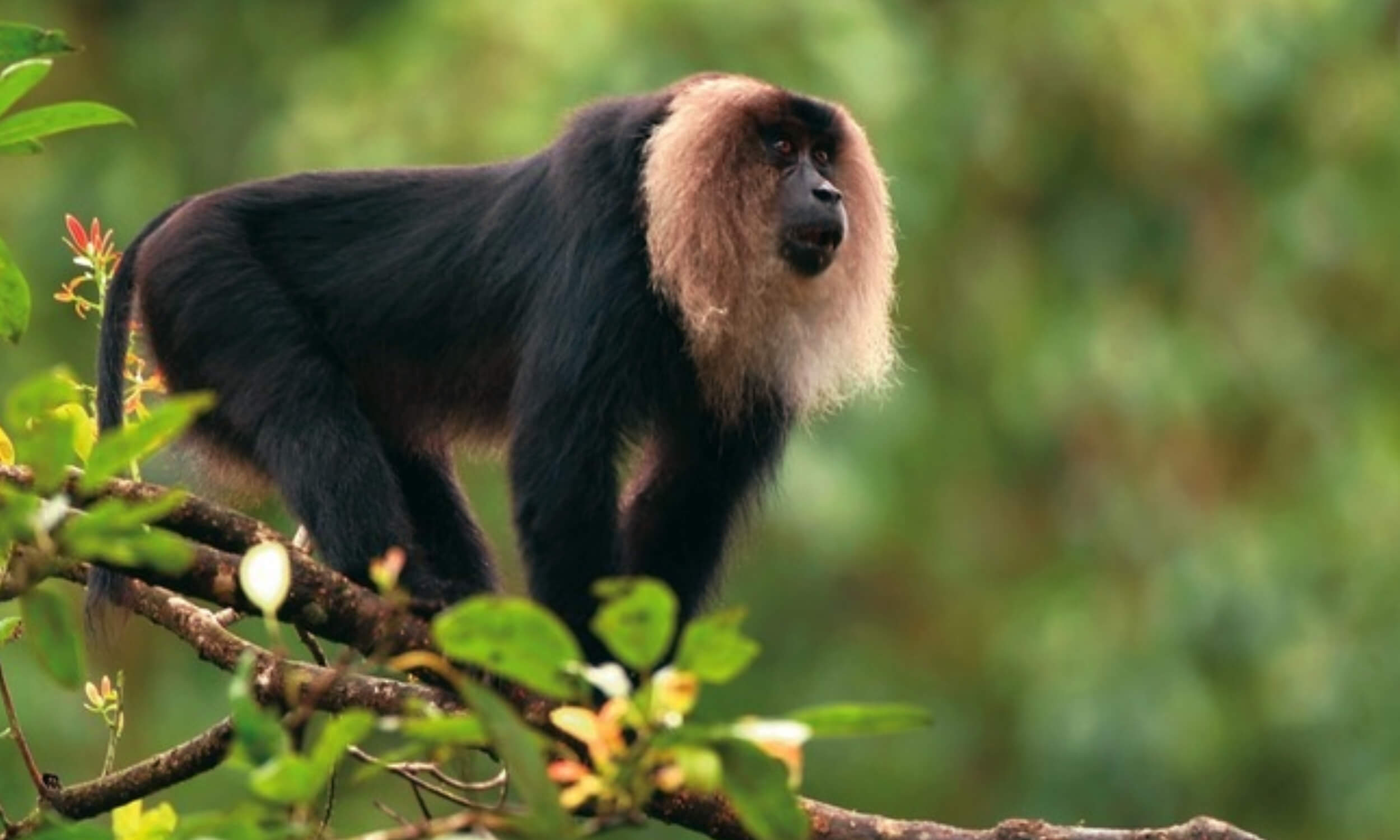
The Western Ghats are a haven for exceptional wildlife, including the endangered Lion-Tailed Macaque. Watching a troop of these fascinating primates in their natural habitat is a memorable experience for any wildlife enthusiast. Endemic to the Western Ghats of South India, this Old World monkey is admired for its unique appearance and distinctive characteristics.
Appearance
The Lion-Tailed Macaque has a striking appearance and derives its name from its long tail, which ends in a tuft resembling that of a lion. Its distinctive silver-white mane surrounding the face further enhances its lion-like look, making it one of India’s most recognisable primates.
Where to Spot the Lion-Tailed Macaque
Wildlife enthusiasts often pause their journeys to photograph this rare and elusive animal whenever they are fortunate enough to spot one. Some of the best places to see the Lion-Tailed Macaque include Silent Valley National Park, the Sirsi-Honnavara Rainforests in the north-western Western Ghats, and the Kalakad Mundanthurai Tiger Reserve, particularly the Papanasam region.
Also Read: Best National Parks for Jungle Safari Experience in India – Love and Conserve Our Wildlife
08: Red Panda
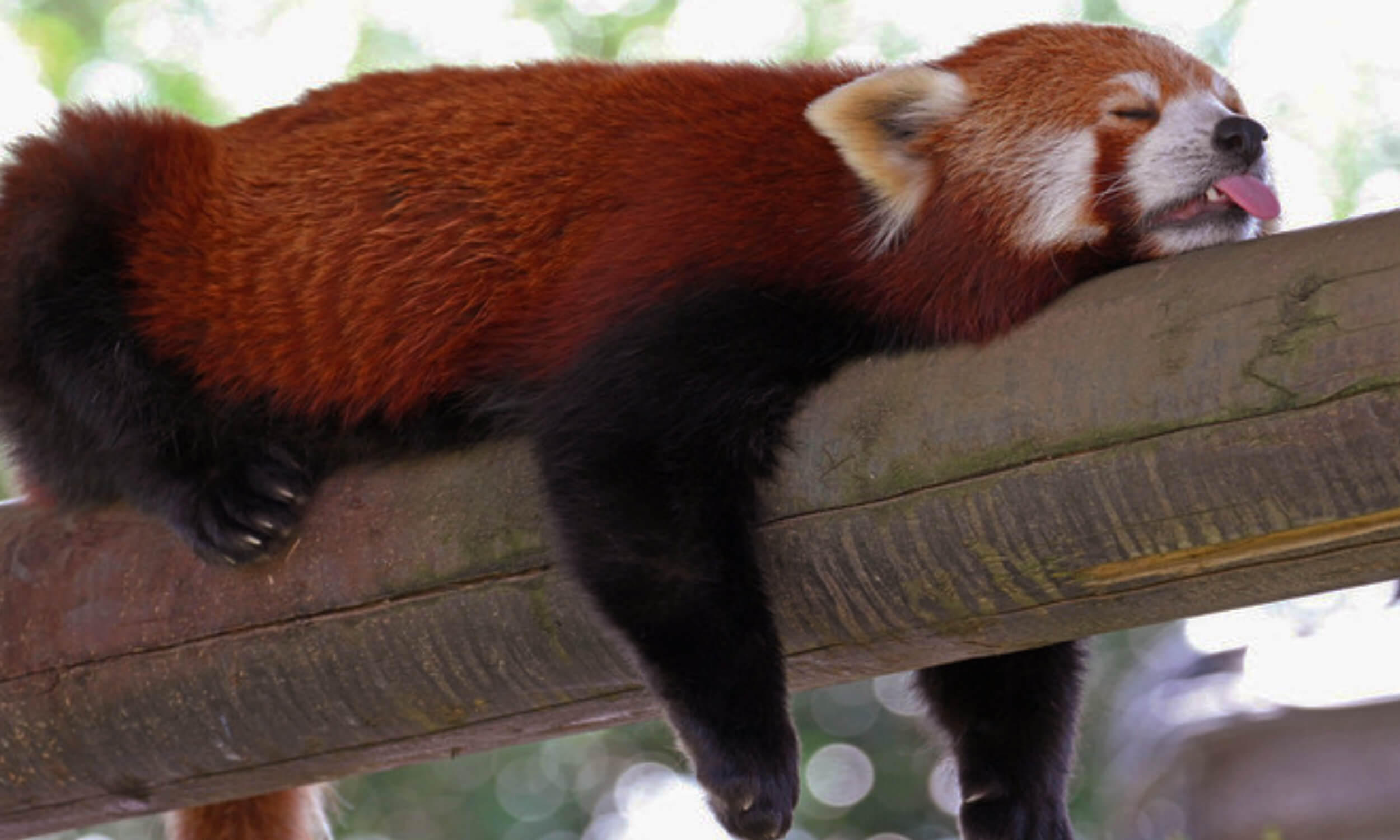
Planning a wildlife safari in India’s national parks and wildlife sanctuaries is an exhilarating way to enjoy a vacation. Spotting fascinating wildlife while exploring peaceful natural surroundings makes the experience even more memorable. Among the many rare animals found in India, the endangered Red Panda is undoubtedly one of the most charming.
Habitat and Characteristics
Native to the Eastern Himalayas, the Red Panda is a small arboreal mammal that spends much of its time in bamboo forests. Also known as the Red Cat-Bear or Lesser Panda, this adorable species is admired for its reddish-brown fur, bushy tail, and playful appearance.
Where to Spot Red Pandas in India
In India, Red Pandas can be spotted in Khangchendzonga National Park, Namdapha National Park, and the forests of Sikkim and Arunachal Pradesh.
Conservation
The Red Panda population continues to decline due to habitat loss, poaching, forest fragmentation, and inbreeding, making the conservation of its natural habitat essential for the species’ survival.
Also Read: National Parks, Sanctuaries & Wildlife Places to Visit During Monsoon Season
09: Kashmir Red Stag (Hangul)
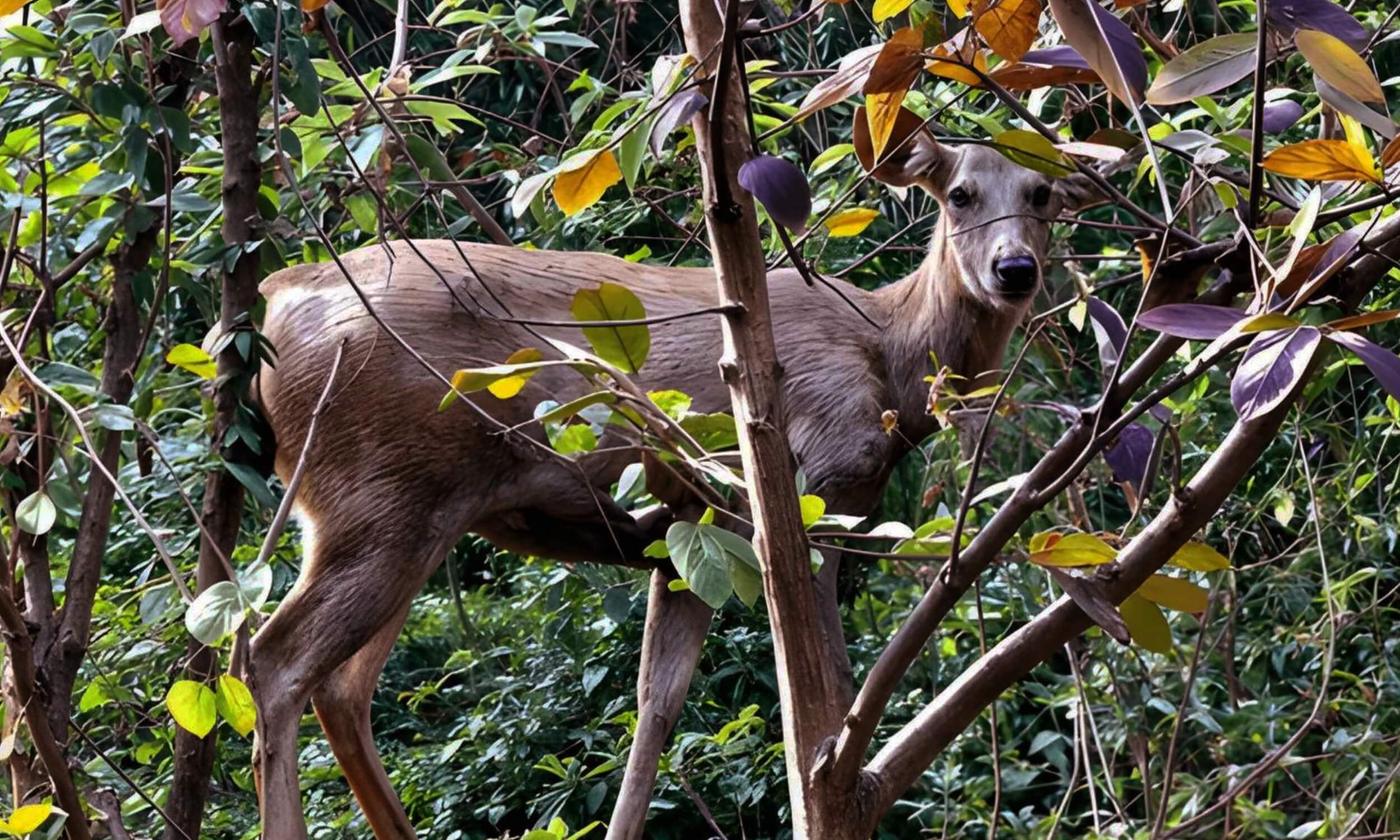
India’s national parks and wildlife sanctuaries offer excellent opportunities to spot a wide variety of wildlife. Among the rarest species is the Kashmir Red Stag, popularly known as the Hangul. A visit to Rajparian Wildlife Sanctuary and Dachigam National Park is well worth considering for wildlife enthusiasts hoping to catch a glimpse of this magnificent deer.
Appearance
The Kashmir Red Stag has a rich brown coat with a distinctive light-coloured rump patch, making it one of the most striking deer species found in the Himalayan region.
Distribution and Habitat
The Hangul is primarily found in the Jammu and Kashmir, particularly in the Sind Valley, Overa-Aru, and the forests of Bhaderwah and Kishtwar.
Where to Spot the Hangul
Including Rajparian Wildlife Sanctuary and Dachigam National Park in your travel itinerary can provide a memorable opportunity to witness the unique Kashmir Red Stag in its natural habitat.
Also Read: Top Places for Wildlife Safari Holidays in India
10: Indian Bison (Gaur)
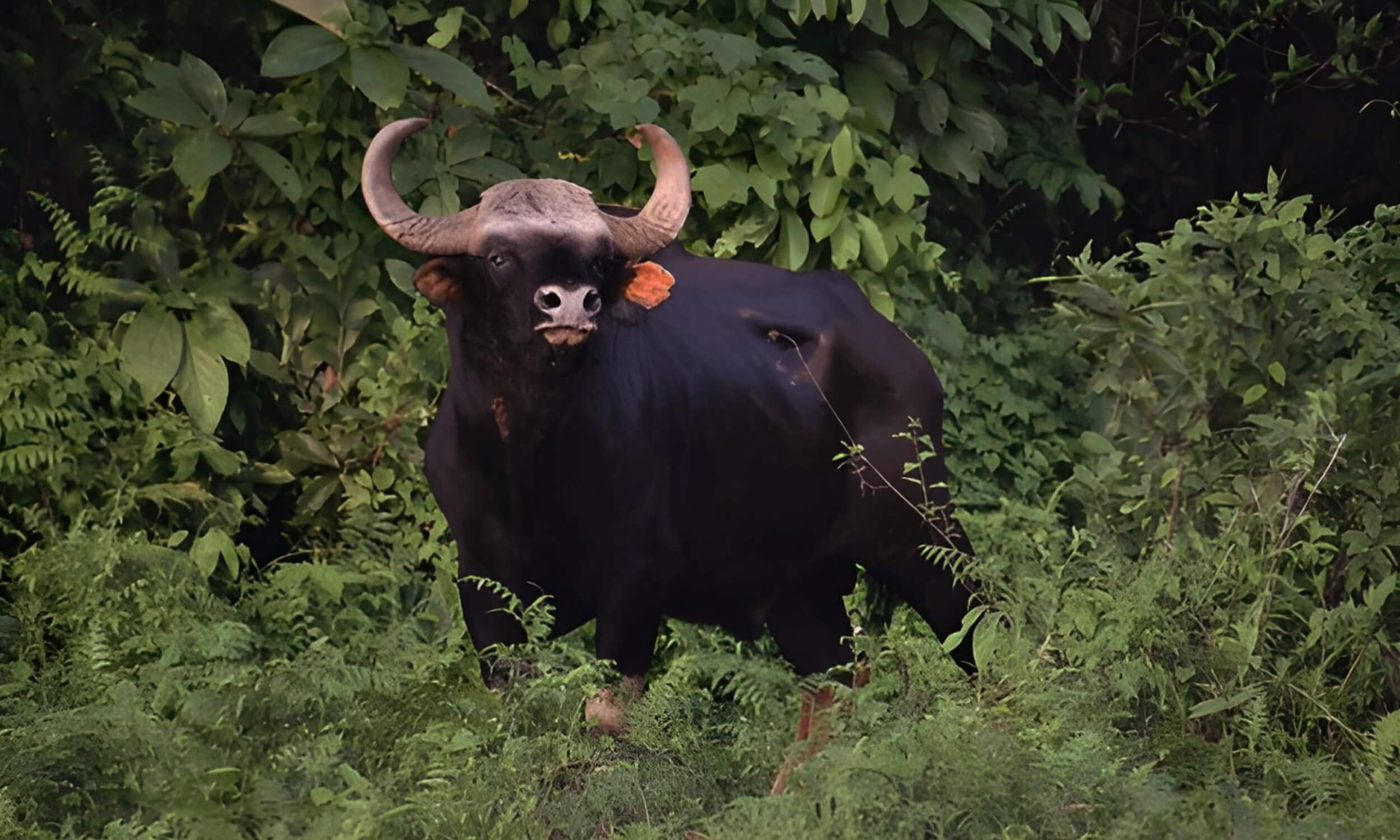
A visit to Chinnar Wildlife Sanctuary and Arignar Anna Zoological Park offers an excellent opportunity to witness the magnificent Indian Bison, also known as the Gaur. These destinations are popular among wildlife enthusiasts who wish to observe one of the largest and most powerful wild bovines in the world.
Appearance and Habitat
Native to South and Southeast Asia, the Indian Bison is commonly found in grasslands, evergreen forests, and forested hills. With its massive body, muscular build, and broad head, the Gaur is a true symbol of strength and vigour.
Conservation
The Indian Bison is listed as a Vulnerable species and is regarded as one of the must-see animals in the wild. Ongoing conservation efforts are essential to ensure the survival of this magnificent species in its natural habitat.
11: Asian Elephant
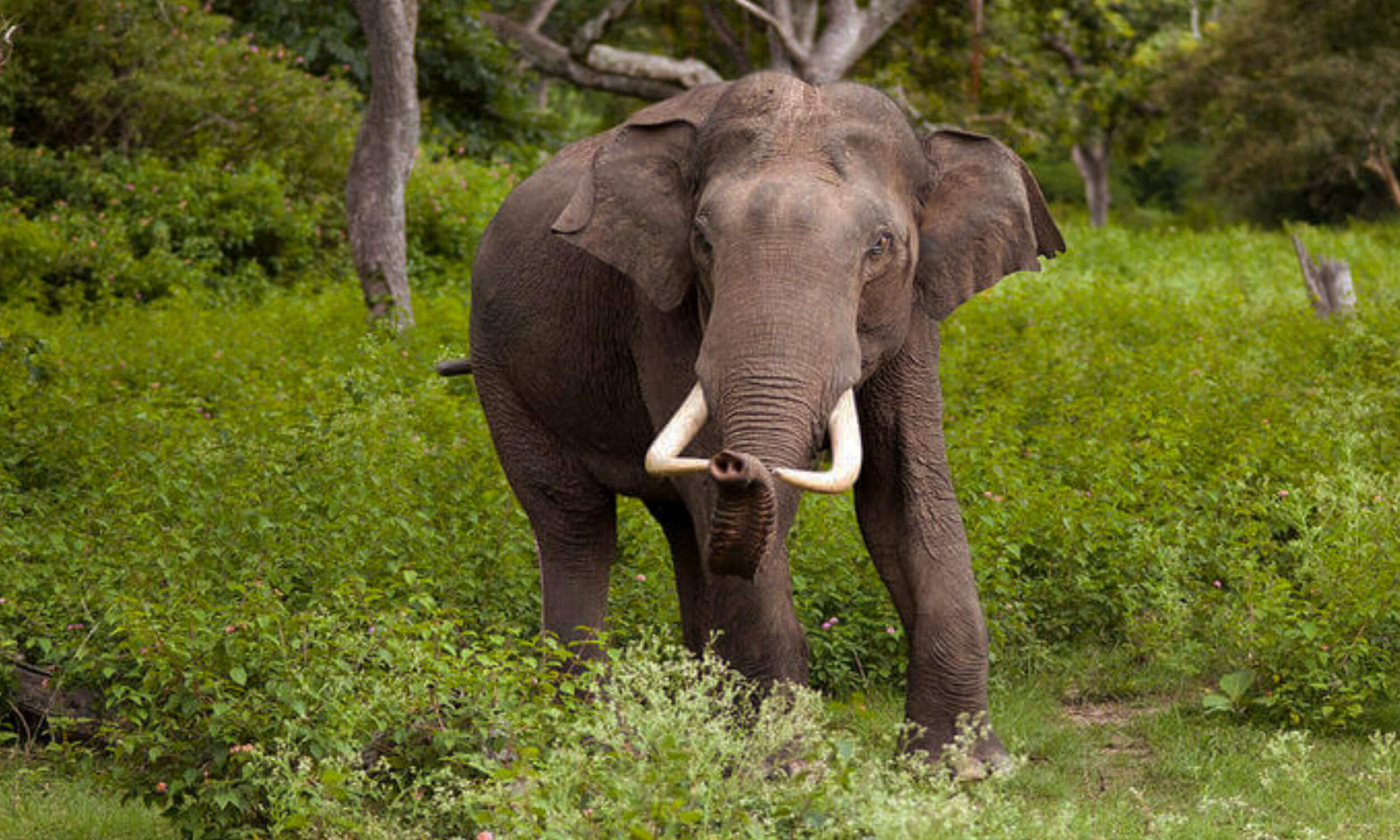
India has no shortage of beautiful national parks and breathtaking natural landscapes where visitors can spot the Asian Elephant in its natural habitat. Seeing these magnificent creatures up close is an unforgettable wildlife experience. India is home to more than 50% of the world’s Asian Elephant population, and they can be spotted in many parts of the country.
Appearance and Habitat
The Asian Elephant is one of the largest land animals on Earth, standing between eight and ten feet tall at the shoulder. Many of India’s national parks and wildlife sanctuaries provide a natural habitat for these gentle giants, where they coexist with a wide variety of other wildlife.
In many forests of South India, it is common to see herds of elephants crossing jungle roads, creating a truly memorable sight for visitors. Such encounters offer excellent opportunities for wildlife photography.
Where to Spot Asian Elephants in India
Some of the best places to see herds of Asian Elephants in the wild include Periyar National Park, Jim Corbett Tiger Reserve, Kanha National Park, Kaziranga National Park, Bandhavgarh Tiger Reserve, the Kabini Forest near Mysuru, and Chandaka-Dampara Wildlife Sanctuary.
12: Chinkara
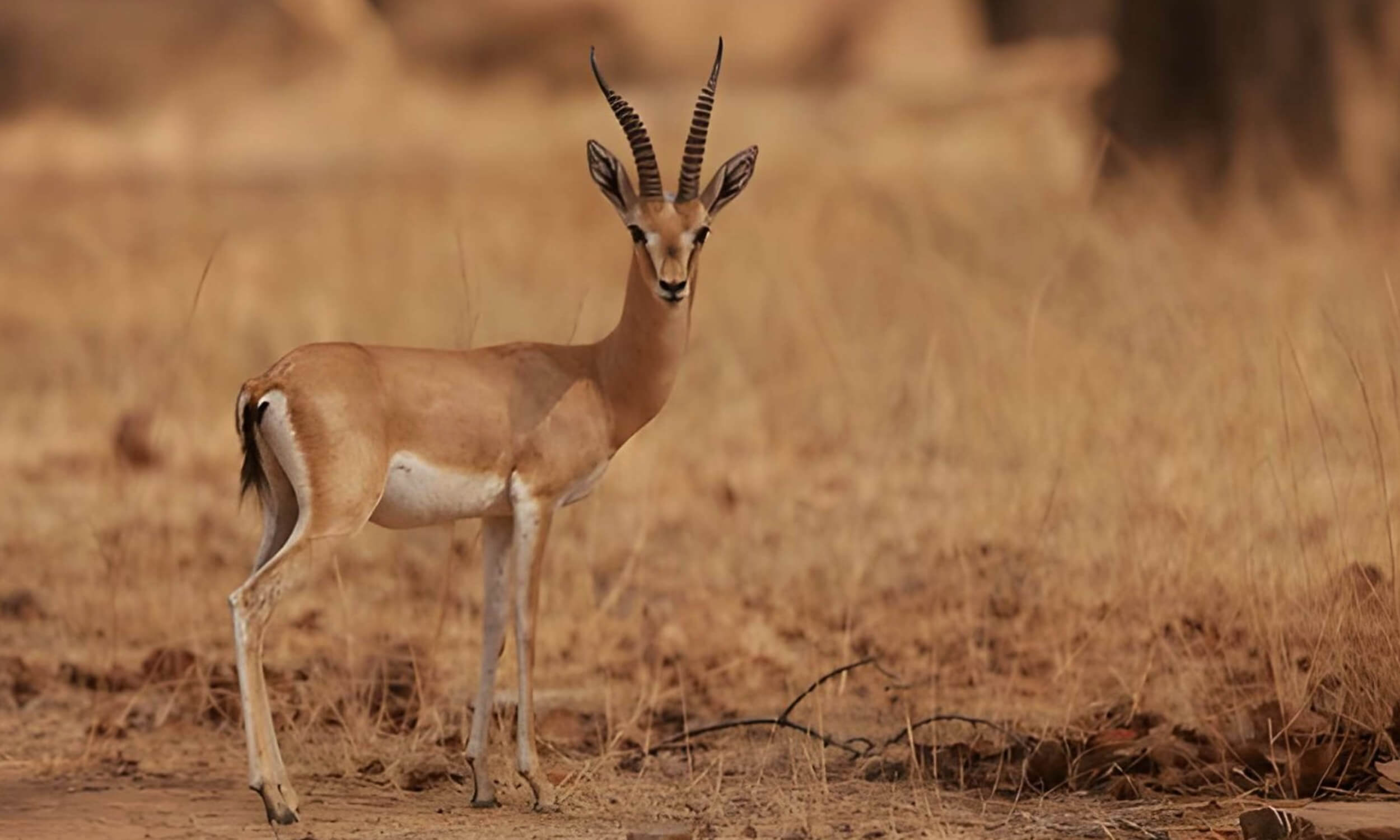
Ranthambore National Park and Bandhavgarh National Park are among the best destinations for wildlife enthusiasts hoping to spot the graceful Chinkara, also known as the Indian Gazelle. Both parks offer excellent opportunities to observe this elegant antelope in its natural habitat.
Habitat and Characteristics
The Chinkara is commonly found in the grasslands of central and northwestern India, as well as the deserts of Rajasthan. One of its most remarkable characteristics is its ability to survive on very little water, making it well adapted to arid and semi-arid environments.
There are more than 80 protected areas across India where this rare animal species can be found, highlighting the country’s ongoing efforts to conserve its natural habitat.
Where to Spot Chinkara in India
A safari to Ranthambore National Park or Bandhavgarh National Park offers an exciting opportunity to witness the Chinkara and enjoy an unforgettable wildlife experience.
About the author
From the Lake District, Nainital, Nidhi Singh is a travel writer whose love for mountains can be seen in her write ups. Talk about solo travelling, indulging in adventure activities, binging on good food, planning budget trips or the Aurora Borealis and you will get all her attention. It is the wanderlust that keeps her going and if at all she could get one wish granted she would love to live a life less ordinary. Follow her on Twitter, Facebook & Instagram.


 +91-9212777225
 Plan Your trip