
- Destinations
- Holiday Ideas
-
Popular India Tourism Destinations by Interest
-
-
Popular India Tourism Destinations by Interest
-
Adventure Tourism
-
- Packages
- Places to Stay
- Weekend Getaways
- InternationalNEW






NEW

States › Odisha › Pilgrimage › Jagannath Temple
Jagannath Temple Odisha
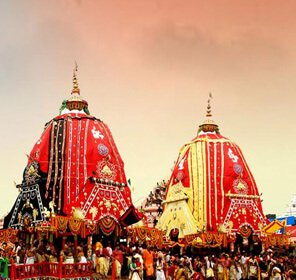
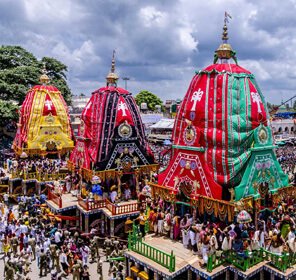
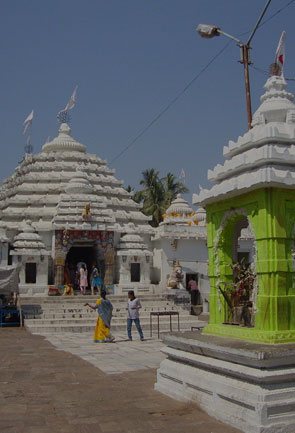
Amid the spectacular views of the eastern coast of India, lies the state of Odisha which is known for spreading spirituality by its many temples. One special temple out of them is the Jagannath Temple which finds its place in the city of Puri. This famous temple of Odisha is one of the Char Dham, which is a set of four pilgrimage sites of India. Worshippers flock in number to the city just to get a glimpse of the magnetic and spiritually bounding temple and also to seek blessings from Lord Jagannath, who is an avatar of Lord Vishnu. Moreover, it was in the 11th century that that temple was sculpted by Anantavarman Chodaganga who a ruler of the Eastern Ganga dynasty was, on the ravages of a temple which used to exist there. Apart from that, what pulls pilgrims to this place of worship even more is the annual Ratha Yatra (Chariot festival). One major ceremony followed in the festival is the public procession of the three principal deities of the temple present on embellished temple cars. Another interesting fact about this temple is that usually the idols are sculpted out of metal and stone but at Jagannath Temple, the idols are carved out of wood which are restored every twelve or nineteen years.
History and Architecture of the Temple
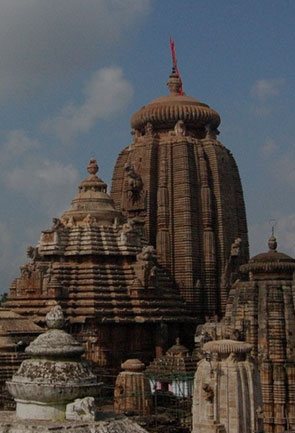
Jagannath Temple not only captivate the minds of its pilgrims with its spiritual aura but with its extensive structure and built. Covering an area of 37000m2, this popular temple of Odisha is fashioned in the Kalinga architectural style in a curvilinear shape which was built by King Anantavarman Chodaganga Deva of the Eastern Ganga Dynasty in the 10th century. On a visit to Jagannath Temple, people come across two walls one out of which surrounds the temple and is known as Meghanada Pacheri, 6.1 m high whereas the other one is Kurma Bheda which covers the main part of the temple. Another interesting thing about Jagannath Temple is that it is home to 120 shrines and temples. Some other things that attract pilgrims about the temple are the Nilachakra of Lord Vishnu with eight spokes named Nacagunjaras that is set atop the temple beautified with different flags each called Patita Pavana; Singhadwara(Lion Gate) which is one of the four gates of the temple; Garba griha (Sanctum sanctorum) Mukhashala (Frontal porch) and Bhoga Mandapa.
According to the famous legend, Lord Jagannath was worshipped by an aboriginal tribe chief amid deep and dark forests as Nila Madhava. The aboriginal tribe chief, Vishwavasu kept it as a secret and didn't spill the beans in front about the place in front of anyone. Far away from this spot was a place named Malwa which was ruled by King Indramunya who was an ardent worshipper of Lord Vishnu. The king had a keen desire to see the Lord in his foremost form. Much to his surprise, Indramunya saw a dream in which he was conveyed that his desire to see the Lord can be fulfilled in Utkala (Odisha). Without much thought, the king sent the brother of the royal priest, Vidyapati to the land in order to know the place where Lord Vishnu was being worshipped. Upon his arrival at Odisha, Vidyapati got to know that Lord Vishnu is worshipped atop a hill by the name Nila Madhava who was also the family deity of the chief. Following that, Vidyapati tried to convince the chief to let him visit the spot where Lord Vishnu was worshipped but couldn't. Later, Vidyapati married the daughter of the chief but still, Vidyapati couldn't get access to the hidden place of worship. It was when the daughter of the chief asked his father to let Vidyapati see the spot that the chief took him but blindfolded. On his way, Vidyapati dropped mustard seeds so as to form a way just to come back and visit the cave again.
Upon gathering enough information, Vidyapati made his way back to Malwa and narrated all that happened in Odisha to the king. In no time, Indramunya planned his pilgrimage to Odisha in search of the cave where the Lord was worshipped. Contrary to the king’s expectation, the deity was not present in the cave. Shattered by what just happened, Indramunya was disappointed but was given a divine direction to head towards the seashore of Puri where he will find a log of wood which was to be turned into the image of Lord Jagannatha. Even when he got the log, one problem still prevailed which was that no one knew how did the divine Lord look. Seeing the king in misery, Lord Vishnu himself came in the form of a carpenter and asked the king that he will make the image only if he is given complete privacy in a closed room for twenty-one days. After fifteen days, Gundicha, the queen felt the curiosity to open the closed room and was thereby opened on the orders of the King. Gundicha was also concerned about the carpenter as no sound from the room was heard in the days that went by. Upon opening the doors, the king found incomplete images of Lord Jagannath, Balabhadra, Subhadra and Chakra Sudarshan which were sculpted out of the log but no sign of the carpenter. The images were installed in the temple thereafter.
Opening/Closing Time
5:00 AM to 11:00 PM
Best Time to Visit
The months from December to February are the best time to visit Jagannath Temple and the city as a whole.
Nearby Tourist Attractions
- Gundicha Temple
- Ramachandi Temple
- Puri Beach
- Narendra Tank
- Balighai Beach

Popular Temples in Odisha

Konark Sun Temple

Brahmeshwar Temple
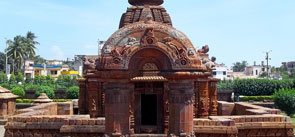
Mukteswar Temple

Parasurameswar Temple

Rajarani Temple

Vaital Deul Temple

Lingaraja Temple

Taratarini Temple
Panchalingeswar Temple

Biraja Temple

Kapilash Temple

Devi Ambika Temple

Samaleswari Temple
Ghanteswari Temple

Gupteswar Temple

Bharateswar Temple

Gundicha Temple

Pancha Tirtha

Loknath Temple

Chakra Tirtha Temple
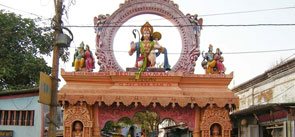
Daria Mahabir Temple

Siddha Mahavir Temple




 Plan Trip
 Call Us
 Packages
 Home
Home