The Kumbh Mela is the largest religious gathering on Earth, and the numbers keep rewriting themselves. The Maha Kumbh held at Prayagraj in early 2025 recorded over 660 million visits across 45 days, according to official Uttar Pradesh government estimates, a figure larger than the population of any country except India and China. Yet scale is only half the story. At the center of every Kumbh stand the akharas, monastic orders of Hindu saints whose processions, rituals, and centuries-old hierarchies give the festival its structure and its soul. This guide traces the history of the Kumbh Mela, explains what the 13 recognized akharas are, and lays out exactly when and where you can witness the next editions between 2026 and 2028.
Kumbh Mela at a Glance
| Particular |
Details |
| What it is |
The world’s largest Hindu pilgrimage and spiritual gathering |
| Rooted in |
The legend of Samudra Manthan (Churning of the Ocean) |
| Held at |
Prayagraj, Haridwar, Nashik-Trimbakeshwar, and Ujjain |
| Frequency |
Every 12 years at each city; Ardh Kumbh every 6 years at Prayagraj and Haridwar |
| Central ritual |
Amrit Snan (formerly called Shahi Snan), the ceremonial holy bath |
| Sacred rivers |
Ganga, Yamuna, and the mythical Saraswati (Prayagraj); Ganga (Haridwar); Godavari (Nashik); Shipra (Ujjain) |
| Organized by |
Host state governments with the Akhil Bharatiya Akhara Parishad |
| Global recognition |
Inscribed on UNESCO’s Representative List of the Intangible Cultural Heritage of Humanity in 2017 |
| Next editions |
Nashik-Trimbakeshwar Simhastha (2026-27), Haridwar Ardh Kumbh (2027), Ujjain Simhastha (2028) |
The Legend That Started It All
The Kumbh Mela traces its origin to the Samudra Manthan, one of Hinduism’s foundational legends. The devas and asuras churned the cosmic ocean together in search of amrit, the nectar of immortality, using Mount Mandara as the churning rod and the serpent Vasuki as the rope. When Lord Dhanvantari finally emerged carrying the kumbh (pitcher) of nectar, a celestial struggle broke out over its possession. During the chase that followed, drops of amrit are believed to have fallen at four places: Prayagraj, Haridwar, Nashik, and Ujjain.
These four cities became the rotating hosts of the Kumbh Mela, with each edition timed to specific planetary alignments of Jupiter, the Sun, and the Moon that recall the celestial event. Devotees believe that bathing in the sacred rivers during these windows cleanses past sins and carries the soul closer to moksha, or liberation.
A Short History of the Kumbh Mela
Ritual bathing fairs at Prayag are among the oldest continuous religious traditions in India; the annual Magh Mela at the confluence finds mention in early texts, and the seventh-century Chinese traveler Xuanzang described a great gathering at Prayag under Emperor Harsha. Tradition credits the eighth-century philosopher Adi Shankaracharya with organizing ascetic orders into the akhara system and encouraging their assembly at these fairs, which gave the gathering its enduring monastic character.
The modern, massively organized Kumbh took shape over the last two centuries, and its stature keeps growing. In 2017, UNESCO inscribed the Kumbh Mela on its Representative List of the Intangible Cultural Heritage of Humanity, recognizing it as the largest peaceful congregation of pilgrims in the world. The 2019 Prayagraj Ardh Kumbh drew an estimated 240 million visits. The 2025 Maha Kumbh, described as the rarest alignment in 144 years, nearly tripled that figure.
What Are Hindu Akharas?
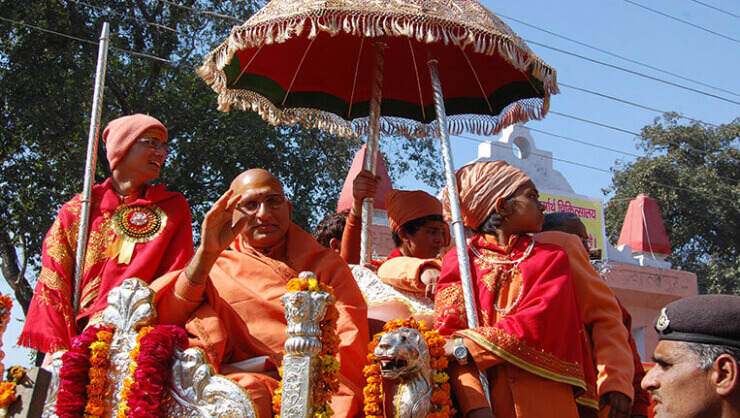
Akharas are ancient monastic orders of Hindu ascetics that train sadhus, preserve scriptural and yogic traditions, and lead the principal rituals of the Kumbh Mela. The Akhil Bharatiya Akhara Parishad, the apex council, recognizes 13 akharas across four traditions: Shaiva Sanyasi, Vaishnava Bairagi, Udasin, and Nirmal.
The word akhara originally meant a wrestling arena, and the martial connotation is no accident. For centuries, several akharas maintained warrior-monk traditions, protecting temples, pilgrims, and trade routes during periods of invasion and upheaval. Today their role is spiritual and institutional: they run monasteries and educational centers year-round, and at every Kumbh their camps become the festival’s beating heart, hosting discourses, initiations, and community kitchens.
Precedence matters deeply here. The order in which akharas proceed to the river on the main bathing dates is fixed by centuries of negotiation and is one of the most closely watched protocols of the entire festival.
The Four Akhara Traditions
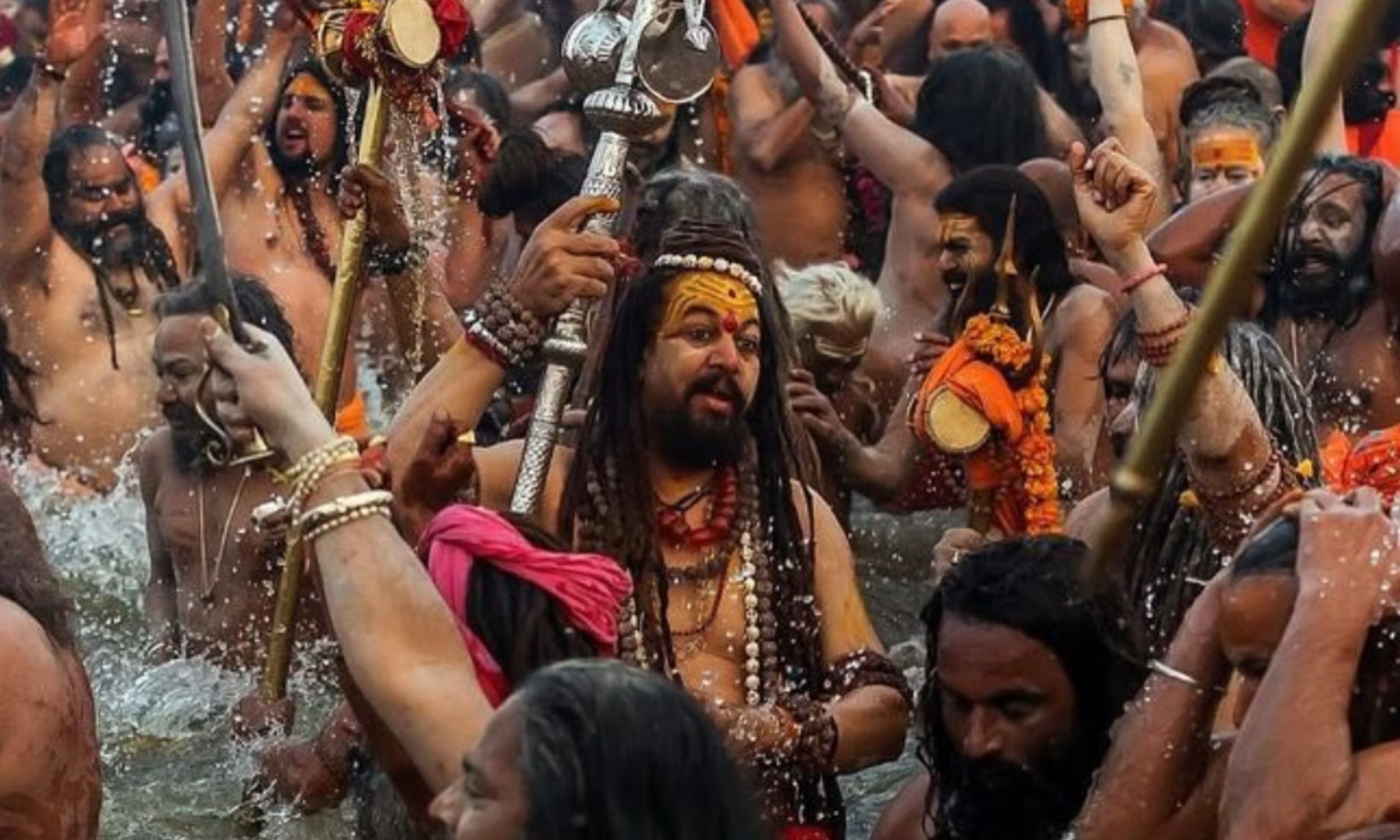
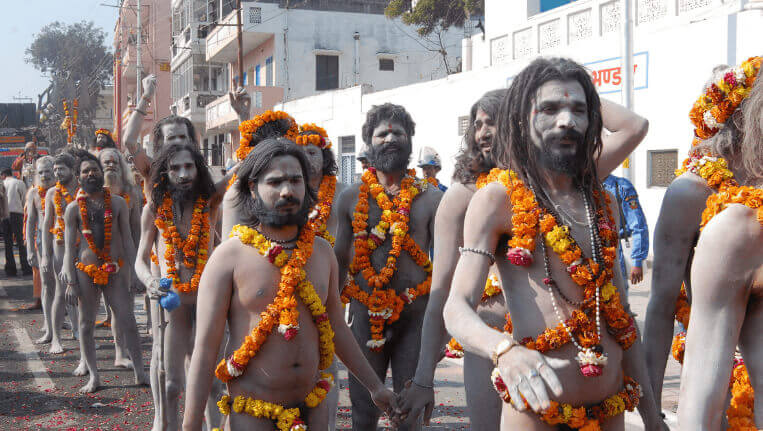
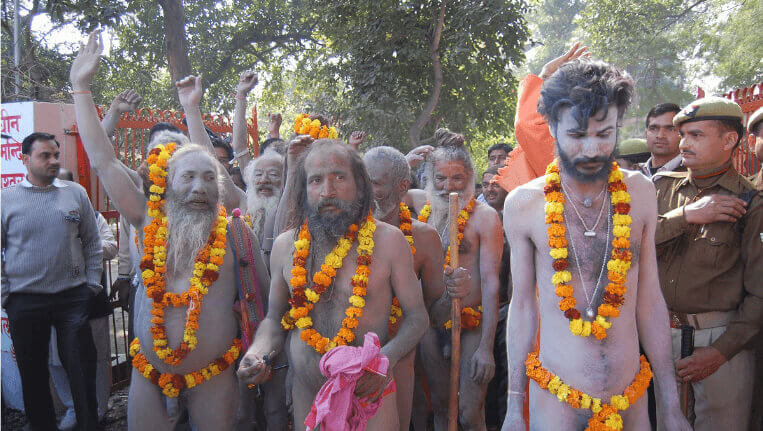
Shaiva Sanyasi akharas (seven of the thirteen) follow the Dashanami monastic lineage associated with Adi Shankaracharya. They are home to the Naga Sadhus, the ash-smeared, often unclothed ascetics whose river charge on Amrit Snan mornings is the festival’s most iconic image.
Vaishnava Bairagi akharas (three) belong to the Ramanandi tradition and center their devotion on Lord Rama, Lord Krishna, and Hanuman. Their members are called bairagis, and their camps are known for kirtan and scriptural recitation.
Udasin akharas (two) follow the teachings of Sri Chand, son of Guru Nanak, blending Hindu ascetic practice with elements of early Sikh thought. Their emphasis falls on meditation and detachment.
Nirmal Akhara (one) emerged from the Sikh scholarly tradition and is respected for Sanskrit learning, philosophy, and interfaith scholarship.
The 13 Recognized Akharas
| Akhara |
Tradition |
Principal Deity |
Known For |
| Shri Panch Dashnam Juna |
Shaiva |
Lord Dattatreya |
Largest akhara, thousands of Naga Sadhus |
| Shri Panchayati Niranjani |
Shaiva |
Lord Kartikeya |
Scholarly saints, many with academic degrees |
| Shri Panchayati Mahanirvani |
Shaiva |
Kapil Muni |
One of the oldest orders, yogic tradition |
| Shri Panch Atal |
Shaiva |
Lord Ganesha |
Ancient Dashanami customs |
| Shri Panch Dashnam Avahan |
Shaiva |
Lord Dattatreya |
Naga initiation traditions |
| Shri Panch Agni |
Shaiva |
Goddess Gayatri |
Celibate Brahmin brahmacharis, Vedic fire rites |
| Shri Taponidhi Anand |
Shaiva |
Lord Surya |
Meditation and tapasya |
| Shri Digambar Ani |
Vaishnava |
Lord Rama and Lord Krishna |
Largest Vaishnava procession |
| Shri Nirvani Ani |
Vaishnava |
Lord Hanuman |
Wrestling and physical culture heritage |
| Shri Nirmohi Ani |
Vaishnava |
Lord Hanuman |
Historic role in the Ayodhya tradition |
| Shri Panchayati Bada Udasin |
Udasin |
Teachings of Sri Chand |
Meditation and monastic education |
| Shri Panchayati Naya Udasin |
Udasin |
Teachings of Sri Chand |
Community service |
| Shri Nirmal Panchayati |
Nirmal |
Scriptural learning |
Sanskrit scholarship, interfaith study |
A note on the newest presence at the Kumbh: the Kinnar Akhara, a monastic order of transgender sadhus founded in 2015, has participated prominently since the 2019 Prayagraj Kumbh in association with Juna Akhara. Its rise is one of the most discussed developments in the modern history of the institution.
From Shahi Snan to Amrit Snan
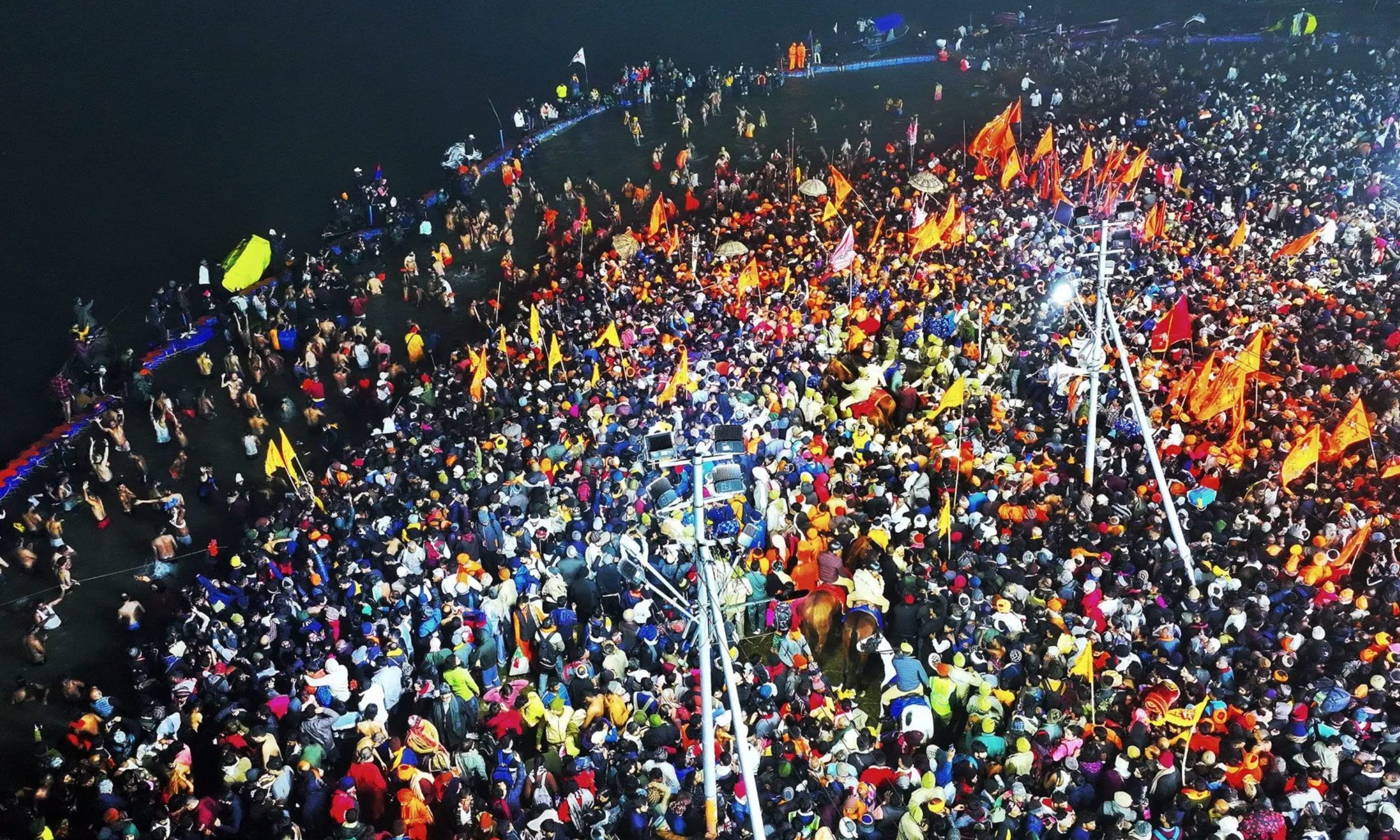
The ceremonial royal bath, known for centuries as the Shahi Snan, was formally renamed the Amrit Snan at the 2025 Maha Kumbh, after the akharas and the Uttar Pradesh government moved to replace Mughal-era Persian terminology with Sanskrit names tied to the festival’s own nectar legend. The grand camp-entry processions, earlier called Peshwai, are now termed Chhavni Pravesh. Nashik’s upcoming Simhastha has confirmed it will use the new names as well.
The ritual itself is unchanged and remains the festival’s crescendo. On the main bathing dates, fixed by planetary positions, the akharas proceed to the river in strict order of precedence, with Naga Sadhus traditionally leading the charge into the water before all others. Conch shells, drums, decorated chariots, and saffron banners turn the riverbank into a spectacle witnessed by millions. Only after the akharas complete their bath do ordinary pilgrims enter the water at the designated ghats.
From Shahi Snan to Amrit Snan
The ceremonial royal bath, known for centuries as the Shahi Snan, was formally renamed the Amrit Snan at the 2025 Maha Kumbh, after the akharas and the Uttar Pradesh government moved to replace Mughal-era Persian terminology with Sanskrit names tied to the festival’s own nectar legend. The grand camp-entry processions, earlier called Peshwai, are now termed Chhavni Pravesh. Nashik’s upcoming Simhastha has confirmed it will use the new names as well.
The ritual itself is unchanged and remains the festival’s crescendo. On the main bathing dates, fixed by planetary positions, the akharas proceed to the river in strict order of precedence, with Naga Sadhus traditionally leading the charge into the water before all others. Conch shells, drums, decorated chariots, and saffron banners turn the riverbank into a spectacle witnessed by millions. Only after the akharas complete their bath do ordinary pilgrims enter the water at the designated ghats.
=================
Upcoming Kumbh Calendar: 2026 to 2028
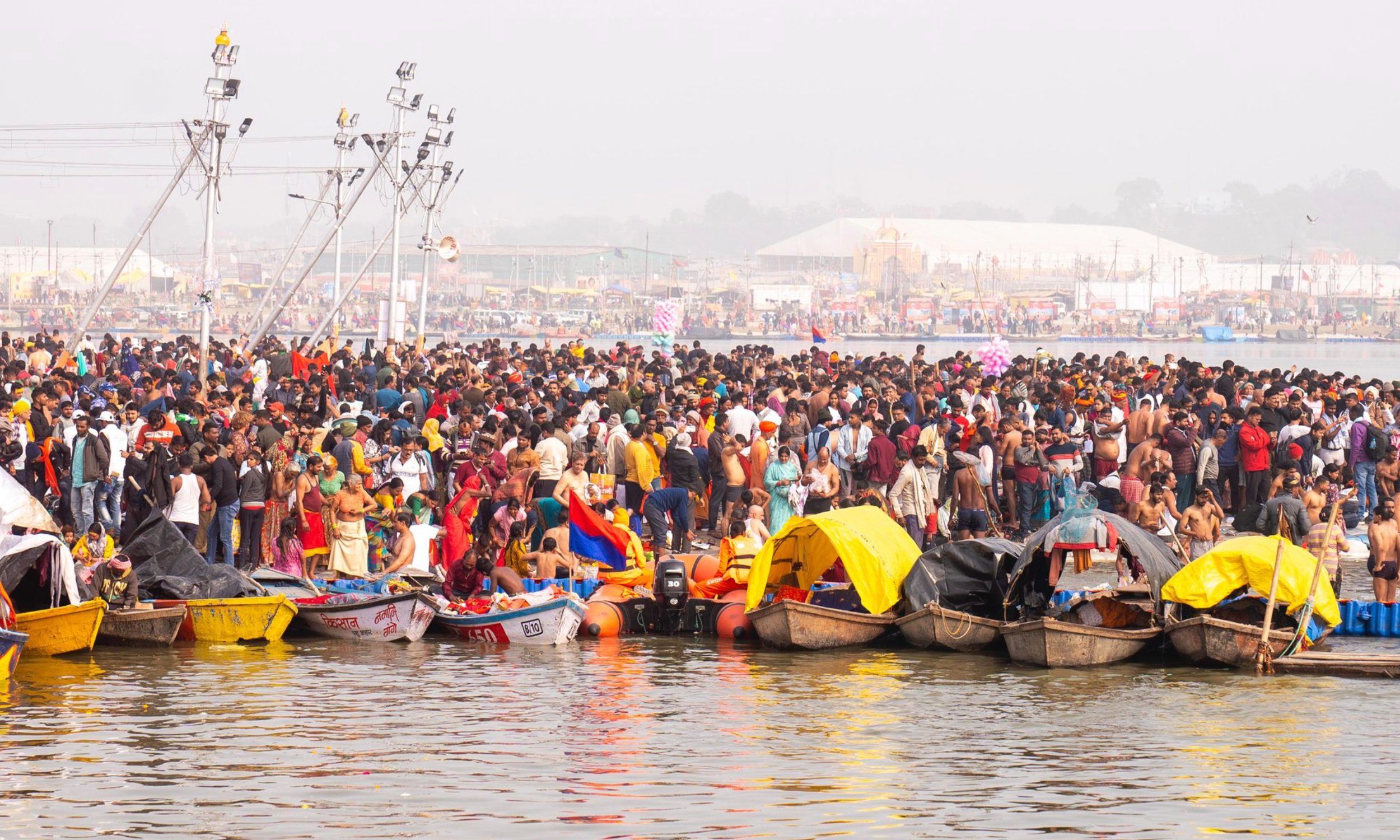
This is the busiest stretch of the Kumbh cycle in over a decade, with three editions arriving back to back.
| Edition |
Location |
When |
Status |
| Simhastha Kumbh Mela |
Nashik-Trimbakeshwar, Maharashtra |
Flag hoisting on October 31, 2026; principal Amrit Snan dates fall in mid-2027 |
Next up |
| Ardh Kumbh Mela |
Haridwar, Uttarakhand |
2027 |
Preparations underway |
| Simhastha |
Ujjain, Madhya Pradesh |
March 27 to May 27, 2028 |
Dates announced |
The Nashik-Trimbakeshwar Simhastha is the one to plan for first. It is the only Kumbh held on the Godavari, it splits its rituals between Ramkund in Nashik city and the Kushavarta Kund at Trimbakeshwar, and it is expected to draw crowds informed by the record-shattering turnout at Prayagraj in 2025. For bathing dates, accommodation, and tour planning, see our dedicated Nashik Kumbh Mela guide and the wider Kumbh Mela section.
Planning Your Kumbh Visit
- Fix your dates around the Amrit Snan days first; they deliver the full spectacle but also the heaviest crowds, so decide early which experience you want.
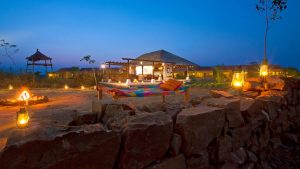
- Book accommodation four to six months ahead. Tent cities at the mela grounds range from dormitory camps to luxury Swiss cottages, and the best ones sell out first.
- Reach early on bathing days. Road closures begin before dawn, and the last few kilometers are almost always on foot.
- Ask before photographing sadhus, especially inside akhara camps. Most saints oblige; barging in with a lens does not go down well.
- Keep an offline map and note your sector number. Mela grounds are organized into numbered sectors, and losing your bearings in a crowd of millions is easier than you think.
- TMI Pro Tip: attend a Chhavni Pravesh procession in the days before the main snan. You see the akharas at full ceremonial strength with a fraction of the bathing-day crowd.
Frequently Asked Questions
When is the next Kumbh Mela in India?
The next edition is the Simhastha Kumbh Mela at Nashik-Trimbakeshwar in Maharashtra, which opens with the traditional flag hoisting on October 31, 2026, with the principal bathing dates following in 2027. It is followed by the Haridwar Ardh Kumbh in 2027 and the Ujjain Simhastha from March 27 to May 27, 2028.
What is the difference between Shahi Snan and Amrit Snan?
They are the same ritual under two names. The ceremonial bath of the akharas was renamed from Shahi Snan to Amrit Snan at the 2025 Maha Kumbh, replacing the Persian-origin term with a Sanskrit name drawn from the festival's nectar legend.
How many akharas are there?
The Akhil Bharatiya Akhara Parishad recognizes 13 akharas: seven Shaiva, three Vaishnava Bairagi, two Udasin, and one Nirmal. The Kinnar Akhara, founded in 2015, participates in association with Juna Akhara.
Why do Naga Sadhus bathe first?
Tradition grants the Naga Sadhus of the Shaiva akharas the right of first entry into the river on Amrit Snan days, an honor rooted in their historical role as warrior-protectors of the faith. The full bathing order of the akharas follows a fixed protocol of precedence.
Can foreign tourists attend the Kumbh Mela?
Yes. The Kumbh is open to everyone, and recent editions have drawn large international crowds. Non-Hindu visitors can watch the processions, explore akhara camps, attend discourses, and take a dip at the public ghats. Modest dress and basic courtesy at religious ceremonies are all that is asked.
The Kumbh Mela endures because it is both a spectacle and a system: a legend of spilled nectar, a 1,200-year-old monastic order structure, and a rotating calendar that turns four river cities into the largest gatherings humanity stages. With Nashik-Trimbakeshwar opening the next cycle in October 2026, there has rarely been a better moment to plan your first Kumbh. Start with our Nashik Kumbh Mela guide, or talk to our travel experts to build a Kumbh itinerary around the Amrit Snan dates.
About the author
From the Lake District, Nainital, Nidhi Singh is a travel writer whose love for mountains can be seen in her write ups. Talk about solo travelling, indulging in adventure activities, binging on good food, planning budget trips or the Aurora Borealis and you will get all her attention. It is the wanderlust that keeps her going and if at all she could get one wish granted she would love to live a life less ordinary. Follow her on Twitter, Facebook & Instagram.


 +91-9212777225
 Plan Your trip