Allahabad
( Sightseeing )
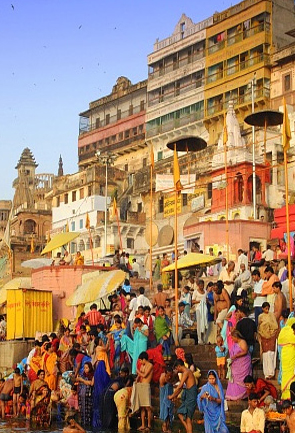
Sangam
: At this point the shallow, muddy Ganges meets the green
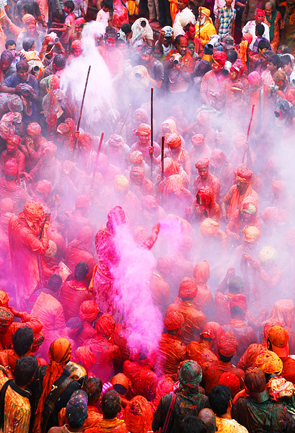
River Yamuna. During the month of Magha (mid-January to mid-February)
pilgrims come to bathe at this holy confluence for the festival
known as the Magha Mela. Astrologers calculate the holiest time
to enter the water and draw up a 'Holy Dip Schedule'. The most
propitious time of all happeens only every 12 years when the massive
Kumbh Mela take place. There's a half-mela (Ardh Mela) every six
years.
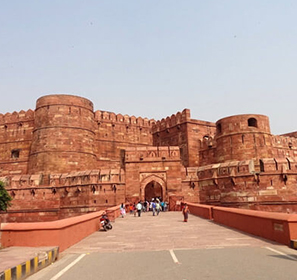
Fort
: Built by Akbar in 1583, The fort stands on the northern
bank of the Yamuna, near the confluence with the Ganges. It has
massive walls and three gateways flanked by high towers. It is
most impressive when viewed from the river. Near the fort is an
Asoka pillar dating from 232 BC. Its inscription eulogises the
victories of Samudragupta and contain the usual edicts.
Anand Bhavan : This shrine to the Nehru family and it is
the best kept museum in the country, indicating the high regard
in which this famous dynasty is held in India. The family home
was donated to the Indian government by Indira Gandhi in 1970.
The exhibits in the house show this well-off family became involved
in the struggle for Indian independence and produced four generations
of astute politicians - Motilal Nehru, Jawaharlal Nehru Indira
Gandhi and Rajiv Gandhi. You can see Nehru's bedroom and study,
the room where Mahatma Gandhi's used to stay during his visits
and Indira Gandhi's room, as well as many personal item connected
with the Nehru family. You can also see the extensive bookshelves
(full of Marx and Lenin) indicate where India's post-Independence
faith in socialism sprang from. In the manicured garden is an
outbuilding housing a pictorial display of Jawaharlal Nehru's
life. Next door is Swaraj Bhawan, where Motilal Nehru lived until
1930 and where Indira Gandhi was born. It houses a museum featuring
dimly lit rooms and an audio-visual presentation 'The Story of
Independence'.
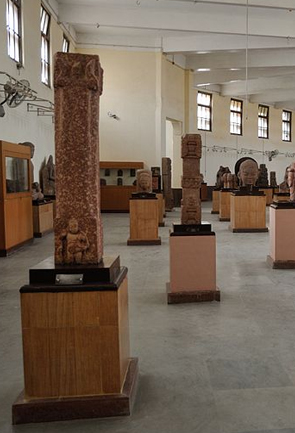
Allahabad Museum : It has galleries devoted to local archaeological
finds, including terracotta figurines from Kausambi. It also has
natural history exhibits, an art gallery and a large room of artefacts
donated by the Nehru family. In the latter are all sorts of wonderful
and ridiculous items presented to Nehru while he was prime minister.
Minto
Park : Near the Yamuna, is where Lord Canning read out the
declaration by which Britain took over controle of India from
the East India Company in 1858.
Khusru
Bagh : Close to the Allahabad railway station is Khusru Bagh,
a scrappy walled garden which contains the tomb of Prince Khusru,
son of Jehangir, who sought to wrest power from his father and
was executed by his brother Shah Jahan. Nearby is the unoccupied
tomb intended for his sister and the tomb of his Rajput mother,
who was said to have poisoned herself in despair at Khushru's
oppositon to his father.
All
Saints Cathedral : Dedicated to the memory of people of all
ages and places who have kept their faith in God. The All Saints
Cathedral is one of the finest cathedrals in this part of the
country. Designed more than a century ago, by Sir William Emerson,
the eminent architect who also designed the Victoria Memorial,
Calcutta, the Cathedral has some truly exceptional stained glass
murals. It is also called Patthar Girja.