Sarnath
: About ten kms from the Varanasi, is the place where lord
Buddha after enlightenment gave his first sermon or as the Buddhist
say set the 'w
heel
of dharma' or law rolling. Today Sarnath is considered as one
of the richest place to have antiques since the Ashoka period
to the 12th century. The Dharmarajika stupa was also built by
Ashoka and it was surmounted by the pillar. This pillar with four
lions today forms the national emblem of India. Sarnath has many
more ruins of monasteries and stupas.The spot at which the stupa
stands is believed to be the place from where Buddha gave his
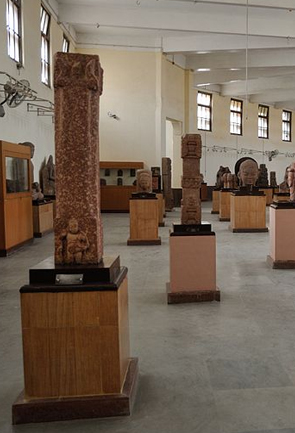
forts sermon. Sarnath has an extremely rich collection of Buddhist
statues. These sculptures are the images of Buddha and Bodhisatva.
These images are kept in the Archaeological museum of Sarnath.
Chunar
Fort : The northern extreme of the Kaimur hills affords a
impressive view of the invincible sandstone battlements of Chunar,
that overlook a bend in the ganges. Vikramaditya of Ujjain is
said to be its earliest occupant, way back in 56 B.C. chunar sandstone
has been used for the past many centuries, most famously in the
making of the the Ashokan Pillar, which was highly polished for
sheen and longevity
Jaunpur
: This bustling town 58km north-west of Varanasi sees few
travellers but is of interest to architectural historians for
its moques, which are built in a unique style that is part Islamic
and part Hindu and Jain. Founded by Feroz Shah Tughlaq in 1360
on an ancient site, Jaunpur became the capital of the independent
Muslim Sharqui kingdom. The most impressive mosques were constructed
between 1394 and 1478. They were built on ruins of Hindu, Buddhist
and Jain temples and shrines, and are notable for their odd mixture
of architectural styles, their two storey arcades and large gateways,
and their unusual minarets. Jaunpur was sacked by Sikandar Lodi,
who left only the mosques undamaged. The Mughals took over in
1530. The 16th century stone Akbari Bridge, which crosses to the
northern part of town where most of the mosques and Jaunpur Junction
railway station are located. The modest but well-maintained Jaunpur
Fort, built by Feroz Shah in 1360, overlooks the Gomti River.
Continue 500m north of here and you come to the Atala Masjid,
built in 1408 on the site of a Hindu temple dedicated to Atala
Devi. Another 500m north-west is the largest and most impressive
of the mosques, the Jama Masjid, built between 1438 and 1478.
Other places to see include the Jhanjhri Masjid, the tombs of
the Sharqul sultans, the Char Ungil Masjid and the Lal Darwaza
Masjid.
Vindhyachal : There are many Shaktipeeths in India. These
are the places where the Goddess of power is said to be residing
and people worship her viz- Goddess Durga. Vindhyachal is one
of such peeths or abode of Shakti. The place is 90 kms from Varanasi.
The temples of Vindhyavasini Devi, Asthbhuja and Kalikhoh are
a must visit here.