|
Mathura
( Excursions )
1. General Information
2. Excursions
3. SightSeeing
4. Travel Information
Vrindavan
Vrindavan, just 15 km from Mathura, is another major place of pilgrimage.
It is noted for its numerous temples - both old and modern. The
name Vrindavan evokes the playfulness and lovable characteristics
of Shri Krishna. This is where krishna indulged in adolescent pranks
like flirting with gopis in the forests and stealing their clothes
while they bathed in the river. Little now remains of the legendary
forests and the river has meandered away from most of Vrindavan's
bathing ghats, but this town still attracts huge numbers of pilgrims.
Vrindavan today, is noted for its numerous temples. The bulky red
sandstone Govind Dev Temple is the most impressive building in Virndavan.
The name means Divine Cowherd-in other words Krishna. Architecturall
it's one of the most advanced Hindu temple in northern India and
was built in 1590 by Raja Man Singh of Amber. There are many other
temples in Vrindavan, including the popular Bankey Bihari, Radha
Ballabh (built in 1626), Madan Mohan, the 10 storey Pagal Baba,
and the Nidhi Van.
Gokul
Gokul 16 km. The town where infant Krishna was brought up in secrecy
and home of his foster mother. Yashoda Maiya. The most important
temple is Gokul Nathji. Gokul is particularly known for the festivals
of Janmashtami. Annakut and Trinvat Mela, which are celebrated here
in a distinct style
Barsana
47 km. Birth place of Radha. consort of Lord Krishna, it was previously
known as Brahmsarin. The four prominent hills are adorned by temples
in honour of Radha. called Ladliji. A small lake, Prem Sarovar.
is believed to be the first meeting place of Lord Krishna and Radha.
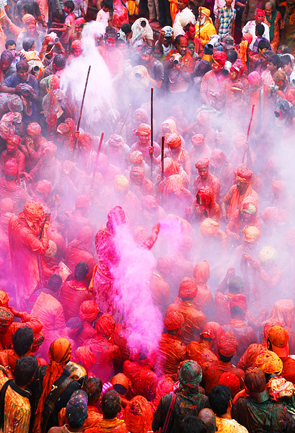
Barsana is famous for its holi celebrations, called Lath-maar holi,
enacted between the residents of Nandgaon and Barsana
Govardhan
Govardhan is situated 26 km west of Mathura on the state highway
to Deeg. A famous place of Hindu pilgrimage, Govardhan is located
on a narrow sandstone hill known as Giriraj which is about 8 km
in length. The young Lord Krishna is said to have held Giriraj up
on the tip of a finger for 7 days and nights to shield the people
of Braj from the deluge of rain sent down by Lord Indra. Govardhan
is set along the edge of a large masonry tank known as the Mansi
Ganga, which is believed to have been brought into existence by
the operation of the divine will. Its enclosures were built by Raja
Bhagwan Das of Amer in 1637 and embellished by Raja Man Singh, who
built a long flight of steps leading up, from the end of the tank.
Close by is the famous red sandstone temple of Haridev and the Kusum
Sarovar with exquisitely carved chhatris - the cenotaphs of the
members of the royal family of Bharatpur, who perished whilst fighting
against the British in 1825. Towards the south is the beautiful
chhatri of Raja Surajmal of Bharatpur. Fine frescoes - illuminating
the life of Surajmal, vividly depict darbar and hunting scenes,
royal processions and wars.
Nandgoan
Nadgaon lies 8.5 km north of Barsana on the metalled road to Mathura
(56 km). According to tradition, it was the home of Shri Krishna's
foster father, Nand. On the top of the hill is the spacious temple
of Nand Rai, built by the Jat ruler Roop Singh. The other temples
here are dedicated to Narsingha, Gophinath, Nritya Gopal, Girdhari,
Nand Nandan and Yashoda Nandan which is located half way up the
hill. A little beyond is the Pan Sarovar, a large lake with masonry
ghats along its sides. Legend has it, that this was the place where
Shri Krishna used to take his cows for water. Not far away is the
Kadamb grove called Udhoji - Ka- Kyar.
Mahavan : 18 km. On the left bank of the Yamuna river, it
is associated with early childhood of Lord Krishna Amongst its places
of interest are temples of Mathura Nathji and Assi Khamba. or eighty
Pillars, which follows the contemporary style of Buddhist architecture.
Mahavan is connected by regular bus services with Mathura.
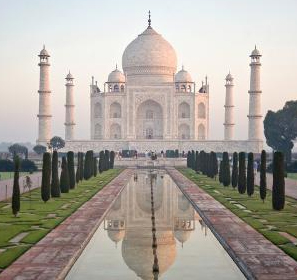
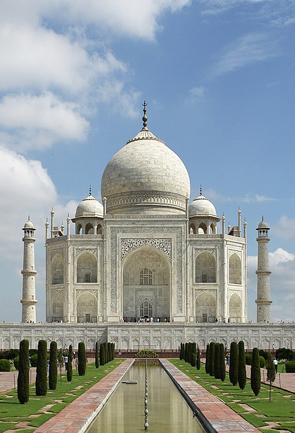
Agra : Once the capital of the Mughals and the city of the
Taj Mahal, Agra is just 50 km from Mathura. The Taj Mahal, a symphony
in white marble, a tribute to eternal love, was built by the Emperor
Shah Jahan in memory of his wife Mumtaz Mahal. Other splendid examples
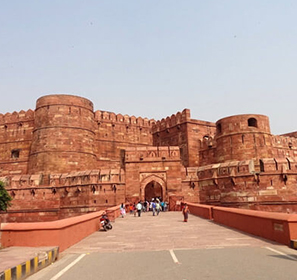
of Mughal architecture in Agra include the Agra Fort with its exquisite
Pearl Mosque, palaces and darbar halls; the imposing mausoleum of
Emperor Akbar at Sikandra, built in an amalgam of Hindu and Muslim
architectural styles and Itmad-ud-Daula's tomb, embellished with
coloured stone inlay and filigree marble screens
Fatehpur Sikari : (60 km from Mathura) The wonderful city
of Fatehpur Sikri was built by the Emperor Akbar. The marvellously
preserved fort, palaces and the tomb of Salim Chishti with its delicate
lacy marble screens are worth seeing.
|