Agra
(
Sightseeing )
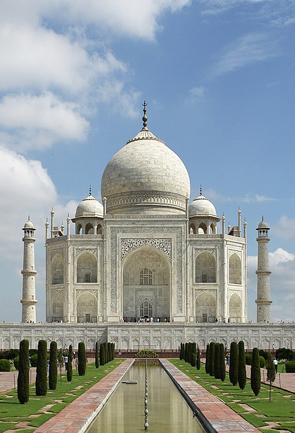
Taj
Mahal
There
is no other monument in the world, which can match the beauty
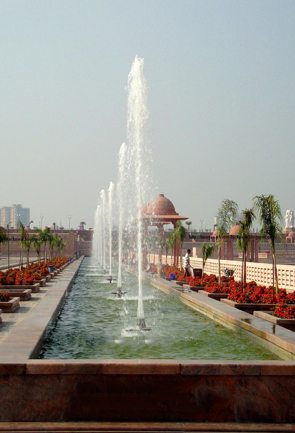
and grandeur of the Taj Mahal. Set amongst the
serene ambience of a well laid out garden the massive marble structure
of the Taj is awe-inspiring. The Taj Mahal was
built in the 17th century by Shahjahan- the fifth Mughal emperor,
in memory of his beloved wife, Mumtaz Mahal. Shahjahan loved his
wife so much that after she passed away in 1631, he decided to
immortalize their love in the form of the Taj Mahal.
It is more than 350 years since Taj Mahal was
built, but it has not lost its romantic aura, which attracts millions
of visitors towards it....For
More Information Click Here...
Agra Fort
Agra
might be world famous for the Taj Mahal, built by the Mughal emperor
Shahjahan in memory of his beloved wife. However, it is also famous
for the Agra Fort, which is a veritable treasure trove of the
Mughal architectural tradition. The various buildings within this
sprawling fort complex represent the assimilation of different
cultures, which was the mark of the Mughal period....For
More Information Click Here...
Itmad-ud-Daulahs Tomb
Itmad-ud-Daulahs
tomb is a highly ornate edifice, which is looked upon as an imminent
precursor of the Taj Mahal as far as elaborate carvings and inlay
work are concerned. The tomb marks a significant departure from
the tombs of the Mughal dynasty built before its construction....For
More Information Click Here...
Jami
Masjid : Across the railway tracks from the Delhi Gate of
Agra Fort, the Jami Masjid was built by Shah Jahan in 1648. An
inscription over the main gate indicates that it was built in
the name of Jahanara, Shah Jahan's daughter, who was eventually
imprisoned with Shah Jahan by Aurangzeb.
Chini Ka Rauza : It is the only building in India to be
decorated exclusively with glazed tile work. The tiny mausoleum
overlooking the River Yamuna was the tomb of Afzal Khan, a minister
in the court of Shah Jahan.
Rambagh : Previously known as Araambagh, is the probably
amongst one of the first Mughal monuments of India. Built by Emperor
Babar in 1526 for his recreation, its architecture shows Afghani
influences.
Jahangir Mahal : The biggest private residence in the Fort
is the Jahangir Mahal, the Palace of Emperor Jahangir. It is an
excellent blend of Hindu and Mughal architecture. The palace has
a hall which is called Jodhabai's dressing Room. Jodhabai was
Jahangir's Hindu mother. Its desigen and layout is essentially
Hindu. Later the palace was used by Jahangir's Dressing Room.
Jodhabai was Jahangir's Hindu mother. Its design and layout is
essentially Hindu. Later the palace was used by Jahangir's queen
Noorjahan,the Light of the World. Jahangir was very found of wine
as well as his queen whom he adored even more. The love of wine
interfered in the day do day running of the Government.To help
him out in administering imperial justice, Noorjahan sat with
her husband to advise him in taking decisions. She was an iron
lady and never tolerated opposition.Those who came in her way
ended mysteriously in the yamuna river.
Chisti's Tomb : The Gateway buildings leads to the Friday
mosque or the Jami Masjid. It is believed to be a copy of the
main mosque at Meca. Nearby is the small white marble tomb of
Sheikh Salim Chisti. It is ornamented with latticed screens and
serpentine brackets. Shahjahan added exquiatie pieta dura work
later as a mark of respect for the saint. The tomb was built over
the exact spot where the holy man sat in meditation during his
lifetime. Even, today, childess couples come to the tomb to seek
the blessings of Sheikh Salim Chisti.