| Safdarjang's
Tomb
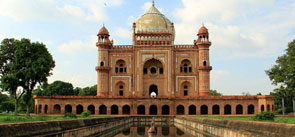
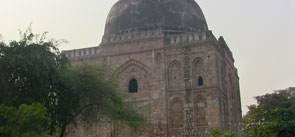
This marble domed mousoleum was the last famous Mughal monument
built in Delhi in 1753-54, by the son of the second Nawab
of Oudh. It is a son's tribute to his father, the Wazir of
Mughal Emperor Muhammad Shah. ...
more ... |
Purana
Quila
Purana
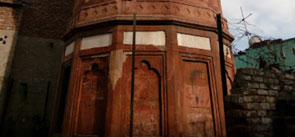
Quila, the old fort.The fort was built by the great Afghan
ruler Sher Shah Suri in the 16th century A.D. aptly on the
banks of the river Yamuna. Now Boating facilites are available
here. A Sound and Light Show depicting 5000 years of Delhis
past is held by Delhi Tourism every evening both in Hindi
and English. ... more
...
|
|
Lodi
Tombs
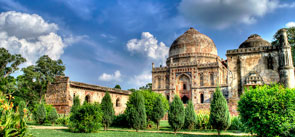
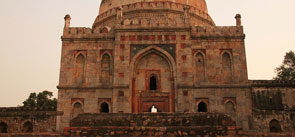
Evidence of the sixth city, said to have been built by the
Sayyid and Lodi dynasties is found only in the tombs and mosques
in the famous Lodi Gardens, which is a favourite point for
early morning walkers from the posh south Delhi colonies.
|
Humayun's
Tomb
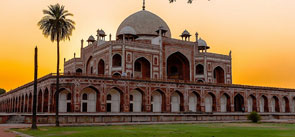
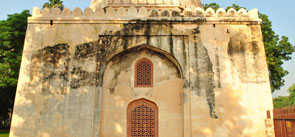
The Tomb was built by Humayun's widowed Queen Haji Begum,
in the 16th century AD. Architecturally the forerunner of
the Taj Mahal, it stands in Nizamuddin which shows the Mughal
architecture at its best ...
more ... |
| Red
Fort
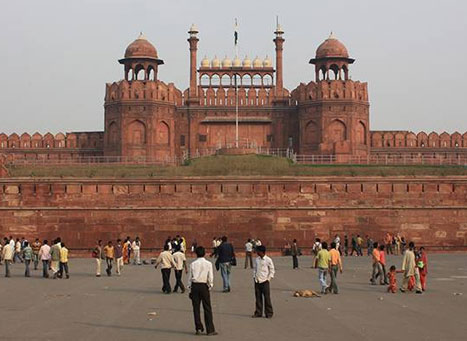
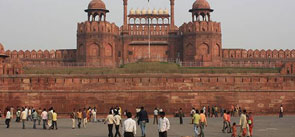
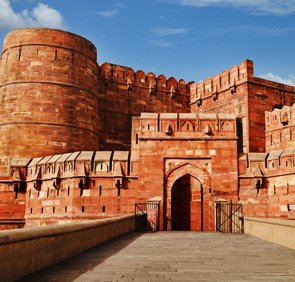
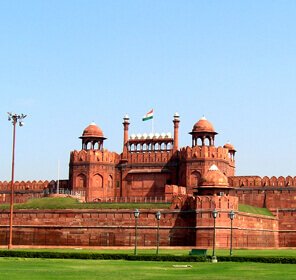
Delhi's most magnificent monument, the Red Fort, was built
by Emperor Shah Jehan, in 1638 A.D. Enclosed in this glorious
Fort is Diwan-i-am, the hall meant for public audiences; Diwan-i-Khas,
where private audiences were granted; Rang Mahal, the water
cooled apartment of the royal ladies; the Pearl Mosque, a
lovely, ornate dream in white marble.The Prime Minister of
India addresses the nation from this age old Fort, on the
auspicious day of Indias Independance. ...
more ...
|
Qutub
Minar
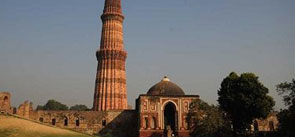
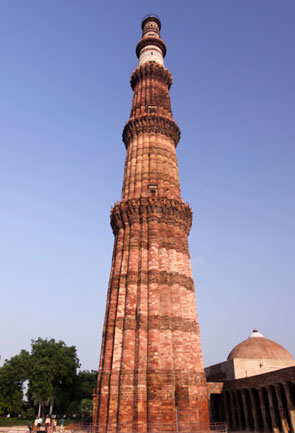
The Qutub Minar made of red sandstone rising to the height
of 72.5mts is an architectural marvel of the 13th century.
Also a must is the visit to Ashoka Pillar dating back to the
5th century. Though made of iron it has with stood the weathers
of time.A very interesting belief is assigned to this pillar-
Stand with your back to the pillar, and if you can hold your
hands around it, then make a wish and it will surely come
true. Try it! ... more
... |
| India
Gate
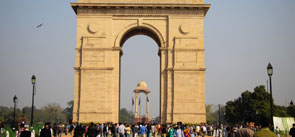
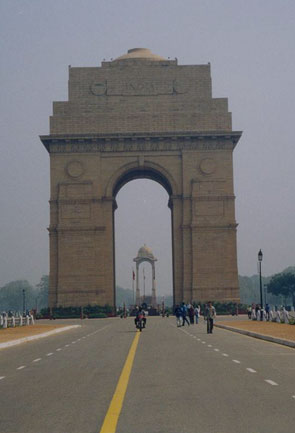
India Gate is a majestic high arch, 42 meters high, built
as a memorial to the Indian soldiers killed in the World War
I. Beneath it burns an eternal flame. From the base of the
arch one can get a good view of the Rashtrapati Bhavan. ...
more ... |
The
Bahai's House of Worship
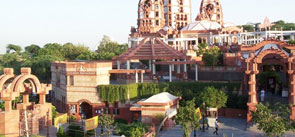
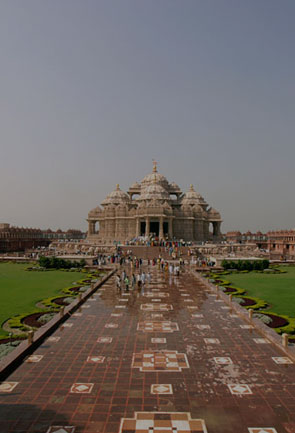
This distinctive lotus shaped marvel in marble is surrounded
by a landscaped garden and is a symbol of peace.
|
| Ferozshah
Kotla
It is the site of the city of Ferozabad built in the 14th
century by Emperor Ferozshah Tughlaq. The famous 14-meter
highly polished sandstone Ashoka Pillar carrying Emperor Ashoka's
message of peace stands here. |
Parliament
House
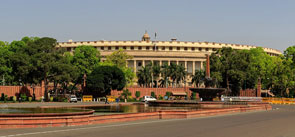
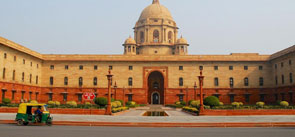
This circular shaped colonnaded building houses the two Houses
of Parliament- the Lok Sabha and the Rajya Sabha. Its domed
Central Hall is 90 feet in diameter.
|
| Chandni
Chowk
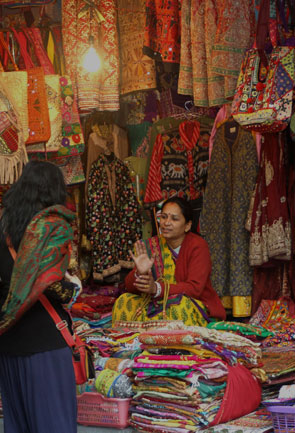
It is the nerve centre of commercial activity. The narrow
lanes have kept alive the traditional workmanship which makes
Delhi famous. A market place right from the times of Mugals,
this market still hosts the decendants of royal chefs as also
the famous Chudiwali gali and the parathe wali gali. Spend
the most enjoyable evening in the Chandni Chowk. |
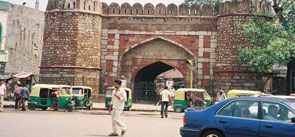
Shahjahanabad
The most splendid of Delhi's old cities, built by Emperor
Shah Jehan, is now a part of old Delhi. It was surrounded
by a wall 8.8 km in circumference with 14 massive gates; Five
of these still stand: Delhi Gate, Kashmere Gate, Turkman Gate,
Ajmeri Gate and Lahori Gate.
Top |
|
Raj
Ghat
On
the banks of the river Yamuna is the Raj Ghat where the father
of the nation Mahatama Gandhi was cremated in 1948, soon after
India attained it freedom.
... more ... |
Sports
Stadia
Built
for the IX Asiad held in 1982, the best known are Jawaharlal
Nehru Stadium with a seating capacity of 75,000, Indira Gandhi
Indoor Stadium (capacity 25,000), Yamuna Velodrome (capacity
2,250), Talkatora Indoor Stadium (capacity 5000), Chattarsal
Stadium (capacity 10000) and Tughlaqabad Shooting Range for
the shooters.
|
|
Memorials
to National heroes
Gandhi Museum, near Raj Ghat, houses many belongings of Gandhiji
and photographs depicting his life story. The memorial at
Teen Murti House is a similar memorial to Jawaharlal Nehru.
The Indira Gandhi Memorial is at 1, Safdarjung Road where
she was assassinated. Netaji Memorial and INA museum at NH-10,
Tikri Kalan, Azad Hind Gram depicts the freedom struggle of
Netaji Subhash Chandra Bose and Indian National Army. A 20
minute audio visual films is also screened in the museum at
regular intervals. |
Jantar
Mantar
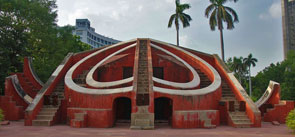
Jantar Mantar is an astronomical observatory with masonry
instruments, built in 1724 by Jai Singh, the mathematician
and astronomer king. The Samrat or Yantra supreme - the largest
structure shaped like a right-angled triangle, is actually
a huge sun-dial; the other five instruments are intended to
show the movements of the sun, moon, etc. ...
more ...
|
| Cultural
Centre
Mandi House is the nerve centre of cultural activity in Delhi.
Close to Connaught Place, the complex has a number of auditoria
and cultural institutions where regular performances take
place. The other main cultural centre is the Siri Fort auditorium
near the Asian Games Village. |
Lal
Kot
Lal Kot, a mosque built by Qutub-ud-din Aibak the first Muslim
ruler of Delhi, marks the foundation of the Qutub Minar. The
first city of Delhi, was built around 1060 AD by the Hindu
Tomar King Anangpal. This was enlarged by Prithviraj Chauhan,
the celebrated Rajput. Later, the first Muslim ruler of Delhi,
Qutab-ud-din-Aibak, built Quwatul-Islam mosque and laid the
foundation of the Qutab Minar. |