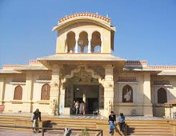
Overview
Ahmedabad, the commercial hub of Gujarat, is the seventh largest city in India. This business centre of India has attracted many trendsetters and tycoons from the highly competitive field, which makes the city highly evolving, innovative and investing. Beyond the Ahmedabad's commercial persona, the city also boasts a vibrant cultural scene featuring the eclectic influences of its Mughal roots, colonial connections and a pool of Gujarati people. Also, Ahmedabad has many tourism places to visit like Kankaria Lake, Sabarmati Ashram, Calico Museum of Textiles, Hathee Singh Temple, Sarkhej Roza, etc.
Legends say that the city owes its foundation to Sultan Ahmed Shah. While hunting Sultan Ahmed Shah encountered a warren of rabbits on the bank of the Sabarmati river. Astonishingly, the rabbits turned fiercely on his hounds and defended their territory. Considering this as an auspicious sign, Sultan Ahmed Shah built this area as his new capital and named it after himself- Ahmedabad. Till now, Ahmedabad has witnessed the rule of many rulers, starting from Sultanate rulers in 1487, Mughal rulers in 1573, Maratha rulers in 1753 and later was taken over by the East India Company in the year 1818. Until 1960, Gandhinagar was the capital of Gujarat.
A heady combination of combination of Western and Indian influence, Ahmedabad is a cultural melting point. There is a fascinating mixture of places when one goes on a holiday to Ahmedabad. Sabarmati River divides Ahmedabad into two parts - the old city and the new Ahmedabad.
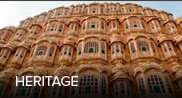
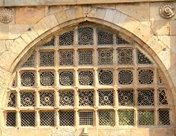
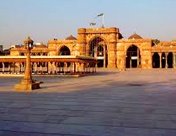
Old City lies on the west side of the river and is surrounded by a 10 km long wall. Maze of crowded bazaars, exquisitely carved temples, gigantic monuments, magnificent gates and sub terrain stepwell, all these things together makes the old city. Bhadra Fort, Jama Masjid, Ahmed Shah's Mosque, Siddi Saiyad's Mosque and Tomb of Ahmed Shah are amongst the highlighted attractions of the Old Ahmedabad. All the monuments, forts, temples, pols and havelis in the western part of Ahmedabad are the testimony to the aesthetic appeal that is inherent in Gujarat.
The colonial period saw the expansion of the city to the west side of Sabarmati, facilitated by the construction of Ellis Bridge in 1875 and later the relatively modern Nehru Bridge. Towards the west side of the magnificent Sabarmati River is the New Ahmedabad featuring some finest examples of the contemporary design architecture of Le Corbusier and the American architect, Louis Kahn. The new city on the west side is nearly all built in the last 50 years. This particular section of Ahmedabad features malls, wide roads, and several major universities.
Ahmedabad is majorly an important educational tourism destination of India. With educational centres like National Institute of Design and Indian Institute of Management, the colleges of the city nurture the best talent in business and art. Though not amongst the famous tourist attractions of Ahmedabad, these two prestigious organizations features great architecture, manicured gardens and well-stocked libraries. A lot of industries are also investing in Ahmedabad. The city is the largest business hub in Gujarat and s favourite amongst the famous business giants of India. Owing to its numerous textile mills, Ahmedabad is known to the world as the "Manchester of the East."
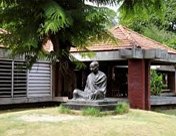
People say that Gujarat is the land of legends and Ahmedabad is no exception to this. Sabarmati Ashram, a peaceful ground located on the Sabarmati River's west bank, was the second home to the legendary leader Mahatma Gandhi. His personal articles like spinning wheel, spectacles amongst others are well preserved in Ashram. Sabarmati ashram was the nerve center of India's freedom movement as this was the place where Mahatma Gandhi planned many famous national movements like non-violent, civil disobedience and Swadeshi, which rocked the foundation of British Raj. Mahatma Gandhi's cottage, Hriday Kunj, has been maintained much as he left it and exhibits some of his personal belongings.
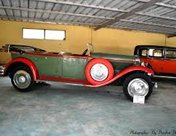
Both art collection and medieval castles, Ahmedabad has a sheer wealth of treasures. Museums like Kite Museum, Calico Museum of Textiles, Auto World Vintage Car Museum, Lalbhai Dalpatbhai Museum and Vechaar Utensils Museum can surprise anyone with its beauty and historical significance. People who want to know more about the unique and vibrant culture of the city, a tour to Ahmedabad museums can be a help. Ranging from textile museums to cars exhibitions to utensils display, here one can find many museums.
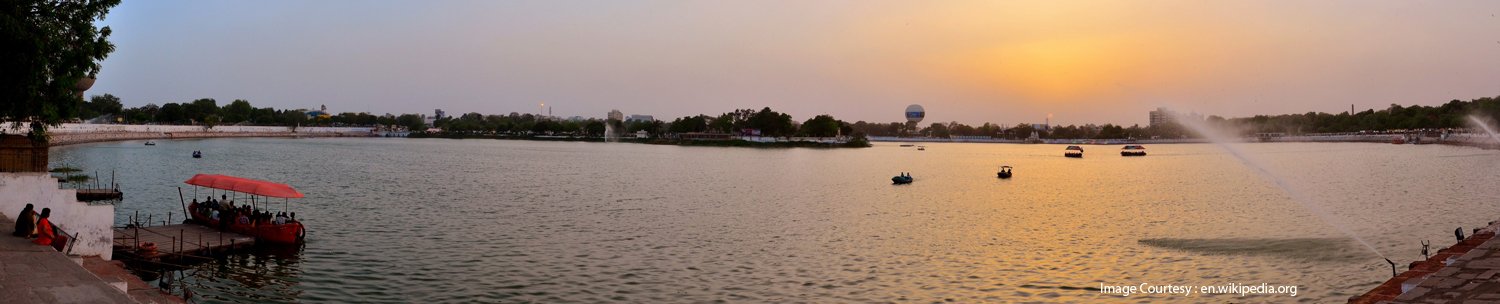
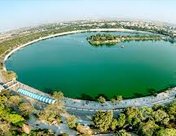
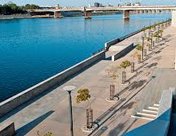
In Ahmedabad, enter into a different world at the Kankaria Lake or can let their hair down. Plenty of options are available in Ahmedabad for varied interest and age. Kankaria is one of the biggest lakes of Gujarat and stands out as a major tourist attraction of Ahmedabad. Plush multiplexes and malls of Ahmedabad are worth visiting. Cities of Gujarat come to live even at night. The law garden night market is a treat for all the people who want to show some unique traditional clothes. The rustic charm of the place can leave anyone spellbound. Ahmedabad is the best place in Gujarat to purchase tie-dye technique of bandhani. One can purchase bandhani saree, dupatta, pearl-work garments and much more from the shops of Ahmedabad. One place that deserves a special mention is Sabarmati riverfront where one can go for strolling. Also, Ahmedabad is the place to sample some scrumptious local food. Be sure to try the Gujarati thali, which usually comprises dal, rice, roti, kadhi and saag/sabji. Plus, Gujarati snacks are famous the world over.
The epicentre of art, shopping and dining destination, Ahmedabad wear many crowns. It's a place where tourists will be left awestruck by world class sights (lovely parks and striking architecture) and will experience the new face of modern India. From mosques to markets to theme parks, spas and galleries, Ahmedabad has a lot to offer. Brimming with history, culture and food, Ahmedabad has all the ingredients that make it a fun-filled holiday destination.
Popular Tourist Attractions in Ahmedabad
| Gandhi Museum |
Kankaria Lake |
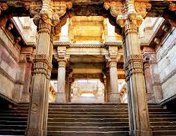
Adalaj StepWell |
Sabarmati Riverfront |
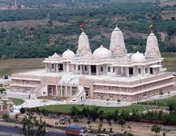
| Dada Bhagwan Temple |
Vintage Car Museum |
ISKCON Temple |
Jama Masjid |
Things to Do and See in Ahmedabad
- Try delicious Gujarati cuisine at a local food joint or restaurant. Pallet of different flavours, Gujarati thali is a must try.
- Go for a heritage walk to the old city and explore the beautiful monuments.
- Go for a morning walk at the Sabarmati riverfront.
- Ahmedabad offers unparalleled venues for shopping. From Ahmedabad, one can purchase bandhani sarees, suits, dupatta and mirror work materials.
- History lovers can make their way to Sabarmati Ashram.
Interesting Facts
- In 2010, Forbes magazine rated Ahmedabad as the fastest-growing city in India and listed it as third fastest-growing in the world after the Chinese cities of Chengdu and Chongqing.
- In 2012, Times of India ranked Ahmedabad as the best city to live in India.
- Ahmedabad is known as the "Manchester of East" because of its textile industries.
Where to Stay
In Ahmedabad, one can find hotels, resorts, homestays and hostels of every shape and size offering affordable and hassle-free stay every time. Many international companies and hotel operators like Hyatt, Carlson Rezidor Hotel Group, Holiday Inn and Crowne Plaza owns and operates hotels in Ahmedabad. Ahmedabad is the major commercial hub of Gujarat, therefore, here one can find some business hotels as well, which offers luxurious services at a very pocket-friendly prices. Also, tourists can book their stay at the airport hotels, which are located quite close to the airports. Homestays, hostels and hotels in Ahmedabad, are a good idea, especially for those who are new to the city and appreciate the reassuring presence of a host.
Hotels in Ahmedabad
- Crowne Plaza
- Four Points by Sheraton
- Novotel
- Lemon Tree Hotel
- Hyatt Ahmedabad
- Hotel Volga
- Regenta Ahmedabad
- Courtyard by Marriott
- Hotel Ambassador
- Holiday Inn Express
- The Fern
- Aloft
- Sarovar Portico
- Divans Bungalow
- Radha Krishna
- S M G Girls Hostel
- Navrangpura Ladies Hostel
- Shiv Hostel
- Hiramani Hostel