One
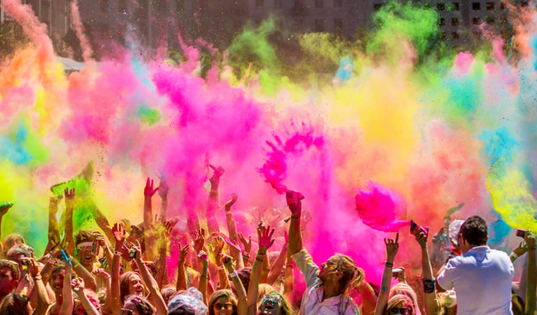
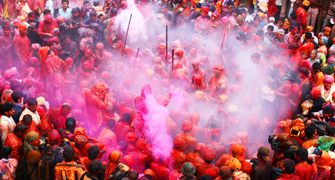
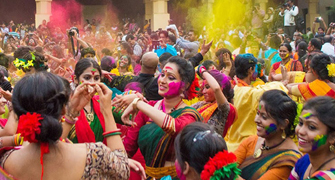
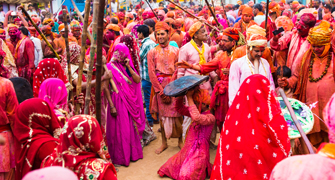
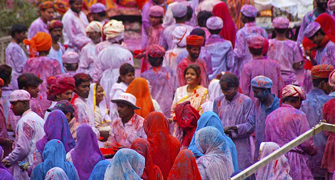
of the important festivals of North India, Holi - the festival
of colours, is celebrated with gaiety and exuberance. It marks
the end of winter and greets the advent of spring. According
to legend, Holika was a demoness who was vanquished by Prahlad,
her virtuous nephew. The heroic deed is commemorated with a
bonfire on the eve of Holi and the next morning, the young and
the old take part in boisterous singing, dancing and smearing
each other with Abir - coloured powder, or Gulal
spraying coloured water. This is a day to forgive and forget
and to repair ruptured relationships.
Holi is associated with the romantic frolicking
of the cowherd God Krishna. Many exquisite Mughal
miniatures depict the celebration of Holi with Radha
and Krishna in the leading roles. From folk music and
dance of Raas to the austerely classical Dhrupad style of vocal
music and the elegant Kathak, Holi continues to inspire artistes
in different genres.
There is a lot of informal feasting, some people
enjoy the heady effect of an almond flavoured milk drink Thandai
spiked with Cannabis. The sweetmeat popularly exchanged on this
occasion is Gujiya - a half moon pastry filled with condensed
milk, dried fruits and nuts.
In
Punjab Hola-Mohalla is celebrated the day after the Holi.
On this day the blue and saffron dressed Nihangs regale the
onlookers with a breathtaking display of fencing and archery,
acrobatic riding and mock combat.