History and Rituals behind the Celebration of Baisakhi Festival
The history of Baisakhi begins when Guru Teg Bahadur, father of Guru Gobind Singh was killed by the Aurangzeb, a Mughal emperor. After his father's death, Gobind Singh was made the next Sikh Guru. The life of the people was miserable under the rule of Aurangzeb. After seeing the woeful condition of the people and to motivate them, Guru Gobind Singh, in the year 1699 asked the youngsters to come forward to give their life for the country. However, initially none of the men came forward, but after the repeated requests or encouragement from Gobind Singh, five men showed interest. The Guru took them to the tent and dressed them in saffron (yellow) clothes. They were bestowed upon the title of the ‘Panj Pyaras’ (the precious five men). On that very day, beginning of new religion was announced called the 'Khalsa Panth' (today known as Sikhism). The men who were converted into Sikhism were told not to fear anybody other than the God and live life in whatever manner they desire.
Baisakhi Celebrations – Welcoming the Festival of Joy and Happiness
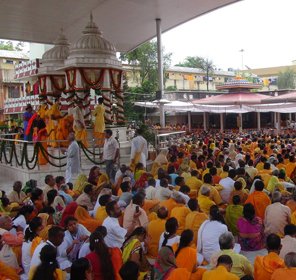
Baisakhi is celebrated with great pomp and extreme happiness, especially by the Sikhs. The gurdwaras are cleaned and decorated. Many people throng to the gurdwaras to offer prayers and seek the blessings of the almighty for the prosperous year ahead. Overall, the Baisakhi celebrations are carried out by the Sikhs in a very well planned manner.
Morning Prayer in the Gurdwaras
In the morning, the Sikh people take bath and wear the new clothes. The Sikh families then assemble at the gurdwaras to attend a specially organized prayer in the morning. After the prayer is over, the devotees are distributed a sweet known as the ‘Kada Prasad’.
Langar is organized for the Worshippers
In the afternoon, around lunch time, a langar (vegetarian food) is organized for the devotees in the gurdwara. All the people whether they are rich or poor are equally served the same food. There is no discrimination followed in the gurdwara.
Procession of Guru Granth Sahib
The procession of Guru Granth Sahib is known as Nagar Kirtan in Punjabi. It is a religious procession accompanied by holy hymns and is an important part of the festival of Baisakhi. The procession is always led by the Panj Pyare (the five beloved ones who form the central part of the Khalsa), who are dressed in saffron. They are followed by the holy book of the Sikhs, Guru Granth Sahib, and other members of the procession. The road through which the procession is to pass is cleared beforehand by the sewadars (volunteers). The procession finally comes to a halt at a particular Gurudwara where Ardas (prayers) is offered.
Worshippers Dance their Heart Out
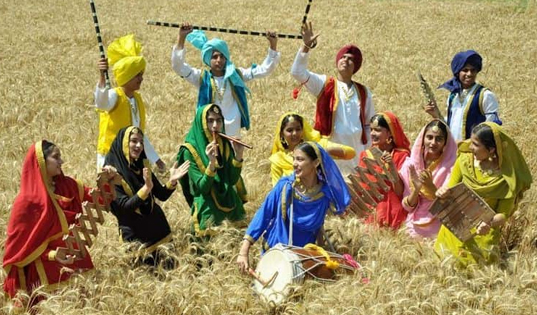
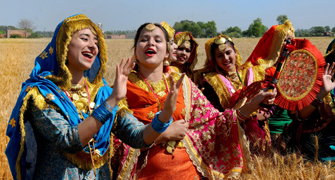
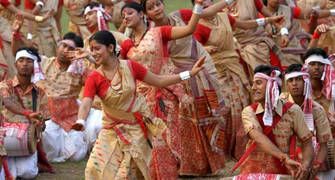
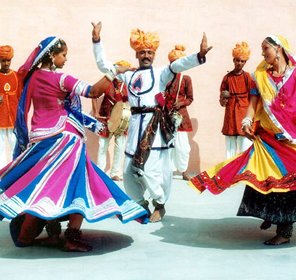
Any Baisakhi celebration is termed to be incomplete without the memorable dance performances. There are two prominent forms of dance that are performed by the Sikhs – bhangra and gidda. Bhangra is essentially a high energy dance that involves plenty of jumping. It is generally performed by both men and women. Gidda is another folk dance traditionally performed by the women. The dance reflects the celebratory mood of the women and their joyful spirits.
Dress Worn by Men
During the prominent festivals, there is a tradition among the Sikh community to wear the bright color outfits. Men wear the kurta, pajama or lungi and a turban on their heads.
Dress Worn by Women
The Sikh or Punjabi women have two choices when it comes to getting ready for the festival. They can either wear a salwar-kameez or lehenga–choli.
Lip-Smacking Dishes to Eat
Sikhs are very fond of eating scrumptious food. On this day, they prepare various kinds of dishes like the potato curry, sarson ka saag, makki di roti, poori, paneer tikkas, vegetable pakora, chicken biryani and lots of delicious dishes.