Legend behind Dussehra Festival
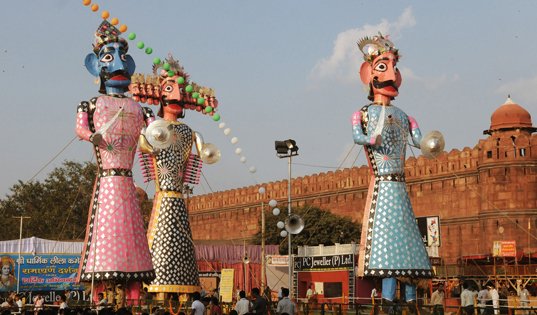
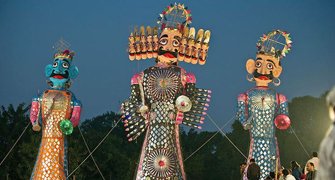
The pious Hindu epic Ramayana unfolds the legendary tale of Lord Rama winning his beloved wife Sita, who was abducted by demon Ravana, the emperor of Lanka.
According to Hindu mythology, Shoorpnakha, the sister of Ravana, fell in love with Rama and Lakshmana (Rama’s younger brother), and wanted to marry any one of them. After being refused by both, she threatened them to kill Sita. Lakshamana, in anger, cut her ears and nose. This lead to Ravana abducting Sita in order to take revenge of her sister. To rescue Sita, Rama and Lakshmana fought a battle with Ravana in Lanka. Lord Hanuman and an enormous army of monkeys helped the brothers.
There is also a reference associated with the celebration of Dussehra festival in the great epic Mahabharata. With different unique weapons, Pandavas fought with several evil forces. These five brothers abandoned their weaponries and left into one-year exile. After returning from exile, they found their weapons under the Shami Tree under which they had buried them before going off for exile. Pandavas worshipped the tree before their battle in which they emerged victorious. This legend is also memorialized at the time of Dussehra Festival.