Every year, as Kerala’s fields turn golden with harvest-ready paddy and the monsoon skies begin to clear, the state prepares for its grandest celebration: Onam. For ten days, life slows down and traditions take center stage: homes are decked with floral carpets, kitchens bustle with the aroma of elaborate feasts, and villages and towns in Kerala resound with music, dance, and games. At its heart lies the cherished legend of King Mahabali’s homecoming, yet Onam is equally a thanksgiving for the harvest, a season when Kerala radiates warmth, color, and festivity unlike anywhere else.
When is Onam 2025?
In 2025, celebrations of the Onam festival in Kerala will start with Atham on August 26, according to the Malayalam calendar, and will continue for ten days. The most important days fall at the end of the festival:
- Uthradam (First Onam): Thursday, September 4, 2025
- Thiruvonam (Main Onam Day): Friday, September 5, 2025
The Onam celebration is followed by a two-day post-Onam period, which is also an important part of the Onam holidays. The dates of post-Onam days include:
- Avittam (Third Onam): Saturday, September 6, 2025
- Chathayam (Fourth Onam): Sunday, September 7, 2025
What is Onam?
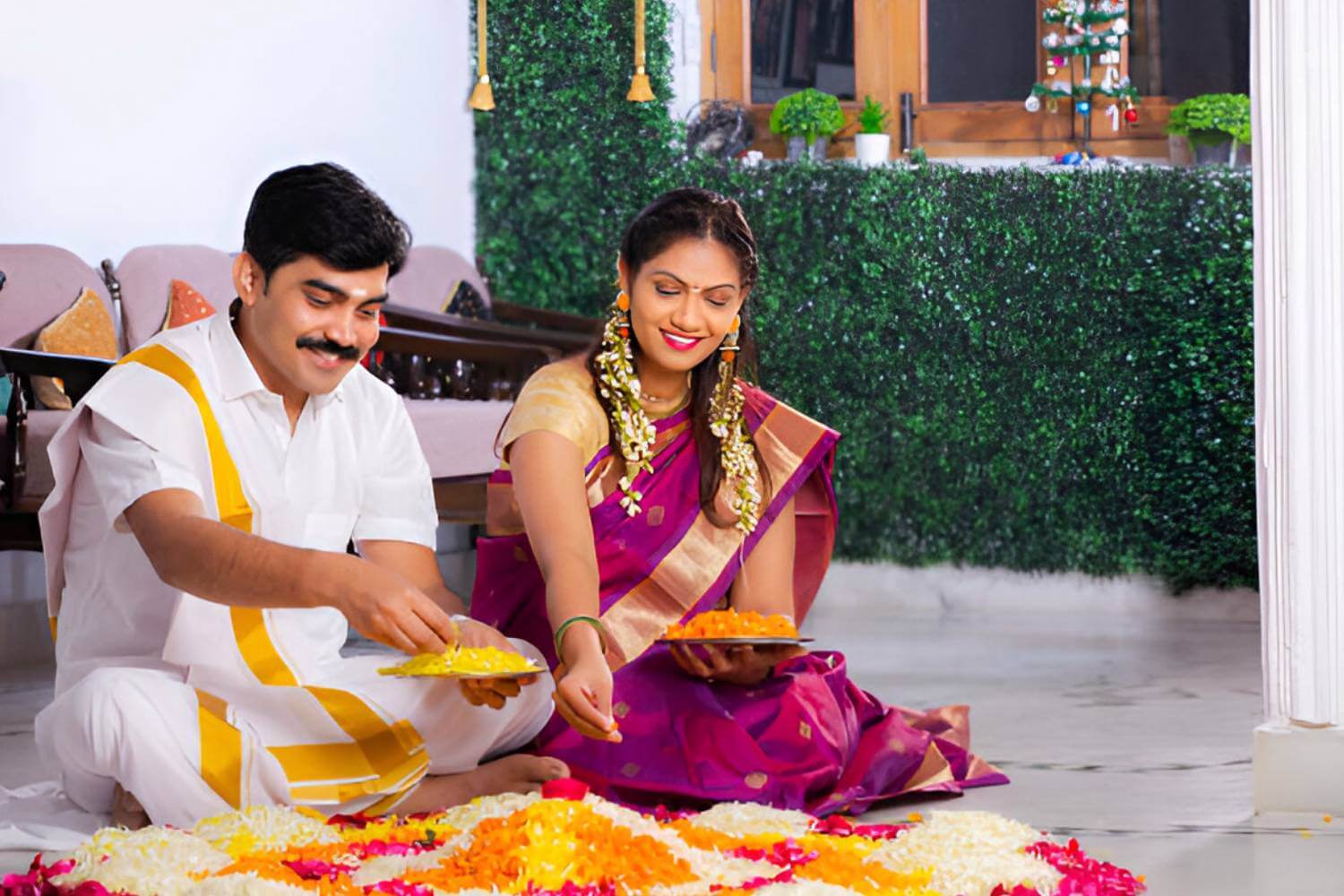
One of the largest festivals in the country and the biggest in Kerala, Onam comes as a joyous event celebrated with communal harmony, traditions, and passion. Household decorations, large gatherings, music, dances, and the stories of the mighty king Mahabali make this festival the most popular event in Kerala.
As Onam is a ten-day celebration followed by a two-day post-Onam celebration, it technically makes it a twelve-day-long event in total. The festival starts with Atham (first day) and culminates with Thiruvonam (tenth day), with a long list of vibrant activities, including boat races, street parades, and tiger dances, observed in between.
The Ten Days of Onam
The Onam festival in Kerala is not just a single day of celebration; it is a beautiful progression of traditions over ten days. Each day leading up to the main event progressively transforms Kerala into a dynamic cultural paradise, which kicks off as follows:
Day 01: Atham
The festivities begin with the start of the Pookalam, a floral carpet design that grows each day. This is also when the famous Tripunithura Athachamayam procession kicks off with a magnificent parade.
Day 02: Chithira
The Pookalam is decorated with more flowers, and people start cleaning their houses and preparing for the festival.
Day 03: Chodhi
On this day, families add a third layer of flowers on the Pookalam and start their festive shopping for new clothes and gifts, a tradition called Onakkodi.
Day 04: Vishakam
The anticipation grows as families begin celebrating Onam by preparing sadya, the lavish traditional feast. Ingredients are bought, and some of the dishes are prepared.
Day 05: Anizham
The day is notable as the exciting Vallamkali (snake boat races) are held in the rivers and backwaters of Kerala on this day. It is a sight to witness the energy and rhythm of the races.
Day 06: Thriketta
As more varieties of flowers are added, the Pookalam becomes more elaborate. On this day, people visit temples and relatives.
Day 07: Moolam
As the festival nears its end, special folk dances and cultural events take place. In some regions, the Onathallu (an Indian martial dance and a semi-contact combat sport in Kerala) also starts.
Day 08: Pooradam
On this day, clay idols of King Mahabali and Vamana are placed in the center of the Pookalam, representing the arrival of the revered king. People also begin to participate in different traditional Onakalikal (Onam games).
Day 09: Uthradam
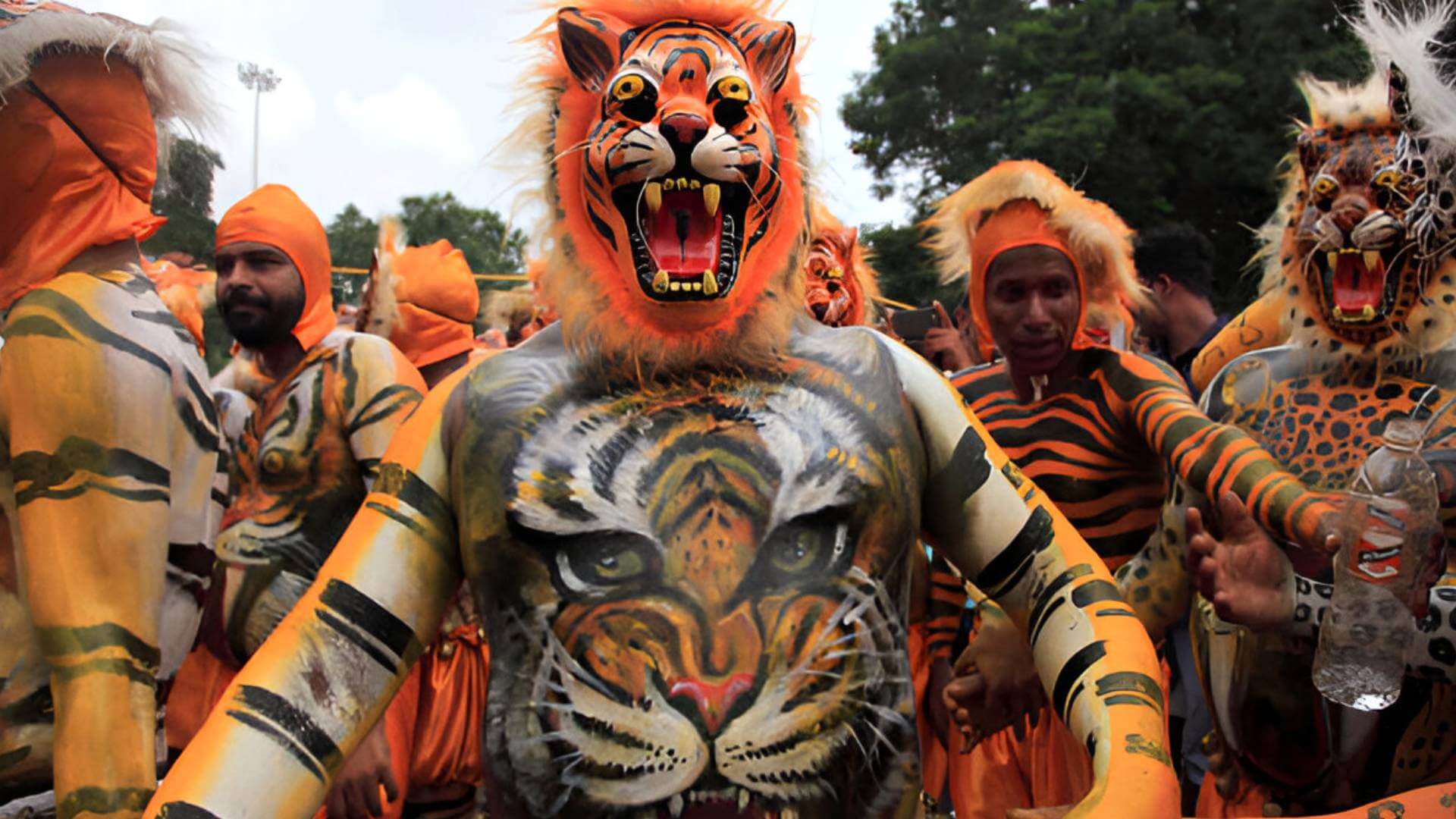
This is the day of great preparation. Houses come alive with the preparations for the major feast for families and friends. In some areas, the Pulikali (tiger dances) takes place on this day as well.
Day 10: Thiruvonam
The final and most significant day. The great Onam Sadhya is cooked and served, and families gather for the feast. To welcome King Mahabali back home, people dress up in new clothes and participate in traditional group dances, such as the Kaikottikali and Thumbi Thullal.
Post Onam Celebration
The good thing about Onam is that the festivities don’t end with Thiruvonam. While the grand feast and main celebrations happen on the last two days, which are also called First Onam (Uthradam) and Second Onam (Thiruvonam), they only mark the climax of the main festival. The festive mood and traditions further continue to live on for the next two days that follow, extending the Onam holiday and its warmth beyond the main celebration.
Third Onam (Avittam)
The day after Thiruvonam is known as Third Onam (Avittam). On this day, families and friends often visit each other’s homes. Many households start taking down the beautiful Pookalam decorations as the festival slowly begins to wind down.
Fourth Onam (Chathayam)
The festivities have one final burst of energy on the Fourth Onam (Chathayam). This day is often marked by the final and most awaited competitions of the snake boat races, like the iconic Aranmula Boat Race in Aranmula in Pathanamthitta district, which attracts large crowds. The air fills with the sounds of cheers, rhythmic rowing songs, and the excitement of the crowd as teams put their all into the final races.
Legend of Onam
The history of Onam celebrations is believed to date back to the Sangam Period, with records from around 800 AD showing that the festival was once celebrated for a month.
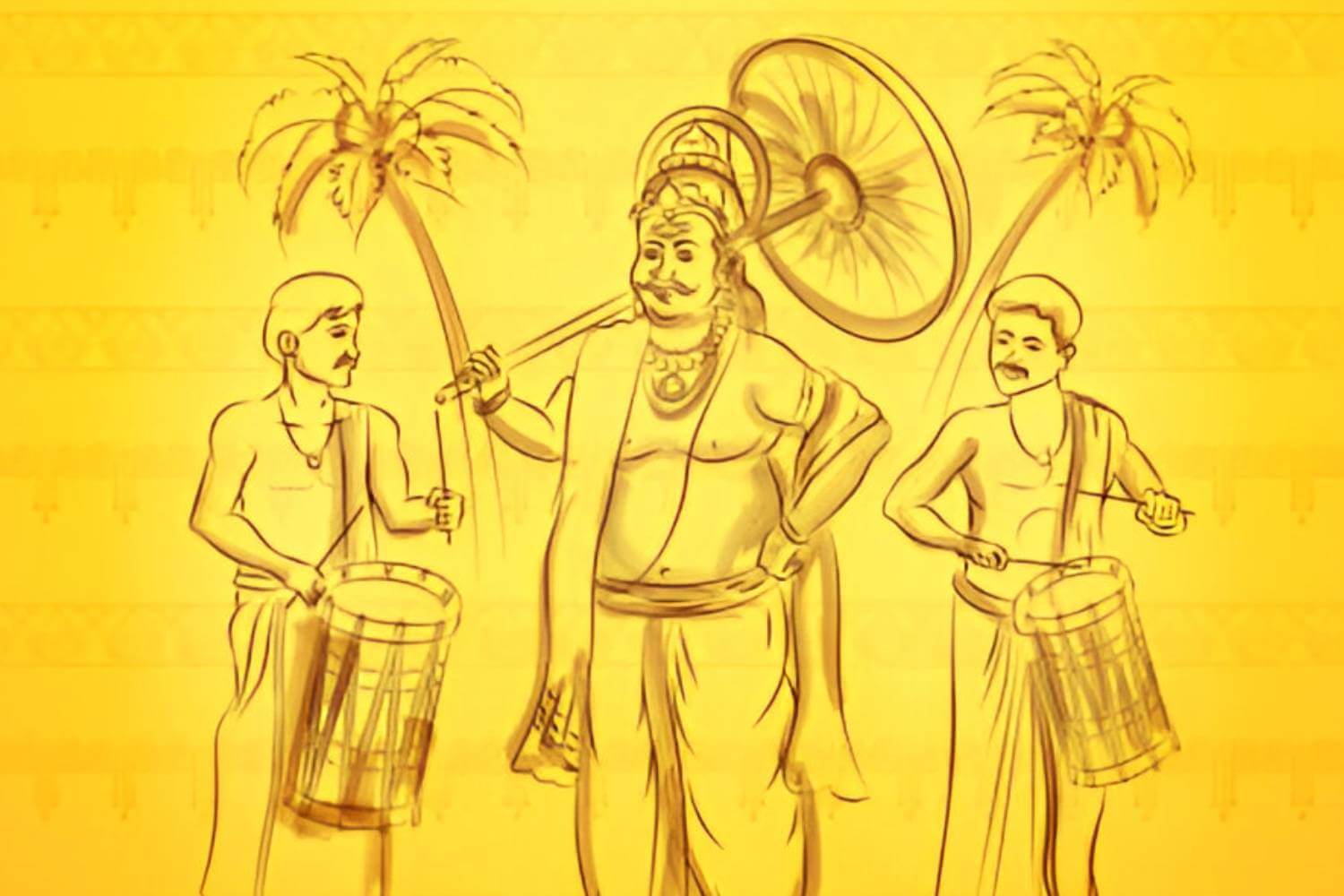
Onam is rooted in one of the most popular legends in India, the story of King Mahabali and Vamana. According to the legend, thousands of years ago, a wise and generous ruler from the Kerala region brought an age of peace and prosperity. During his reign, there was no poverty, crime, or sorrow, and everyone lived in harmony. Though he was born an Asura (demon), Mahabali had a reputation for being a benevolent king. Gradually, the king conquered not just the whole Earth but also the heavens.
The Devas (divine beings) became envious and imagined a threat posed by King Mahabali. The Devas approached the supreme Lord Vishnu to eliminate this perceived threat. To test the character of King Mahabali and eliminate the threat, Lord Vishnu took the avatar of Vamana (a dwarf Brahmin) and approached the king’s land.
Vamana asked King Mahabali to donate “three paces of land,” which the kind king agreed to. But little did Mahabali know that Vamana was Lord Vishnu. The dwarf Brahmin started growing exponentially until he reached a celestial size. Vamana then covered the whole Earth with his first step and took the second step to cover the heavens. With no place left for his third step, Mahabali offered his own head to him. Vamana placed his foot on the king’s head, and the force sent Mahabali to the nether realm (patal lok).
But Lord Vishnu was impressed with King Mahabali and granted him a boon that he can visit his kingdom every year on the same day. Since then, his people have celebrated that day as the Onam festival in Kerala.
The Traditions of Onam
Onam is a harvest festival, after all, and the celebrations highlight a sense of community and connection. The festival is full of captivating traditions, each bringing its own special touch to the festivities. Following are the traditions of Onam:
Athachamayam Onam
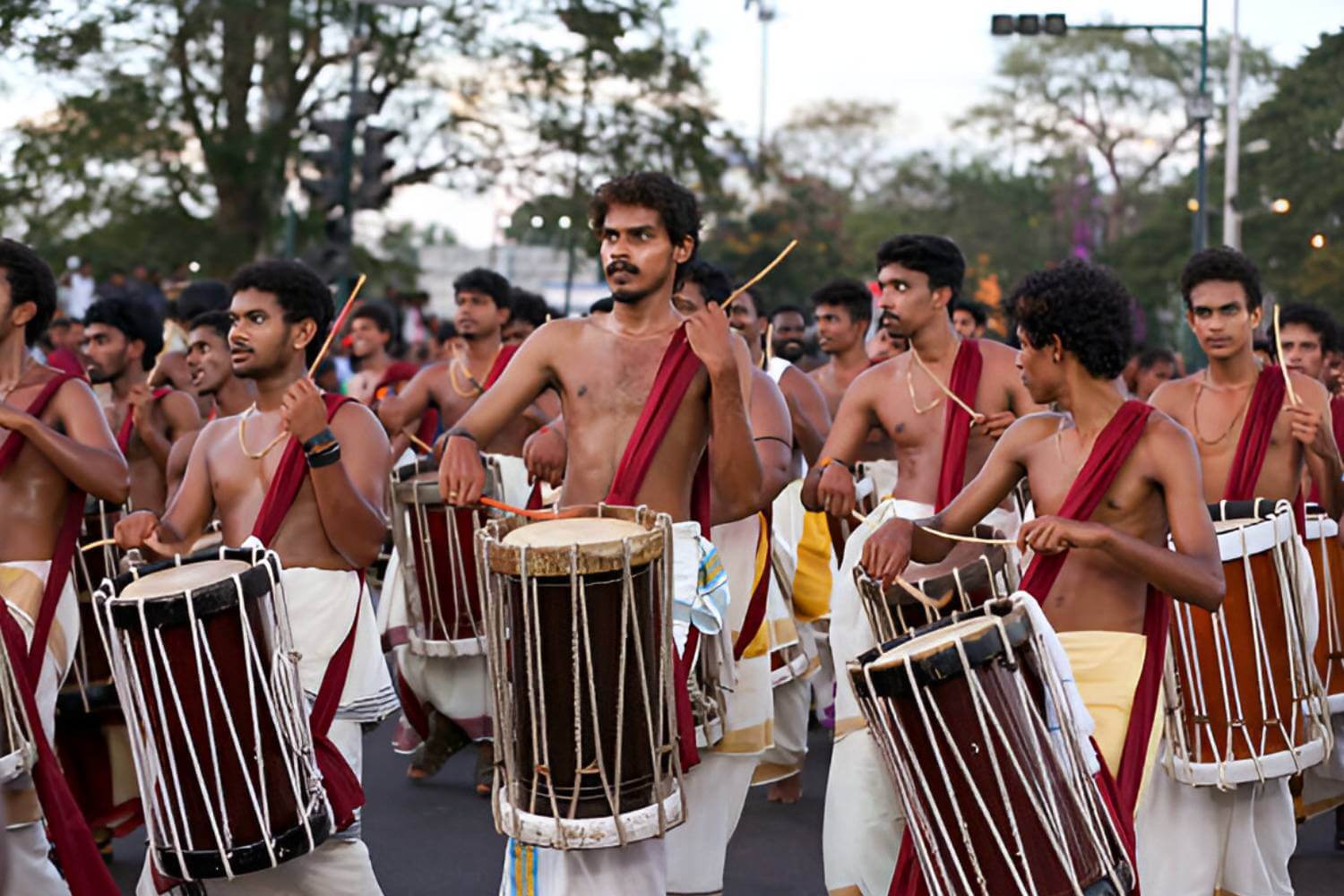
The grand procession known as Athachamayam kicks off the entire festival with great zeal. This is an event held in Tripunithura, which reminds one of a royal tradition in which the Maharaja of Kochi visited the Thripunithura Fort along with his entourage. Today, the procession retains its regal charm, featuring a colorful street parade with different Kerala art forms, dancers, musicians, and floats. You’ll see decorated elephants and traditional music as folk artists and people in traditional attire join in the journey.
Vallamkali/Snake Boat Races
One of the most popular traditions connected to the Onam festival is the Vallamkali, or snake boat races. This event is a high-adrenaline competition where teams of rowers paddle in long, hooked canoes. The races are an iconic part of the festival and attract a large number of participants and onlookers. While most of the races are competitive, the Aranmula Snake Boat Race is more of a traditional and religious ritual. It is considered Kerala’s oldest and most popular boat race, with over 50 boats participating.
Pookalam
Pookalam is a beautiful flower tradition in Onam, in which intricate floral arrangements are made on the floor, often at the entrance of homes and temples, creating a vibrant flower mat. The construction of these flower carpets begins on the first day of Onam. A pyramid-shaped statue called Onathappan, which symbolizes Vamana, is often placed in the center of the Pookalam. You can find many Pookalam competitions across Kerala during this time, where designers showcase their creativity with new designs each year.
Pulikali
Meaning “the play of the tiger,” Pulikali is a folk-art form that dates back over 200 years. The former Maharaja of Kochi introduced it as a dance that was wild and reflected masculinity. Performers paint their bodies with yellow, black, and red patterns to resemble tigers and dance to the rhythm of traditional music and drums. They perform in the street processions, pouncing and shaking their bodies. Performers often mimic scenes of tigers hunting. This entertaining performance can best be seen in Thrissur.
Onasadya
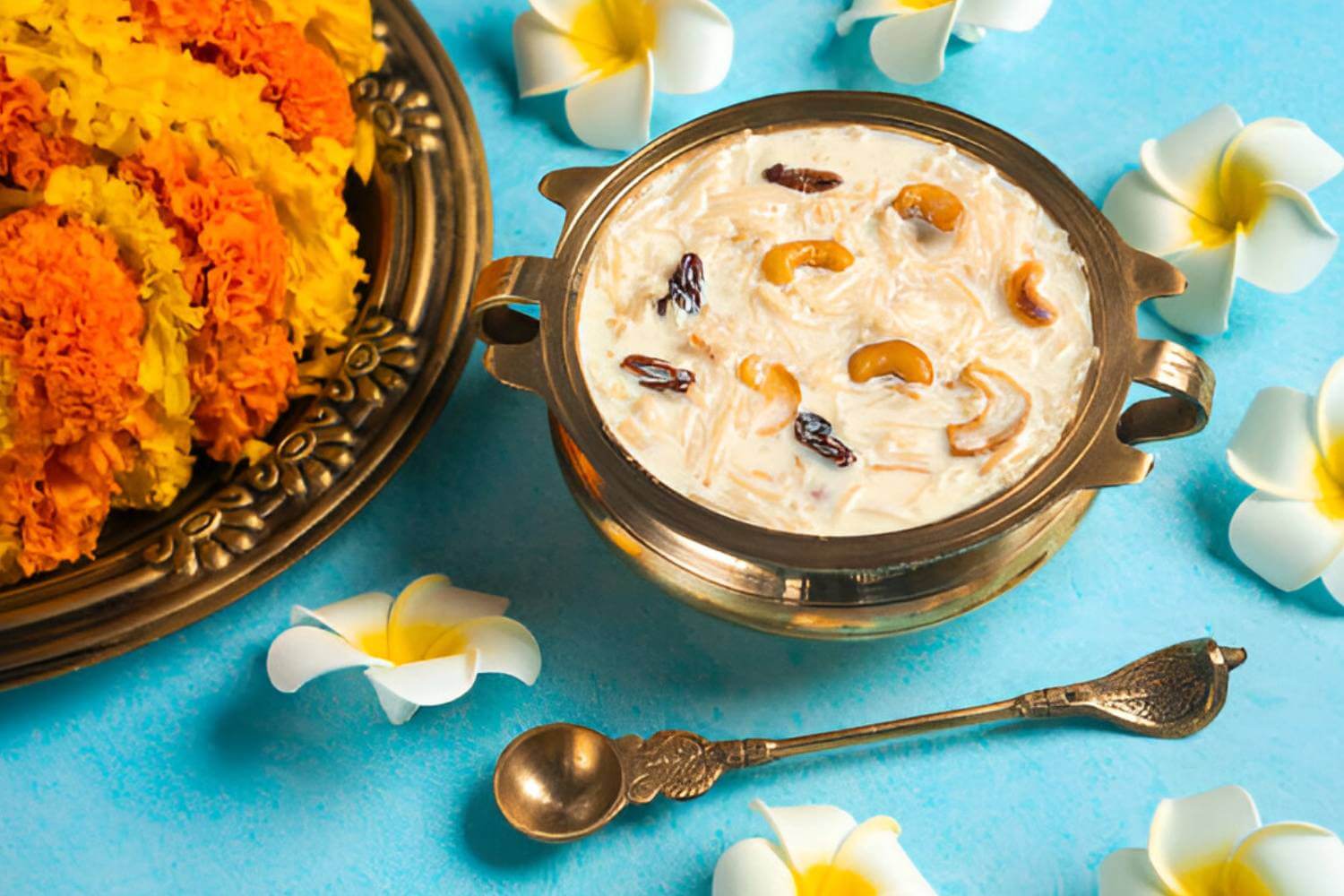
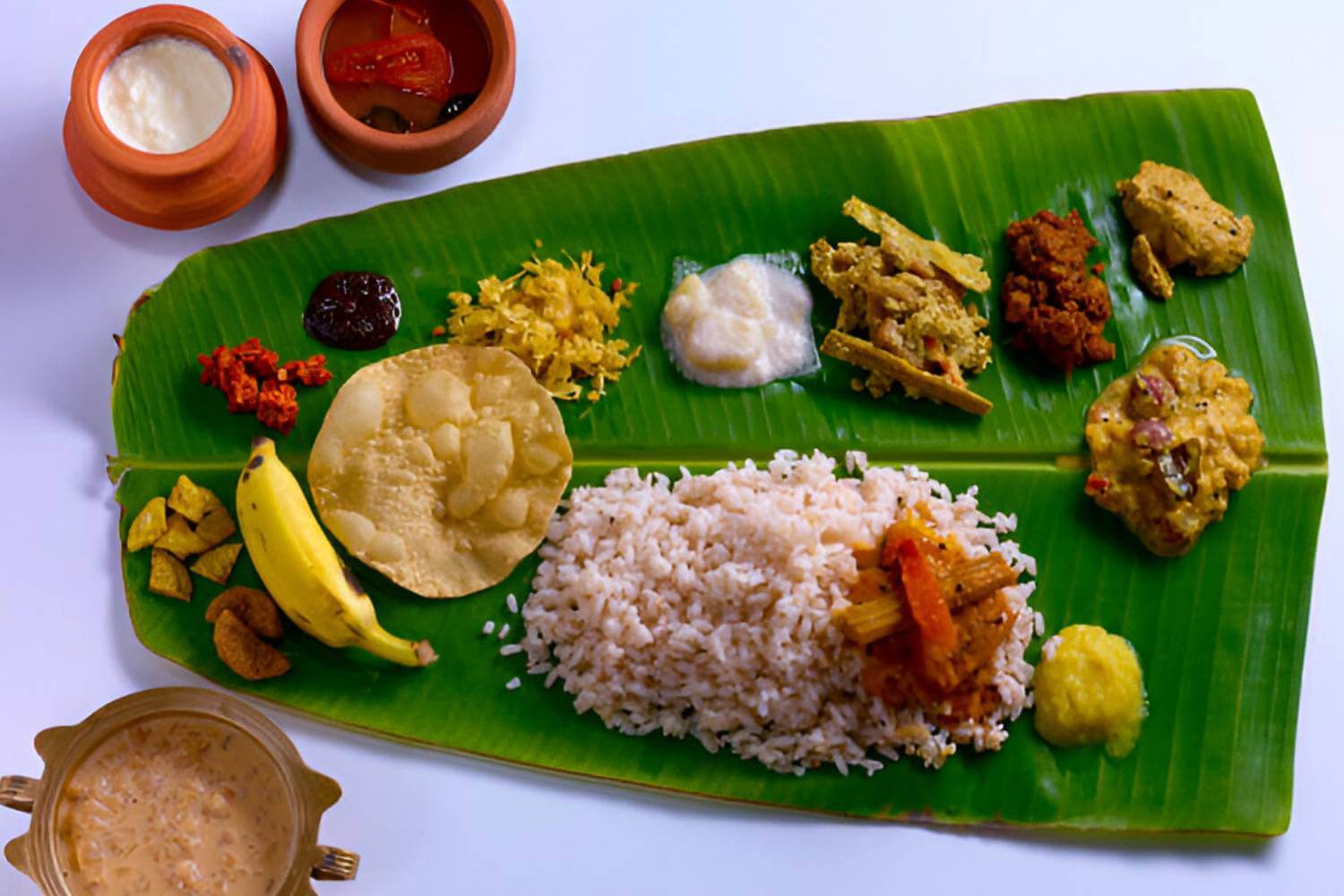
A festival is incomplete without a delicious meal, and the Onasadya, or “Onam feast,” is the culinary highlight of Onam. Onamsadhya is a hearty nine-course vegetarian meal, comprising 13-26 traditional dishes, served on a banana leaf and eaten while seated on mats on the floor. Onam Sadhya is a way of worship and a time for family and friends to gather and enjoy the nourishing food together. Staples like Sambar, Avial, and Parippu curry are served with parboiled brown rice, followed by a scrumptious dessert course with different kinds of payasam or pradhaman, such as Palada Pradhaman and Dudhi Pradhaman.
The Onam-Sadhya dishes also include a variety of rich and flavorful curries like Kalan, Olan, Theeyal, and Koottucurry. You will also find side dishes such as Thoran and Erissery. The sweet and tangy Puliinji and Pineapple Pachhady add to the taste, while crispy Kaya Varuthathu (banana chips) and Sarkarapuratty are also part of the meal. A dollop of Injithair (ginger yogurt) and plenty of pappadam completes this feast. The meal ends on a high note with a choice of delicious local desserts.
Folk Dances
During the festival, you can see various folk-dance performances on various days, bringing the festivities to their peak. Kaikottikali is a group dance performed by women in traditional attire. Women dance in rhythmic, symmetrical movements, clapping their hands while one person sings a line and others repeat it in chorus. Another interesting dance/game is Thumbi Thullal. In this, a girl in the center will hold small bunches of thumba leaves in her hands or in a pot. A group of singers and dancers encircle her, gently goading her on to move to the rhythm of the songs as they sing, cheer, and dance/play games, girl. As the tempo of the song picks up, the girl starts swaying like a thumbi or dragonfly.
Onathallu
Onathallu is an extremely competitive, bare-handed martial arts form. Combatants, dressed in plain white dhotis, face each other without any rigid rules, though hitting the head or face, or punching and kicking, is prohibited. This mock fight is a test of stamina, skill, and physical abilities and ideates the martial spirit of warriors.
Onakalikal
Onakalikal is a collective name for the traditional games played during Onam, usually enjoyed after the Onasadya. Men participate in vigorous sports like Talappanthukali (playing with a ball), Kutukutu (Kabaddi), and combat games like Kayyankali and Attakalam. Archery is also a part of these games. Women, on the other hand, indulge in cultural activities. Senior members of the family often enjoy playing indoor games like chess and cards.
Cultural and Social Significance
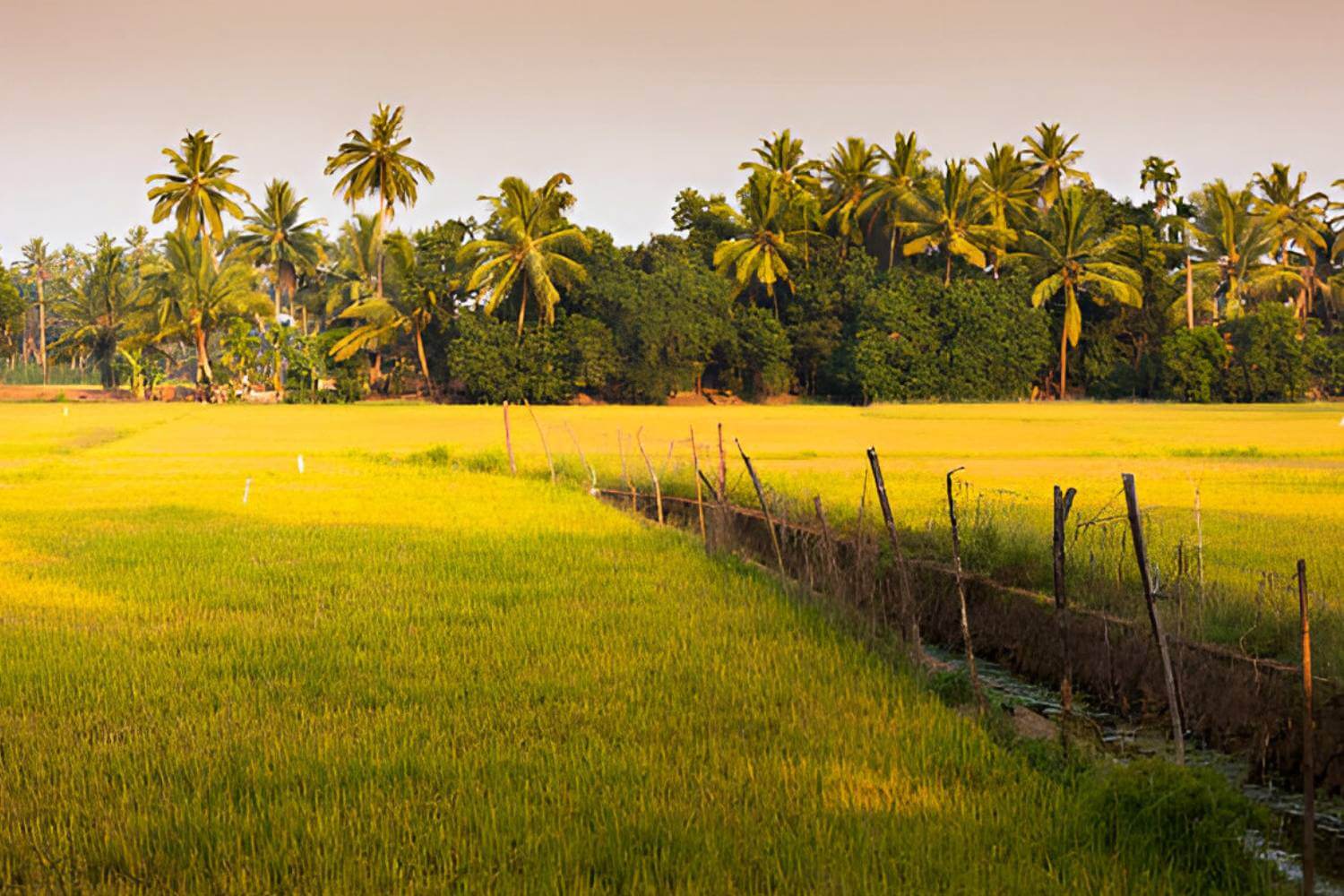
Onam is not only a festival to celebrate King Mahabali’s arrival but also has strong roots as a harvest festival. It is celebrated when the weather is pleasant and sunny, and the fields are a brilliant golden color with matured paddy grains. Thus, the farmers are joyful with a bountiful harvest and celebrate the festival to the fullest.
Though beyond its mythological and agricultural significance, Onam carries a deeper message of unity and harmony. It serves as a reminder of a perfect world where people lived together in peace and happiness. The festival promotes coming together as a community, regardless of social status or wealth. The grand festivities also include the highly anticipated Thiruvonam Bumper lottery, a modern tradition that adds to the excitement and is a part of the festival’s unique social fabric, with a first prize money going up to crores of rupees.
The grand festivities organized during Onam eliminate religious disparities, with Christians in Kerala also participating by lighting the Nilavilakku and having a firstmunal meal with Hindus. Onam encourages honest communication, mutual trust, and strong relationships. It is also a time for families to reunite, reinforcing family bonds.
Onam may seem like just another festival, but at a deeper level, it’s a reminder that true human treasures aren’t material things, but shared happiness, mutual trust, and the warmth of togetherness. The celebrations of Onam are a tribute to a bygone era of peace and prosperity, when communities were bound by a shared purpose. Everything about Onam invites people to join in and strengthen those bonds. In this way, King Mahabali lives on not just as a story, but in the unity of the people who come together to celebrate Onam. ‘Onam Ashamsakal (Happy Onam)!
Other Interesting Blogs to Read
About the author
From the Lake District, Nainital, Nidhi Singh is a travel writer whose love for mountains can be seen in her write ups. Talk about solo travelling, indulging in adventure activities, binging on good food, planning budget trips or the Aurora Borealis and you will get all her attention. It is the wanderlust that keeps her going and if at all she could get one wish granted she would love to live a life less ordinary. Follow her on Twitter, Facebook & Instagram.


 +91-9212777225
 Plan Your trip