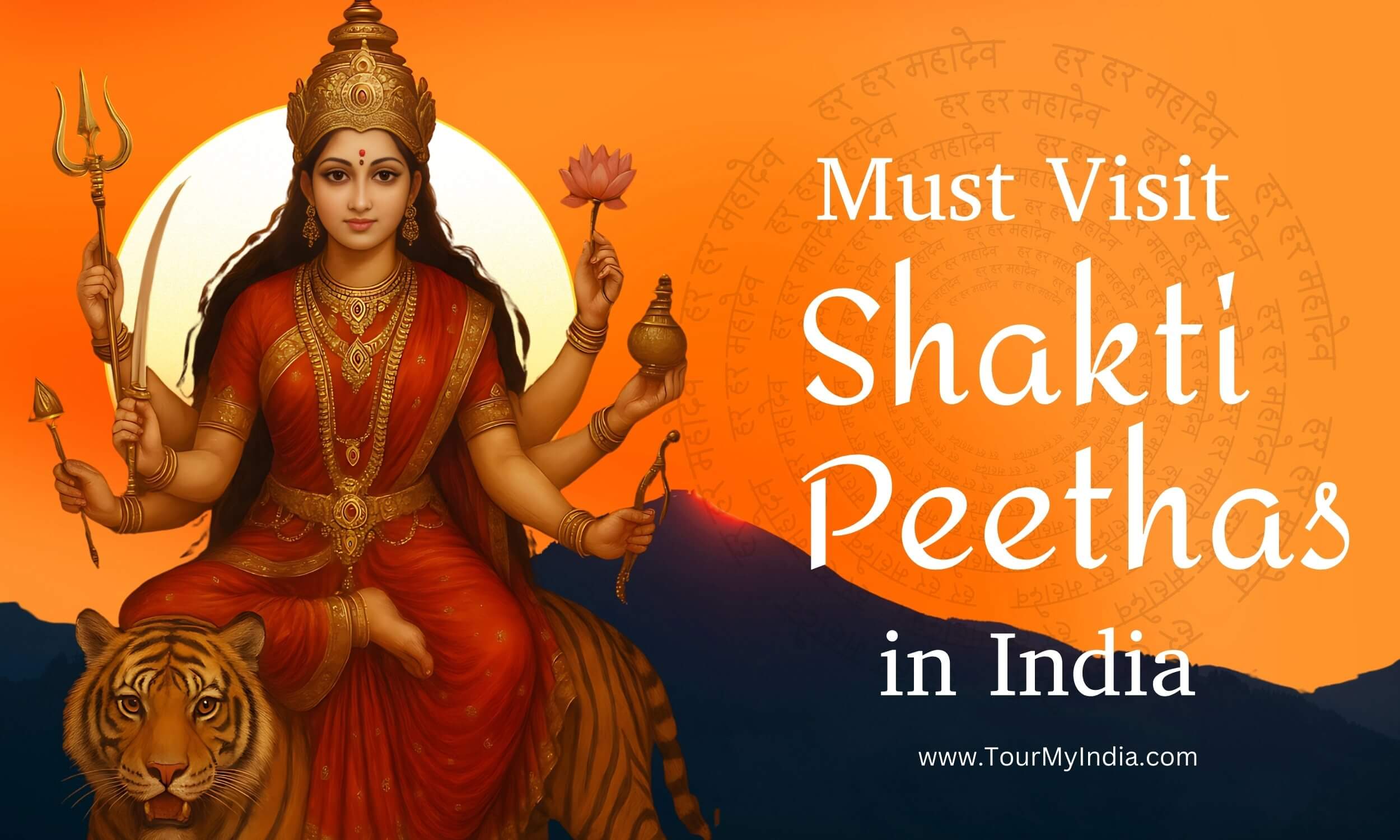
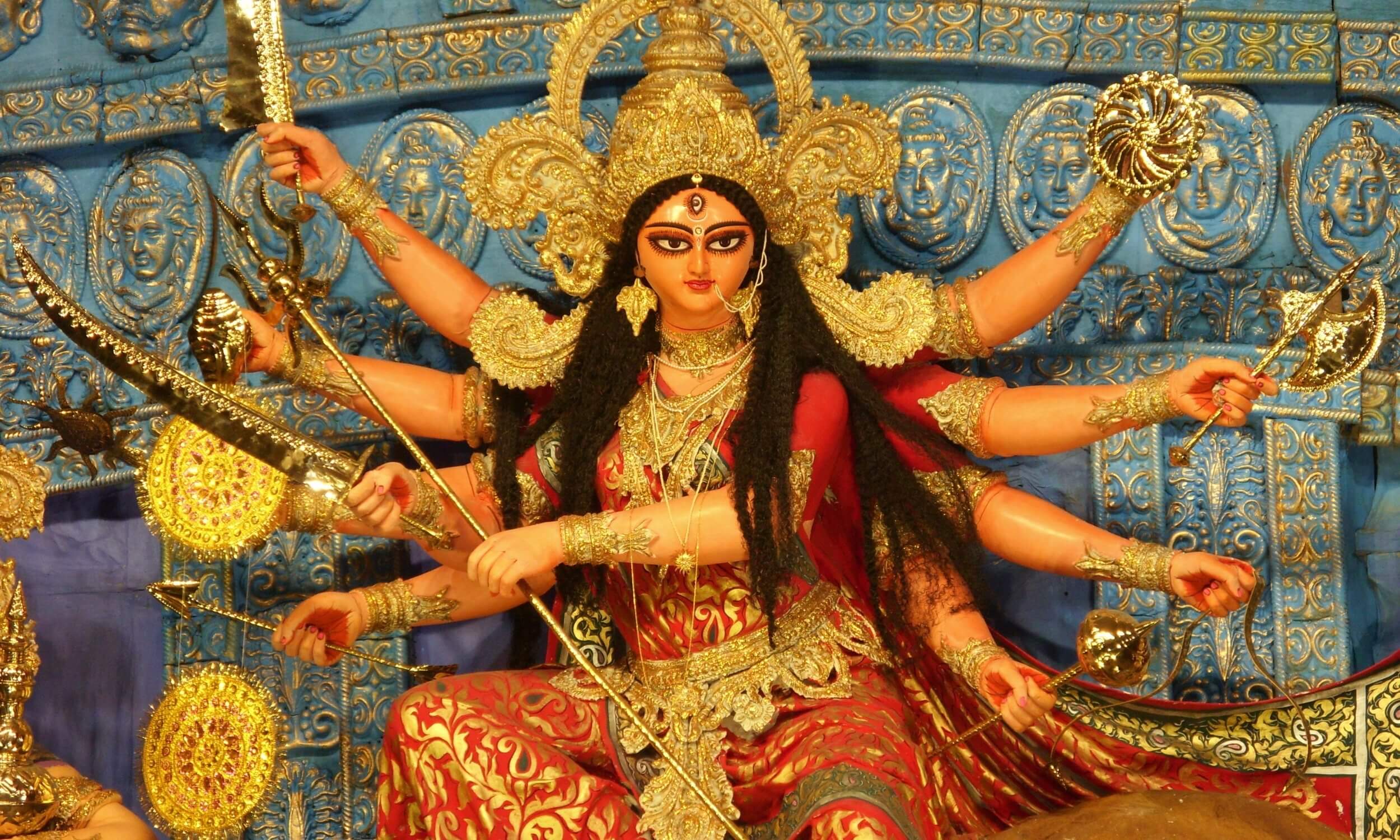
Long before any map could trace the subcontinent, the land was already sanctified by the presence of 51 sites of cosmic power. This is the story of the Shakti Peethas—the divine seats of energy.
The Legend: Where Divinity Fell to Earth
According to Hindu mythology, the story begins with grief. When Goddess Sati, consort of Lord Shiva, sacrificed herself at her father Daksha’s grand yagna, a grief-stricken Shiva began a dance of destruction (the Tandava) that shook the cosmos.
To calm him and save the universe, Lord Vishnu used his Sudarshan Chakra to dismember Sati’s body. The 51 places (the exact number and locations can vary slightly between different Puranas, but this is the most widely accepted number) where a part of her body or an ornament fell became a Shakti Peetha, a fundamental seat of divine feminine power.
Top 18 Must-Visit Shakti Peethas in India
In Northern India
- Jwala Devi Temple, Kangra (Himachal Pradesh)
- Chintpurni Devi Temple, Una (Himachal Pradesh)
- Vishalakshi Devi Temple, Varanasi (Uttar Pradesh)
- Alopi Devi Temple, Prayagraj (Uttar Pradesh)
In Eastern India
- Kamakhya Temple, Guwahati (Assam)
- Kalighat Temple, Kolkata (West Bengal)
- Tarapith Temple, Birbhum (West Bengal)
- Tripura Sundari Temple, Udaipur (Tripura)
- Nalateshwari Temple, Birbhum (West Bengal)
- Mangala Gauri Temple, Gaya (Bihar)
In Central India
- Harsiddhi Temple, Ujjain (Madhya Pradesh)
In Western India
- Mahalaxmi Temple, Kolhapur (Maharashtra)
- Renuka Devi Temple, Mahur (Maharashtra)
In Southern India
- Chamundeshwari Temple, Mysore (Karnataka)
- Kamakshi Amman Temple, Kanchipuram (Tamil Nadu)
- Jogulamba Devi Temple, Alampur (Telangana)
- Bhramaramba Devi Temple, Srisailam (Andhra Pradesh)
- Girija Devi Temple, Jajpur (Odisha)
We’ve curated the 18 most revered, accessible, and spiritually profound Shakti Peethas for your journey. They are grouped by region to help you plan a Shakti Peetha tour with ease.
Northern India: Power in the Himalayas
The crisp mountain air of the Himalayas is charged with divine energy. This circuit is known for its stunning landscapes and profound faith.
1. Jwala Devi Temple, Kangra (Himachal Pradesh)
- Divine Aspect: The Tongue of Sati.
- Why Visit: This is a temple of wonder, where you can witness nine eternal blue flames rising from the rock, burning without any fuel source, symbolizing the goddess’s undying energy.
- How to Reach: 34 km from Kangra town. The nearest airport is Gaggal (DHM) (46 km).
- Best Time to Visit: March–April & September–October (during Navratri).
- Main Festivals: Navratri & Jwalamukhi Mela.
Insider’s Tip: Offer a coconut to the main flame. It’s a powerful local tradition, and the priests will crack it and return a piece to you as prasadam.
2. Chintpurni Devi Temple, Una (Himachal Pradesh)
- Divine Aspect: The Feet of Sati.
- Why Visit: Worshipped as the headless goddess Chhinnamastika, she is believed to grant relief from all worldly “chinta” (worries).
- How to Reach: 29 km from Jwalamukhi. The nearest railway station is Una Himachal (UHL).
- Best Time to Visit: July–August (Sawan Navratri) or during the Shukla Paksha fair.
- Main Festivals: Sawan Navratri, Sharad Navratri.
Insider’s Tip: This temple is a key stop on the Himachal “Devi Darshan” circuit. Combine it with Jwala Devi and Naina Devi for a deeply fulfilling 3-day trip.
3. Vishalakshi Devi Temple, Varanasi (Uttar Pradesh)
- Divine Aspect: Earrings or Eyes of Sati.
- Why Visit: Situated near the famous Kashi Vishwanath Temple in Varanasi, this is one of the most sacred peethas in the holy city, perfect for a combined
- How to Reach: 6 km from Varanasi Junction (BSB). The nearest airport is Lal Bahadur Shastri Intl. (VNS).
- Best Time to Visit: October–March, when the weather is pleasant.
- Main Festivals: Sharad Navratri & the spectacular Dev Deepawali.
Insider’s Tip: After your darshan, don’t miss the evening Ganga Aarti at the nearby Dashashwamedh Ghat. It’s a once-in-a-lifetime experience of sound, fire, and faith.
4. Alopi Devi Temple, Prayagraj (Uttar Pradesh)
- Divine Aspect: Fingers/Hand of Sati.
- Why Visit: This temple is unique, as it has no idol. Worship is focused on a sacred wooden swing (jhula) and a small platform.
- How to Reach: 5 km from Prayagraj Junction. Well-connected by road.
- Best Time to Visit: November–February, especially during the Magh Mela.
- Main Festivals: Magh Mela & Navratri.
Insider’s Tip: Visit in the evening and then proceed to the Triveni Sangam (confluence of Ganga, Yamuna, and Saraswati) for the evening aarti for surreal visuals.
Eastern India: Where Ritual Meets River
This region is the heartland of Shakti worship, home to some of the most powerful and must-visit temples in India.
5. Kamakhya Temple, Guwahati (Assam)
- Divine Aspect: The Yoni (Womb/Genitals) of Sati.
- Why Visit: Widely considered the most important Shakti Peetha in India, this is the epicenter of Tantric worship and fertility blessings. The sanctum has no idol, only a rock fissure (the yoni) fed by an underground spring.
- How to Reach: 8 km from Guwahati Railway Station (GHY).
- Best Time to Visit: October–February. June is for the famous Ambubachi Mela.
- Main Festival: Ambubachi Mela, when the temple closes for three days as the goddess is believed to menstruate; the fair is held on the premises and is attended by many devotees and those following the tantric sect.
Insider’s Tip: Expect long queues. Opt for a VIP darshan pass if you are short on time. Don’t forget to collect the sacred “Kamsindur” (vermilion) and “Angavastra” (cloth) as prasadam.
6. Kalighat Temple, Kolkata (West Bengal)
- Divine Aspect: The Toes of Sati’s Right Foot.
- Why Visit: One of the four “Adi Peethas,” Kalighat is the vibrant, beating spiritual heart of Kolkata. The idol’s fierce, striking form is unforgettable.
- How to Reach: Easily accessible via Kolkata’s metro system (Kalighat station). About 6 km from Howrah Station.
- Best Time to Visit: Tuesdays and Saturdays are auspicious. Durga Puja (Oct) is spectacular.
- Main Festivals: Durga Puja, Kali Puja.
Insider’s Tip: Be prepared for crowds and assertive priests. For a full spiritual loop of the city, pair your visit with the Dakshineswar Kali Temple.
7. Tarapith Temple, Birbhum (West Bengal)
- Divine Aspect: The Eye (Tara) of Sati.
- Why Visit: A major hub of Tantric worship, this temple is known for its intense rituals and mystic atmosphere and is often frequented by sadhus.
- How to Reach: 9 km from Rampurhat Railway Station (RPH).
- Best Time to Visit: October (Durga Puja & Navratri).
- Main Festivals: Kali Puja, Navratri.
Insider’s Tip: The early morning aarti is so intense and is certainly not for the faint of heart. Arrive by dawn to experience its full power.
8. Tripura Sundari Temple, Udaipur (Tripura)
- Divine Aspect: The Right Foot of Sati.
- Why Visit: Locally known as Matabari, this ancient, tortoise-shaped temple is a serene and powerful site where wishes are believed to manifest.
- How to Reach: 55 km from Agartala Airport (IXA).
- Best Time to Visit: Chaitra Navratri (March–April) or during the Tripura Sundari Fair.
- Main Festivals: Tripura Sundari Fair, Diwali Mela.
Insider’s Tip: Don’t miss the massive “Kalyan Sagar” pond behind the temple, which is full of large, protected fish and tortoises.
9. Nalateshwari Temple, Birbhum (West Bengal)
- Divine Aspect: The Throat (Nala) of Sati.
- Why Visit: A serene, beautiful temple on a small hillock, featuring classic terracotta walls and a sacred tree where devotees tie stones for wishes.
- How to Reach: 4 km from Nalhati Railway Station (NHT).
- Best Time to Visit: The cooler months from October to March.
- Main Festivals: Local Poush Mela, Navratri.
Insider’s Tip: Visit the sacred Kali Kunda next to the temple. It’s a small pond whose water is believed to never dry up.
10. Mangala Gauri Temple, Gaya (Bihar)
- Divine Aspect: The Breast of Sati.
- Why Visit: As one of the oldest Shakti Peethas in Bihar, this hilltop temple is revered for granting fertility and maternal blessings.
- How to Reach: 3 km from Gaya Railway Station (GAYA).
- Best Time to Visit: Pitripaksha Mela (Sept–Oct), when Gaya is bustling with pilgrims
- Main Festival:
Insider’s Tip: This temple is a key part of the Gaya pilgrimage. Most visitors combine this darshan with pind-daan rituals for ancestral peace at the Vishnupad Temple.
Central India: The Heart of Tradition
11. Harsiddhi Temple, Ujjain (Madhya Pradesh)
- Divine Aspect: The Elbow of Sati.
- Why Visit: A fierce form of Mahakali is worshipped here, and it’s one of the few major temples where madira (alcohol) is still offered as part of the
- How to Reach: 2 km from Ujjain Junction (UJN).
- Best Time to Visit: Navratri (March & October), when the temple’s two massive lamp towers are lit.
- Main Festival:
Insider’s Tip: This temple is a crucial part of the Ujjain circuit. Plan your visit to get a dual darshan with the Mahakaleshwar Jyotirlinga, one of the 12 most sacred Shiva shrines.
Western India: Temples of Gold and Granite
12. Mahalaxmi Temple, Kolhapur (Maharashtra)
- Divine Aspect: The Eyes of Sati.
- Why Visit: A stunning architectural marvel. During the “Kirnotsav” (Festival of Sun Rays), sunlight directly touches the idol’s feet, chest, and face over three days, six days a year.
- How to Reach: 2 km from Kolhapur Railway Station (KOP).
- Best Time to Visit: March & September for the Kirnotsav festival.
- Main Festivals: Kirnotsav, Navratri.
Insider’s Tip: The evening aarti is soulful. The entire temple complex, carved from black stone, resonates with the sound of drums and bells. It gives pure goosebumps.
13. Renuka Devi Temple, Mahur (Maharashtra)
- Divine Aspect: The Right Arm of Sati.
- Why Visit: Set atop a hill, this temple offers a calm, peaceful ambiance and a unique prasadam of betel leaf.
- How to Reach: About 2 hours from Nanded Airport (NDC).
- Best Time to Visit: The cooler months from October to February.
- Main Festival:
Insider’s Tip: Complete your spiritual circuit by visiting the nearby Dattatreya Temple, dedicated to the divine trinity of Brahma, Vishnu, and Shiva in one form.
Southern India: Grace in Stone and Fire
The south expresses its devotion through magnificent Dravidian architecture, ancient rituals, and vibrant festival traditions.
14. Chamundeshwari Temple, Mysore (Karnataka)
- Divine Aspect: The Hair of Sati.
- Why Visit: Perched atop the Chamundi Hills, this temple offers breathtaking panoramic views over the city of Mysore and its palace. The Dravidian architecture is stunning.
- How to Reach: 15 km from Mysore Palace. Well-connected by road and local buses.
- Best Time to Visit: Dussehra (Oct), when it’s the epicenter of Mysore’s grand celebrations, or on Ashad Fridays (June–July).
- Main Festivals: Mysore Dussehra (Dasara).
Insider’s Tip: Go at sunset. You get to see the temple lit up and the entire city of Mysore twinkling below you. It’s magical.
15. Kamakshi Amman Temple, Kanchipuram (Tamil Nadu)
- Divine Aspect: The Navel or Back of Sati.
- Why Visit: This is the seat of Lalita Tripura Sundari, the goddess in her “world-enchanting” form. An architectural gem, it’s the only major goddess temple in the “temple city” of Kanchipuram.
- How to Reach: 72 km from Chennai Airport (MAA).
- Best Time to Visit: February–April, especially during the Panguni Uthiram festival.
- Main Festivals: Panguni Uthiram, Navratri.
Insider’s Tip: Kanchipuram is famous for its “temple triangle.” Plan your day to include this temple along with the Ekambareswarar (Shiva) and Varadaraja Perumal (Vishnu) temples for a complete heritage walk.
16. Jogulamba Devi Temple, Alampur (Telangana)
- Divine Aspect: The Upper Teeth of Sati.
- Why Visit: The original temple was destroyed and rebuilt in the 2000s. The unique idol is fierce, with a skull- and bat-decorated headdress.
- How to Reach: 27 km from Kurnool (AP). The nearest major airport is Hyderabad (HYD) (215 km).
- Best Time to Visit: Dussehra (Navratri) & Mahashivratri.
- Main Festival:
Insider’s Tip: This temple is considered a powerful site for seeking remedies for Vastu Dosha (architectural flaws in a home).
17. Bhramaramba Devi Temple, Srisailam (Andhra Pradesh)
- Divine Aspect: The Neck of Sati.
- Why Visit: This temple has profound dual significance. The temple is on the same premises as Mallikarjuna Swamy (Jyotirlinga), making it one of the holiest temples in India.
- How to Reach: 215 km from Hyderabad (HYD).
- Best Time to Visit: Navratri & the Chaitra Kumbham Festival.
- Main Festivals: Mahashivratri, Navratri, and Ugadi.
Insider’s Tip: Stay overnight. The temple complex, illuminated against the dark forests of the Nallamala Hills on the banks of the Krishna River, is a sight you will never forget.
18. Girija Devi Temple, Jajpur (Odisha)
- Divine Aspect: The Navel of Sati.
- Why Visit: An ancient temple where the goddess is worshipped as a two-handed Durga. It’s located on the banks of the sacred Vaitarini River, often called the “Ganga of Odisha.”
- How to Reach: 125 km from Bhubaneswar airport (BBI).
- Best Time to Visit: Durga Puja (Oct), when the celebrations are unique and vibrant.
- Main Festival: Durga Puja.
Insider’s Tip: This area is a hidden gem. After your darshan, explore the nearby archaeological sites of Ratnagiri and Udayagiri, centers of Odisha’s lost Buddhist dynasties.
Planning Your Shakti Peetha Yatra
A pan-India yatra is a massive undertaking. Most pilgrims wisely focus on one region at a time. Here are some ideas on how you can plan your Shakti Peetha Yatra in India with ease.
Ideal Route & Circuit Ideas
- North India Circuit (Himachal Devi Darshan): A 7-10-day trip covering Jwala Devi, Chintpurni, Naina Devi, and often Vaishno Devi.
- Eastern Circuit (Bengal-Assam): A 10-12-day trip focusing on the Tantric heartland of Kamakhya, Kalighat, and Tarapith.
- Southern Circuit (Sacred South): A 12-15-day journey connecting Srisailam, Kanchipuram, and Chamundeshwari.
Best Time to Travel
The best times are during the two Navratri festivals. During these times, the temples are alive with festivals, music, and a palpable energy.
- Chaitra Navratri: March–April (Spring)
- Sharad Navratri: September–October (Autumn)
The 51 Shakti Peethas of India are a living, breathing rhythm of faith. Each temple, from Kamakhya’s mystic cave to Kolhapur’s sun-kissed sanctum, invites you to experience spirituality that is raw, rooted, and profoundly human. For centuries, pilgrims have walked these paths seeking blessings. Today, modern travelers come seeking something equally powerful. So, if your heart calls for something beyond sightseeing, something soul-deep, then follow the trail of Shakti.
Let Tour My India curate your spiritual odyssey. We provide expert guidance, authentic local experiences, and comfortable travel, ensuring you get the best experience.
Get Your Free, Custom Shakti Peetha Itinerary from Our Travel Experts Today!
Frequently Asked Questions
What is a Shakti Peeth?
A Shakti Peeth (or Peetha) is a sacred shrine in Hinduism where, according to legend, a body part or ornament of the Goddess Sati fell to earth. Each one is a potent center of divine feminine energy.
How many Shakti Peethas are there in India?
Most religious texts mention a total of 51 Shakti Peethas. Of these, 18 are considered "Maha Shakti Peethas" (supremely sacred). The majority of these temples are in India, with others in Pakistan, Nepal, Sri Lanka, and Bangladesh.
Which is the most important Shakti Peeth?
While all are sacred, Kamakhya Temple in Assam is widely considered the holiest and most powerful Peetha. It symbolizes creation and fertility, as it's where Sati's yoni (womb) is believed to have fallen.
Which are the four Adi Shakti Peethas?
The four "Adi," or original, Peethas are considered the most ancient. They are Kamakhya (Assam), Kalighat (West Bengal), Jwala Devi (Himachal Pradesh), and Hinglaj Mata (Pakistan).
What makes each Shakti Peeth unique?
Each temple is unique in two ways: it is linked to a specific body part of Sati, and it reflects the local culture, rituals, and architecture of its region. For example, the Tantric rituals of Kamakhya are very different from the Dravidian traditions of Kanchipuram.
Can foreign travelers visit these temples?
Absolutely. Most Shakti Peethas are open to all devotees and tourists, regardless of faith or nationality. However, be mindful of local customs, dress modestly, and be prepared for large crowds, especially during major festivals.
About the author
From the Lake District, Nainital, Nidhi Singh is a travel writer whose love for mountains can be seen in her write ups. Talk about solo travelling, indulging in adventure activities, binging on good food, planning budget trips or the Aurora Borealis and you will get all her attention. It is the wanderlust that keeps her going and if at all she could get one wish granted she would love to live a life less ordinary. Follow her on Twitter, Facebook & Instagram.


 +91-9212777225
 Plan Your trip