The Kashi Vishwanath Corridor is a large-scale redevelopment project surrounding the Kashi Vishwanath Temple in Varanasi, created to improve pedestrian access between the temple complex and the ghats of the Ganga. Conceived as a response to decades of congestion around one of Hinduism’s most visited shrines, the corridor reshaped narrow lanes into an open, structured pathway designed for crowd movement, security screening, and basic visitor facilities.
For pilgrims and travellers, the corridor does not alter the religious significance of the temple itself, but it changes how the site is approached, accessed, and experienced. Darshan remains the central purpose of a visit, while the corridor functions as a logistical and spatial framework supporting large daily footfall.
Quick-Start: Navigating the Corridor
To make the most of the 50,000 sq. meter complex, follow this optimal route to balance tradition with the new infrastructure:
- The Entry: Start at Lalita Ghat for the “Grand Entry” experience.
- The Ascent: Use the escalator or the 80 steps to climb from the riverbank to the Dham Chowk.
- Security Check: Have your ID ready for the Integrated Command & Control Center screening.
- The Path: Follow the 400-metre open pathway directly to the temple premises.
- The Exit: Exit through any of the four fortress-style gates to re-enter the vibrant, traditional markets of Varanasi.
Recommended Tour Packages
What is the Kashi Vishwanath Corridor Dham?
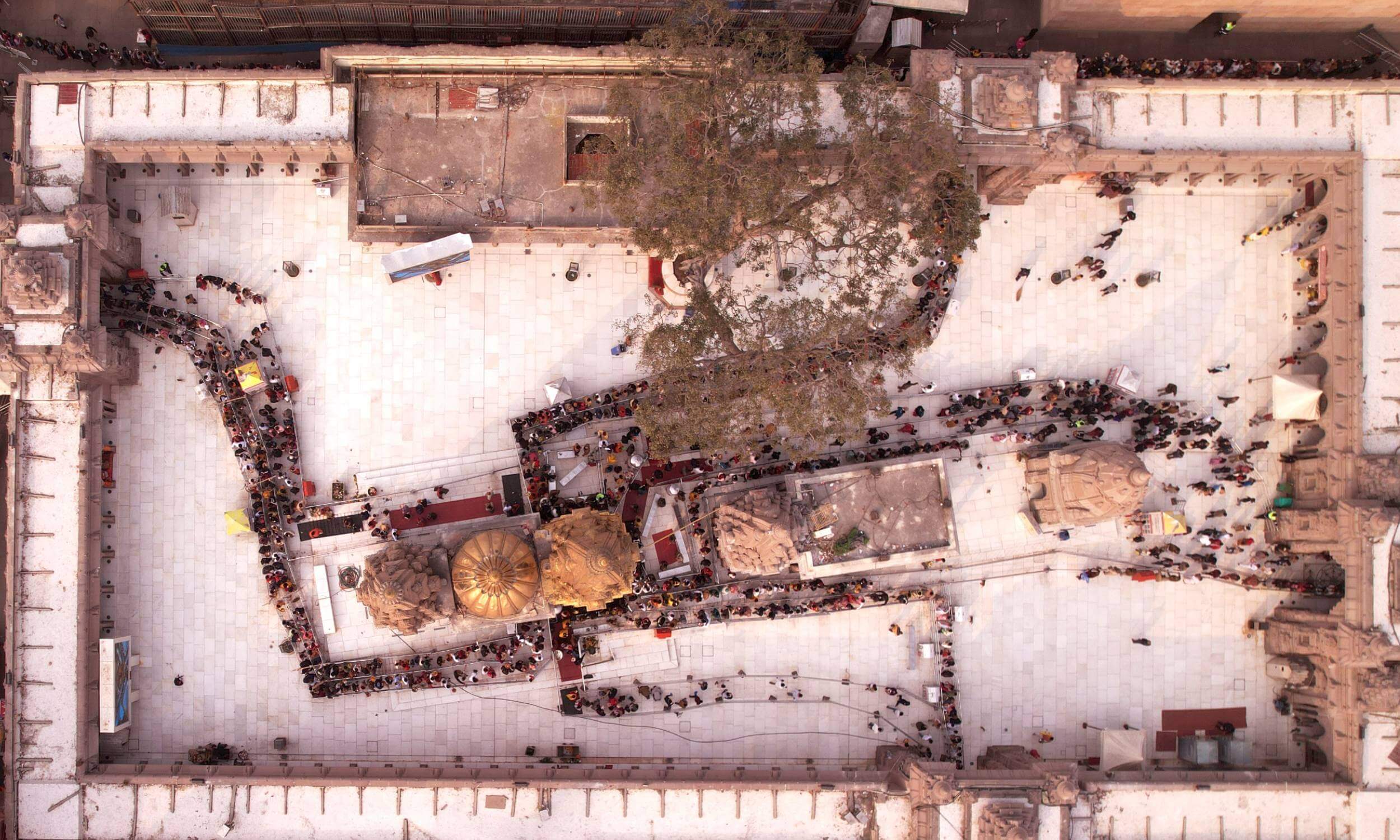
The Kashi Vishwanath Corridor Dham is a large spiritual and heritage complex built around the revered Kashi Vishwanath Jyotirlinga Temple in Varanasi, Uttar Pradesh. The corridor directly links the temple to Lalita Ghat and Dashashwamedh Ghat on the banks of the River Ganga.
Earlier, pilgrims had to navigate extremely narrow and congested lanes to reach the temple. The corridor has eliminated this challenge by creating a 400-meter-long, open, and beautifully designed pathway, allowing devotees to move freely between the Ganga Ghats and the temple premises.
While the corridor represents a modern intervention, the area around the temple has historically been dense, residential, and organically developed. The redevelopment involved the acquisition and removal of long-standing structures, altering the lived fabric of the neighbourhood. Understanding this context helps visitors recognise the corridor as a contemporary solution to access challenges rather than a restoration of a historical layout.
Kashi Vishwanath Corridor Project Overview
- Inaugurated by: Prime Minister Narendra Modi
- Inauguration Year: December 2021
- Total Cost: ₹700+ crore
- Construction Time: Approximately 21 months
- Total Area Developed: Around 50,000 sq. meters (5.3 lakh sq. ft.)
This project stands as one of the largest religious redevelopment initiatives in India.
What did the Construction of the Corridor Change?
For visitors, the most noticeable impact of the corridor is navigational clarity. Entry points are easier to identify, movement is more predictable, and basic amenities such as drinking water, seating areas, and lighting are more accessible than before.
At the same time, Varanasi remains a densely populated and highly active pilgrimage city. The corridor simplifies access to the temple but does not isolate it from the surrounding urban environment. Travellers should expect crowds, street activity, and sensory intensity as part of the broader Kashi experience.
Major Highlights of the Kashi Vishwanath Dham Corridor
The corridor spans approximately 5.3 lakh square feet, with a significant portion kept open or landscaped to support crowd movement and rest areas. Security and visitor management systems have been strengthened through integrated surveillance and command facilities, supporting large daily footfall while maintaining controlled access to the temple zone.
- ₹345 crore spent on construction
- ₹339 crore spent on land acquisition
- Only 30% of the area constructed; the remaining part is kept open or green
- Hi-tech security system worth ₹5.43 crore
- Integrated Command & Control Center
- CCTV & air surveillance systems
- Built using seven types of stone
- Premium Makrana milky white marble flooring
Architectural & Spiritual Attractions Inside the Corridor
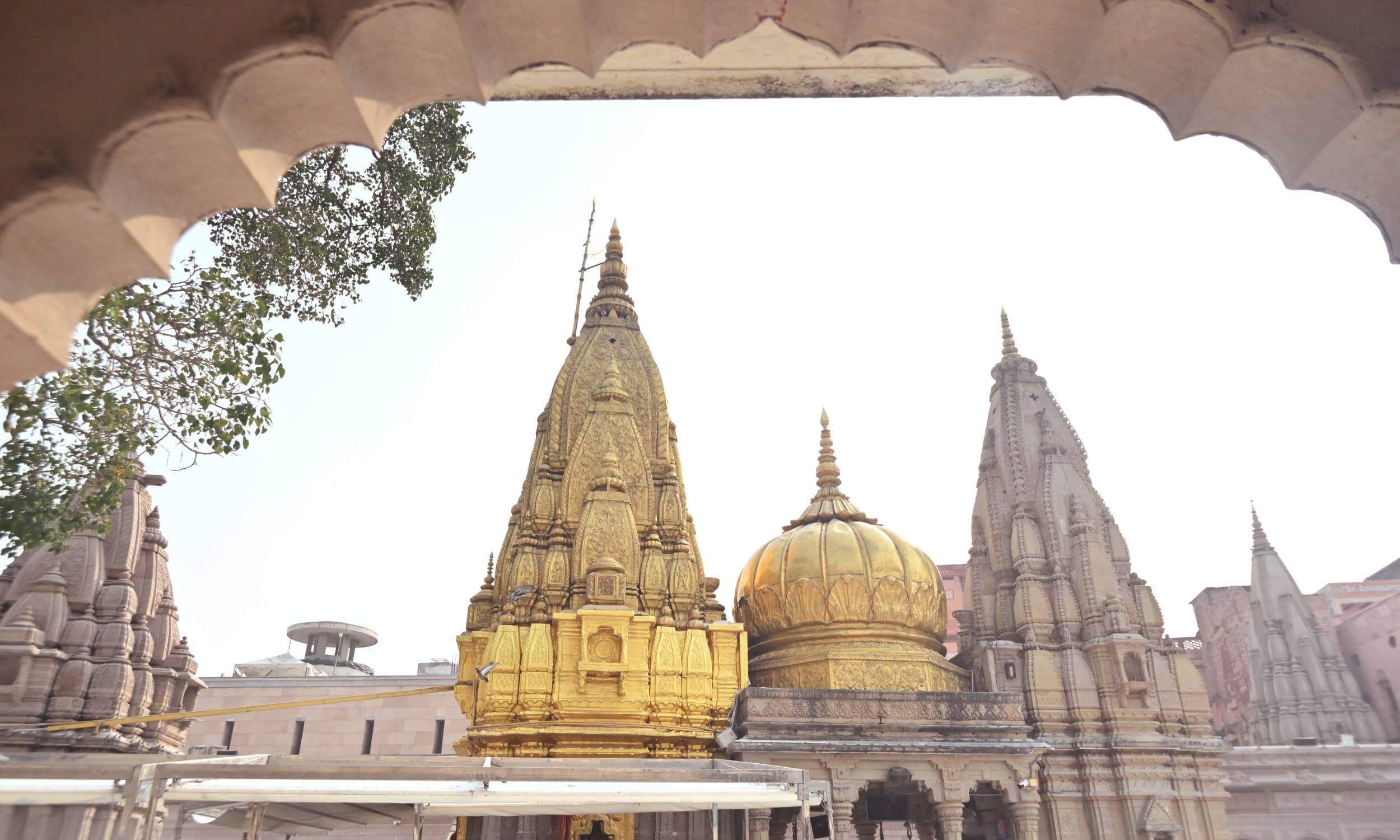
The Kashi Vishwanath Dham Corridor is a blend of devotion, architecture, and heritage conservation. From a visitor’s perspective, the architectural emphasis is on openness and visibility rather than ornamentation. Wide stone pathways, shaded resting areas, directional signage, and holding spaces are designed to manage queues and seasonal crowd surges. The use of durable stone materials prioritizes maintenance and safety over decorative detail, reflecting the corridor’s functional intent.
Key Attractions:
- 80 steps (and escalator) from Ganga Snan to Dham Chowk
- Vishal Mandir Chowk with capacity for 50,000 devotees
- Ganga View Gallery offering uninterrupted river views
- Continuous Gangadhar water supply to sanctum sanctorum
- Statues of Adi Shankaracharya, Maharani Ahilyabai Holkar and Mother India
- 80 ft long & 40 ft wide Parikrama Path
- Parikrama Mandap supported by 157 pairs of pillars
- Rediscovered Gyanvapi Mandap & Nandi Temple remains
- Four fortress-style gates in all directions
- Shiva Forest with Rudraksha, Harsingar & medicinal plants
- Manimala displaying remains of 27 ancient temples
- Marble murals narrating the glory of Kashi
Beyond the Main Shrine: The redevelopment reclaimed sacred space by removing over 300 buildings, leading to the rediscovery of more than 40 ancient temples. When walking the corridor, look for these specific heritage markers:
- Manimala: A dedicated area displaying the architectural remains of 27 ancient temples.
- Gyanvapi Mandap: View the remains of the historical Mandap and Nandi Temple.
- Marble Murals: Take a moment at the murals that narrate the eternal glory of Kashi.
- The Shiva Forest: A green sanctuary within the complex featuring Rudraksha and Harsingar trees.
Religious Importance of Kashi Vishwanath Temple
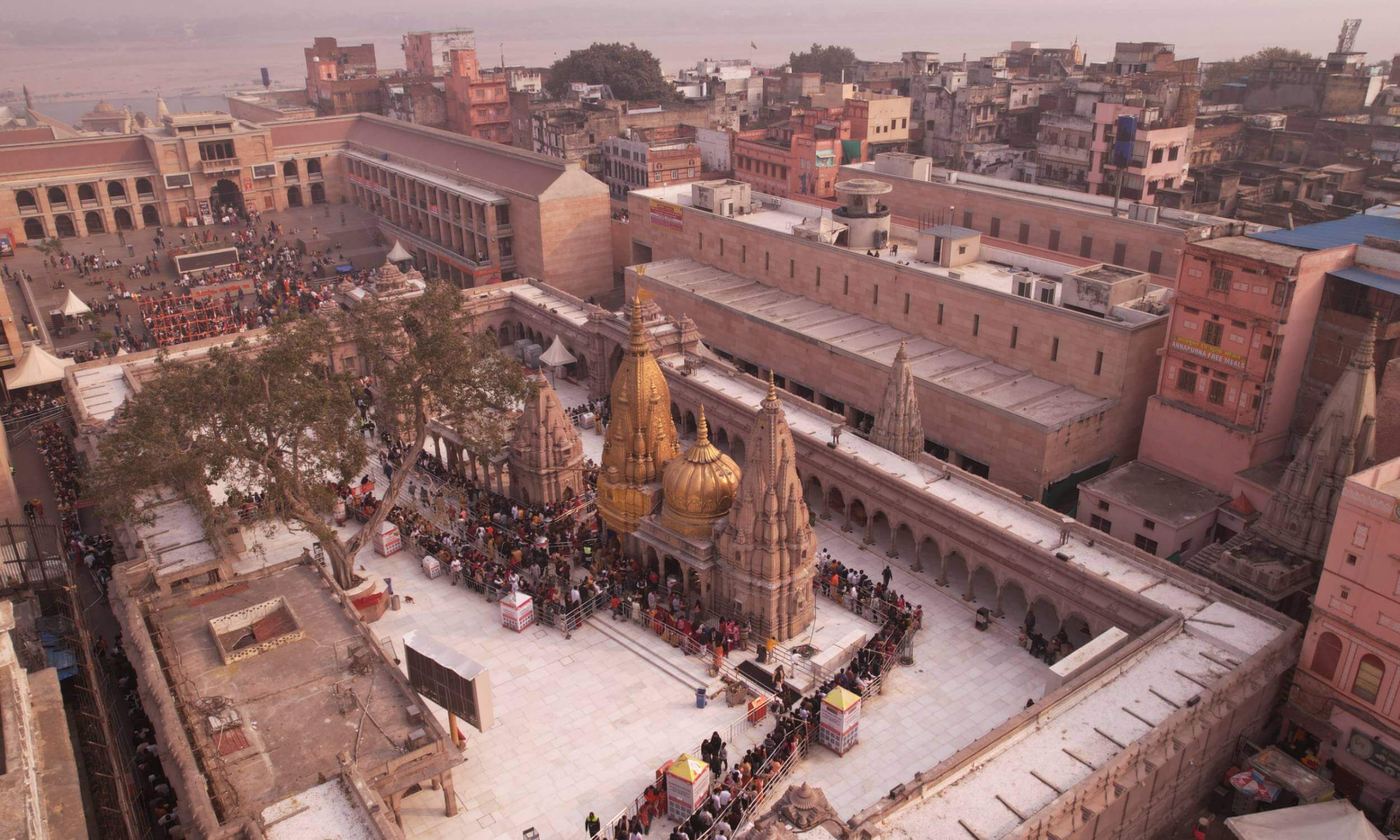
The Kashi Vishwanath Temple is one of the 12 Jyotirlingas of Lord Shiva, making it among the holiest Hindu pilgrimage sites in the world. According to Shaiva tradition and long-held Hindu belief, a visit to the Kashi Vishwanath Temple is considered among the most spiritually significant pilgrimages. Devotees traditionally believe that performing Ganga Snan followed by darshan holds special merit and that the temple represents a unique convergence of Shiva and Shakti.
Several beliefs associated with the temple are preserved through oral tradition and sacred texts. These include the belief that Kashi rests upon Lord Shiva’s trident, that the Jyotirlinga was protected during periods of invasion, and that certain rituals performed here are spiritually transformative. Such beliefs form an essential part of the temple’s religious identity and continue to guide devotional practices today.
Best Time to Visit Kashi Vishwanath Corridor
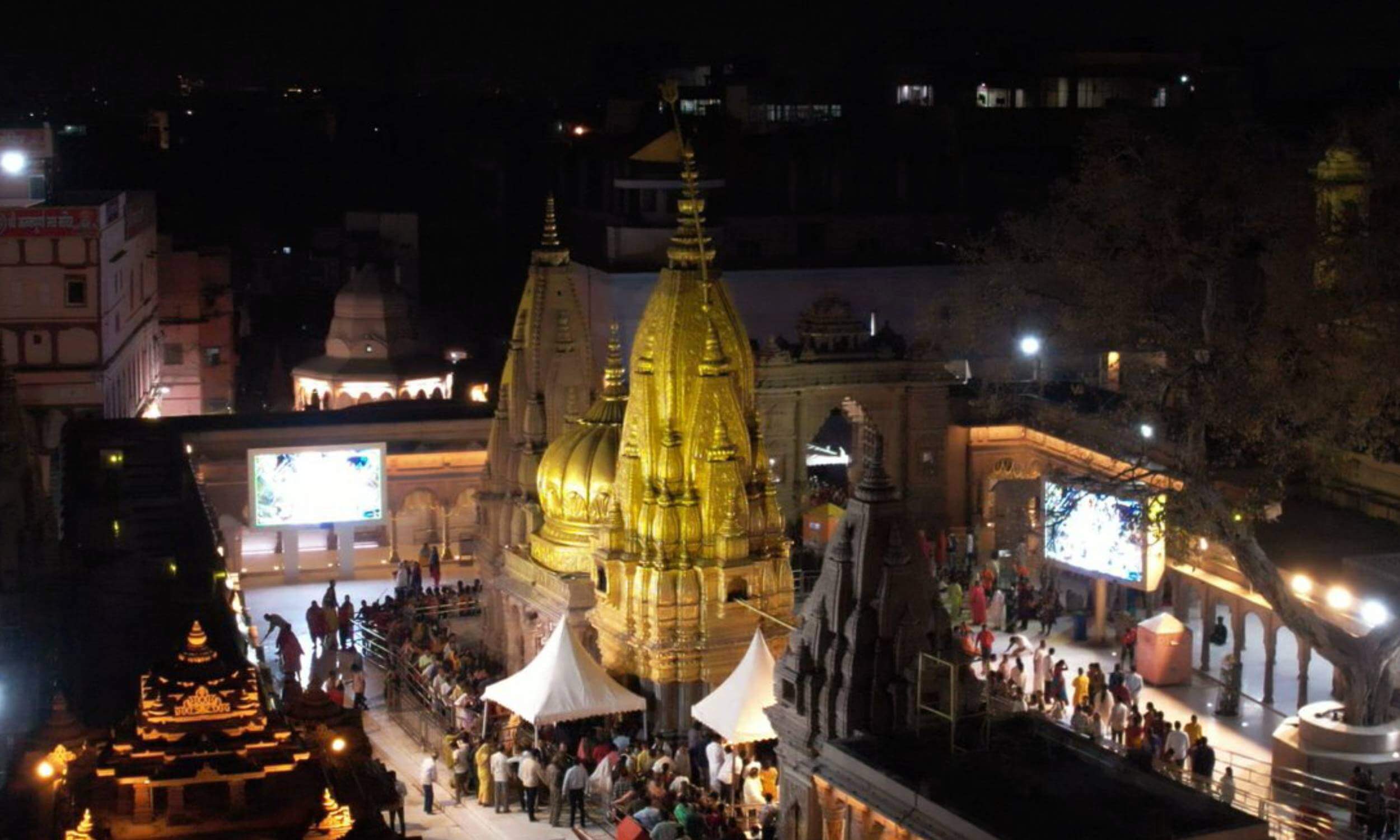
- October to March: Best weather for sightseeing and walking
- Shravan Month (July–August): Peak pilgrimage season
- Maha Shivratri: Grand celebrations
- Dev Deepawali: Millions of lamps illuminate the ghats
Top Tourist Experiences at Kashi Vishwanath Dham
- Early morning Ganga Snan followed by temple darshan
- Evening Ganga Aarti at Dashashwamedh Ghat
- Sunrise boat ride with corridor views
- Guided heritage walk through the Dham complex
- Temple and river cruise combination tours
- Photography of restored ancient temples
Nearby Tourist Attractions
- Dashashwamedh Ghat
- Manikarnika Ghat
- Sarnath (Buddhist pilgrimage site)
- Ramnagar Fort
- Banaras Hindu University
- Rudraksh Convention Center
Travel Tips for Tourists & Pilgrims
Visitors unfamiliar with Varanasi should allow time to get accustomed to the city’s pace before planning temple visits. Foot traffic, noise, and crowd density are integral to the pilgrimage environment, and approaching the experience with flexibility improves both comfort and understanding.
- Book darshan slots in advance during peak season
- Dress modestly
- Mobile phones restricted near sanctum
- Footwear not allowed inside temple premises
- Visit early morning for fewer crowds
- Hire licensed guides for cultural insights
The “Pro-Traveller” Logistics Guide: Because the corridor is a modern framework within a dense, living city, keep these “ground-level” realities in mind:
- Footwear Strategy: Shoes are not allowed inside. While the Makrana milky white marble is premium, it can get very hot or very slippery; stick to the shaded resting areas provided.
- Tech Restrictions: Mobile phones are strictly restricted near the sanctum. Plan to use the lockers or leave devices at your hotel to avoid long queues at the security desk.
- The Mobility Route: For elderly visitors, the Ganga View Gallery and wide stone pathways are designed for easier movement than the old, narrow lanes.
- Crowd Timing: For the most serene experience, visit during the sunrise boat ride hours to see the corridor’s facade from the river before the daily footfall peaks.
Why Kashi Vishwanath Corridor is a Must-Visit
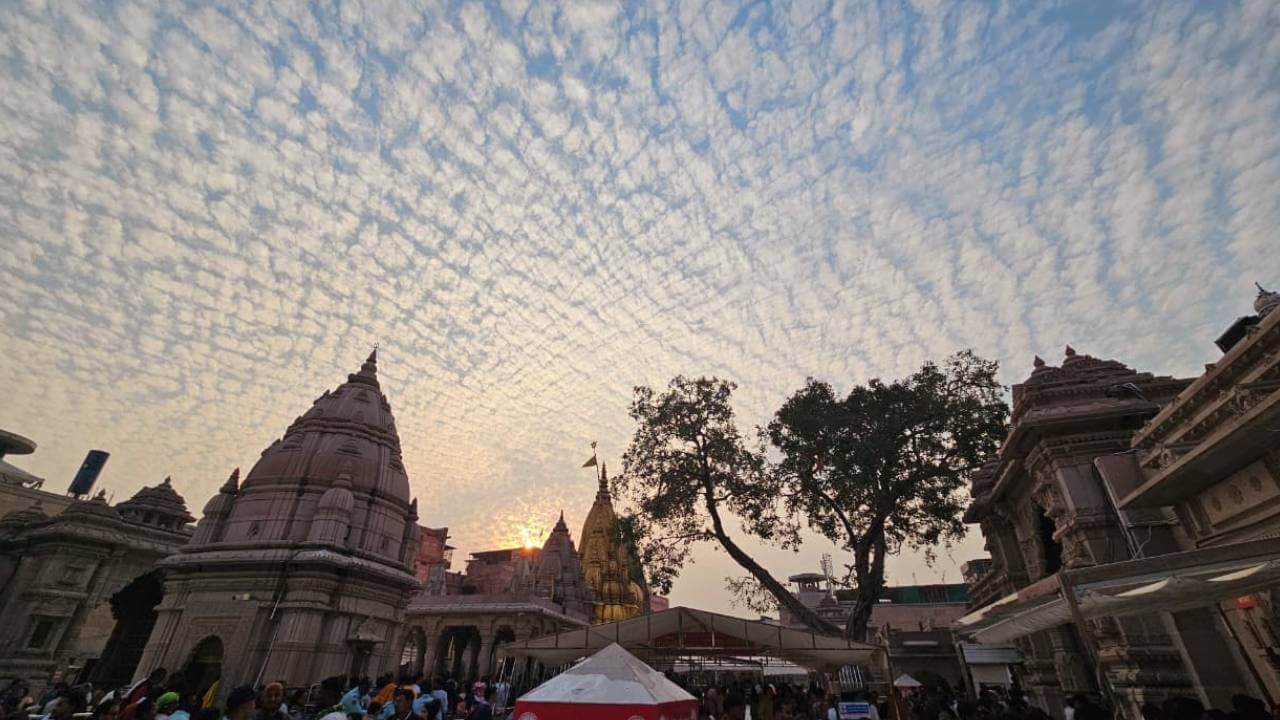
The Kashi Vishwanath Corridor changes how pilgrims and travellers access one of Hinduism’s most important temples, primarily by improving spatial organisation rather than redefining religious practice. It offers a more navigable approach to darshan while retaining the intensity and scale that have always characterised Varanasi.
Visitors who approach the corridor with clear expectations, recognising it as an infrastructural framework within a living pilgrimage city, are more likely to appreciate its role. For those planning a visit, understanding both its advantages and its limits is key to experiencing Kashi with clarity rather than assumption.
About the author
From the Lake District, Nainital, Nidhi Singh is a travel writer whose love for mountains can be seen in her write ups. Talk about solo travelling, indulging in adventure activities, binging on good food, planning budget trips or the Aurora Borealis and you will get all her attention. It is the wanderlust that keeps her going and if at all she could get one wish granted she would love to live a life less ordinary. Follow her on Twitter, Facebook & Instagram.


 +91-9212777225
 Plan Your trip