Sariska National Park
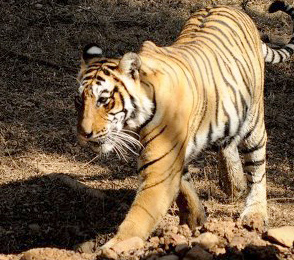 Nestled amidst the Aravali Hills, the Sariska Tiger Reserve is known for the presence and conservation of tiger species. Covered with deciduous dry forests, Sariska brings amazing topography at the largest area of Rajasthan. The reserve blankets an area of 800 sq km in total with approximately covering the core zone of 500 sq km. The landscape is truly amazing with similar topography of Ranthambore that supports scrub thorn arid forests, rocks and grasses.
Created in 1978; Sariska was given the stature of tiger reserve making it the part of India's Tiger Project scheme. One year later, in 1979, the reserve was considered as the national park mostly attracted for the tiger tourism. The variable and erratic climate makes the entire environment an important part of ecological adoption and perfect for wide ranges of wildlife.
Historical Importance of Sariska
Sariska in Alwar district beholds the legacy of the Maharajas of Alwar since the ruins of pavilion and temples of the then ages within the Sariska zone bring the glory and richness of Rajputana period. The 17th century old Kankawadi Fort, at the center of the reserve has a long and tumultuous history. This fort was being built by Jai Singh II. The fort is being known for the imprisonment of Dara Shikoh by his brother the Mughal Emperor Aurangzeb for the succession of the throne.
The presence of prominent temples actually brings great traffic creating some problems to the wildlife although, but still they are really significant. The center of Sariska is also being famed for Pandupol, one of the retreats of Pandavas and the famous Hanuman temple is the reason for the favorite pilgrimage site. Significantly, the Nilkanth temple built by the Barjgujars and the Bhartihari temple is also being crowded with many pilgrims frequently. The Neelkanth or Rajor Gath was the capital of Bargujars and Raja Bhartihari, the ruler of Ujjain mediated at the Bhartihari temple.
Apart from that Sariska is also renowned for Tal Briksh, the hot water spring and many royal buildings including the Sariska Palace, which was used as the royal hunting lodge of Maharaja jay Singh.
Wildlife in Sariska Reserve
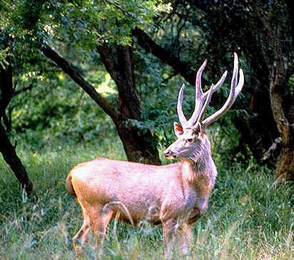
Today, the park is home to numerous carnivores including Leopard, Wild Dog, Jungle Cat, Civets Hyena, Jackal, and Tiger. Their common preys are species like Sambar, Chital, Nilgai, Chausingha, Wild Boar and Langur. Sariska is also well known for its large population of Rhesus Monkeys, which are discovered around Talvriksh.
Most importantly, Sariska also represents great amount of the Avian world including Peafowl, Grey Partridge, Bush Quail, Sand Grouse, Tree Pie, Golden backed Woodpecker, crested Serpent Eagle and The Great Indian horned Owl.
Flora in Sariska
Although the area of Alwar is being recognized as a dry deciduous region but with the onset of monsoons the whole ambience becomes so impressive to attract the visitors for appreciating the natural beauty. Basically, the forest type is tropical, dry, deciduous, and tropical thorn and is regarded as the sole forest patch in the whole world of the western Aravali Hills. No doubt, greenery can rarely being traced at this region because of its localizing in India's deserted land-Rajasthan. However, Sariska plays a major role for the only mushy area of the Aravali ranges. The topography of this sanctuary is comprised of small hills and narrow valleys with dense busy shrubs amidst the rocky terrains. Such a landscape that witnesses less rainfall (avg. 650 mm/year) generally leads to the growth of dense vegetation to comprise scrubby trees and bushes. All in all the Sariska reserve is basically a group of arid yet dense shrubby forest.
Places of Interest
Kanakwari Fort - One of the best illustrations of a jungle fort in India, the Kanakwari Fort lies within the Sariska reserve area within the ranges of 18 kms from the entrance gate. The spot is obviously hard to find as it lies deep inside the tiger infested forest. This was the place where Prince Dara Shikoh, heir to the Mughal throne, was held captive by his brother Aurangzeb. A steep rise of stairs will lead to the fort to bring the faded ancient wall paintings that still reflect the Rajputana eloquences.
Sariska Palace - The Sariska Palace inside the reserve area was once the hunting lodge for Maharaja Jai Singh of Jaipur. This is the most visited place for the number of tourists, even if they are not dwelling for the tiger tours in Sariska. The palace is decked with sprawling lawns, antique furniture and interesting photographs of the Royal Shikar of the 1920s and is now converted into a museum.
Naldeshwar Temple - The Naldeshwar Temple is being located at some distance away from the reserve area at the Alwar-Jaipur highway joining Sariska to Alwar. This temple is easily accessible by foot once reaching at the highway. The temple is dedicated to Lord Shiva and is surrounded by dense greenery to bring a pristine environment for much overwhelming moments. This 18th century old temple showcases some different ambience around the deserted land of Rajasthan.
Neelkanth Temple - The temple of Neelkanth, dedicated to Lord Shiva is encircled by the Aravali ranges and is quite closer to the Sariska reserve. This ancient temple also looks like a rocky museum which is studded with sculptures, carvings and scriptures similar to the ones excavated at Khajuraho and so also has some historical importance too.
Bharthrihari Temple - Located at 30 kms away from the Sariska reserve, this temple is dedicated to an ancient sage Bhartrihari to attract many Hindu devotees. This temple stands above the samadhi of Yogi Bhartrihari Nath and is known for its excellent Rajasthani style of architecture.
Nearby Areas/Excursions
Jaipur - The most demanding and most popular spot in India which is the real trademark of India tourism lying very closely from Alwar at a distance of 132.6 kms could be the preferred choice for much excursion after Sariska. One fair chance to get into the magnanimous Rajasthani architectures in the form of forts, palaces, museums, halls and much more for the most memorable experience.
Delhi - Known for being the capital city of India, Delhi at a distance of 226 kms from the tiger palace, is the location where the tourists can make a relaxing landing from their place (country) and then can proceed towards the political city of India to catch some historical monuments and ancient heritage spots including the legendary market place of Chandni Chowk near the Red Fort. This is the most fascinating place to explore the cultural mix of India to recognize it as "Mini-India".
Agra - The city of Taj Mahal what we call it, Agra locates at the suitable distance of 212 kms from Sariska (Alwar) where the tourists can make their romantic journey prior to rewarding the safari tour in Sariska. Agra presents one of the Seven Wonders of the World, the Taj Mahal which is famed for its dynamic architecture and the great legend behind it to captivate millions of tourists every year. This could be the most refreshing journey after the hectic safari in Sariska Tiger Reserve.
Bharatpur - If the tiger lovers have the same affection for the avians and want to catch the varied counts of birds in India, Bharatpur at the distance of 158.6 kms from the reserve can fit for them. This is well known as the paradise for the ornithologists to read their movements and nature in the area; specifically to find the Siberian Crane, the main attraction of Bharatpur. Quite closer to Agra, this could be the next best excursion for the tourists during their tiger tour in India.
Safari
Safari in Sariska can be best experienced through the Jeep safari as the area is easily accessible by the duly vehicles. But remember; only the authorized vehicles being managed by the forest authority are allowed. Jeep safaris in Sariska Tiger Reserve are normally provided twice a day and are being accompanied by the forest department guards with the vehicles being protected with grills. The best time to visit Sariska Reserve is during the months of October to June with rest of the season being closed, the safari timings for Sariska are:
| Winter Timings: |
|
|
| |
Entry |
Exit |
| Morning Safari |
6.30 hrs |
10.30 hrs |
| Evening Safari |
14.00 hrs |
18.00 hrs |
| Summer Timings: |
|
|
| |
Entry |
Exit |
| Morning Safari |
6.00 hrs |
10.00 hrs |
| Evening Safari |
14.30 hrs |
18.30 hrs |
Travel Information
By Air : Jaipur being the nearest airport for the tourists at the distance of 132.6 kms could be the easiest choice for them to reach at Sariska.
By Rail : The Alwar railway station is the closest railhead for Sariska where Alwar is well connected by other major cities of India and has direct access to Delhi through rail.
By Road : Being easily located on the way to Delhi-Jaipur highway, direct accessing through roadways is much easier to reach Alwar. This highway directly connects to all the nearby towns of Alwar, Jaipur and Delhi for much convenience.
Hotels at Sariska
Sariska Tiger Reserve is the only reserve in India which is being ideally located amidst the arid forest but with the gleam of the palace in the vicinity. This is the reason, why the tourists prefer this place for a longer stay so they can achieve both the wildlife pleasure along with the royal architectural beauty. Making a great living at the vicinity of Sariska, the tourists will also receive royal treatments at its resorts and hotels. Booking for a great accommodation at any of the guest house or the resorts will be very beneficial for the tiger lovers to make their jungle moments more pleasing and wonderful.