 Accommodation
 Transfer
 Meals
Meals Sightseeing
 Area
Area Duration
 Best Season
 Grade
Grade  Altitude
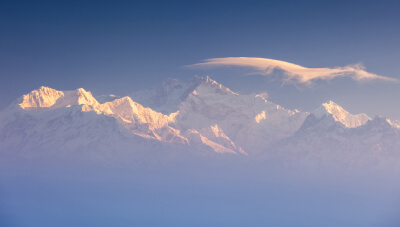
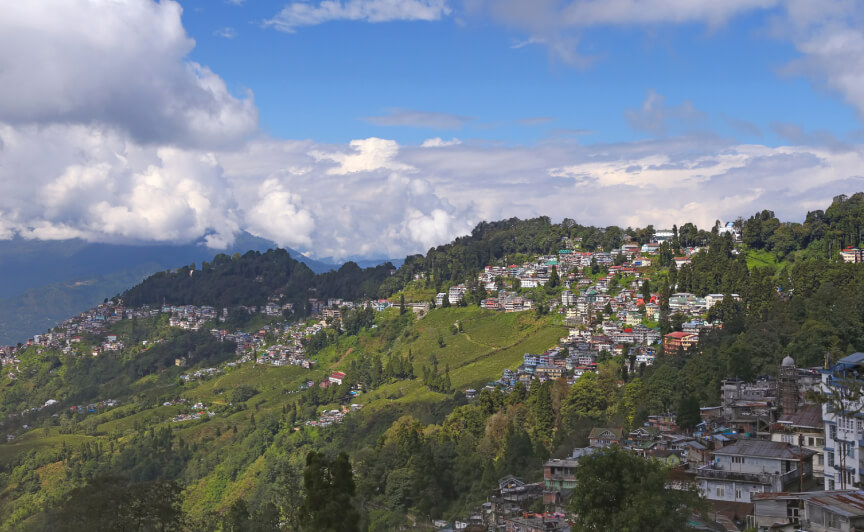
Perched at an elevation of 2,045 meters on the Lesser Himalaya, Darjeeling, which is one of the popular hill stations in India in North Bengal, is frequented by thousands of tourists and adventurers all throughout the year. The majestic view of the Kanchenjunga range at dawn from Tiger Hill and the sprawling valley bedded with a rich verdure captured from the Mall Road simply grabs the attention of every traveller. Nonetheless, the fresh aroma emanating from the vast tea garden that rolls down the hill simply makes the day inspiring and rejuvenating.
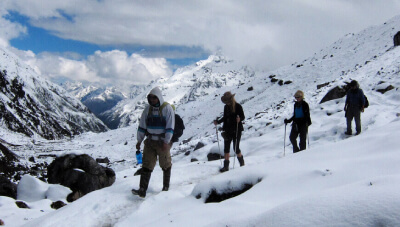
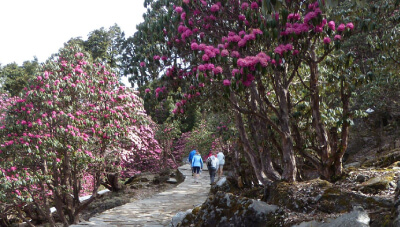
Darjeeling is also a popular hub for trekkers as the hill station is the base to the popular Sandakphu – Phalut Trek. The journey traverses through the rich verdure of the Singalila range and cuts through the thick forest of rhododendron and pine trees en route to several tribal villages tucked in the mountains. It also allows you to get acquainted with the wilderness of the Singalila National Park after crossing Tonglu, which is at an elevation of 3,070 meters.
The trek to Sandakphu – Phalut commences from Maneybhanjang, which is at 2,134 meters, and thereafter it leads to Garibas at 2,620 meters via Tonglu and turns to Sandakphu at 3,640 meters. From Sandakphu to Phalut, it’s a gentle walk and one can catch the panoramic view of the Himalayan range from Mount Everest to Kanchenjunga. The trek downhill leads to Rimbik via Raman and thereafter wheels to Pelling in Sikkim. Pelling is approximately 111 kilometers by road. From Pelling, the Darjeeling and Sikkim trekking tour routes to the Pemayangtse monastery, which is nestling at an elevation of 2,800 meters, and thence the tour leads to Yuksom that is approximately 40 kilometers from Pelling. Yuksom is the erstwhile capital of Sikkim and is the base point of the popular Dzongri – Goecha la trek in Sikkim. From Yuksom one can pay a visit to the Tashiding Monastery and thereafter steer to Martam. The journey leads off at Gangtok via Rumtek Monastery.
Breakfast
Transfers
Stay IncludedWhere you will be met and transfered to your hotel. (Hotel B & B)
Arrive Bagdogra airport and transfer to Darjeeling. A charming 4-hour journey, through Assam tea plantations and tiny villages takes us to Darjeeling. Built on top of a ridge, Darjeeling faces the Himalaya and is a popular destination for Westerners and Bengalis alike. Overnight in Darjeeling.
We could take an early trip to Tiger Hill to see the sunrise. Afterwards we visit the famous Ghoom monastery that enshrines an image of the Maitreya Buddha (the coming Buddha). Later on we can visit the Himalayan Mountaineering Institute and tea plantations. Overnight in Darjeeling.
Early morning drive from Darjeeling to Manay Bhanjang. The trail overlooks the Bengali plain south, and we have tantalising glimpses of Kanchenjunga ahead, as we zigzag through rhododendrons.
We take a mossy paved path that snakes through a succession of forests and hamlets, giving way, from time to time, to spectacular mountain sceneries.
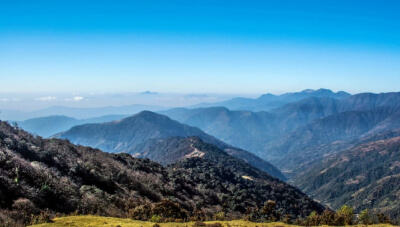
We steadily climb to join the ridge trail towards Kalpokhari. Afterwards we start a long and steep climb onto the Singalila ridge that leads us to Sandakphu. A remarkable 360 ° view from the top.
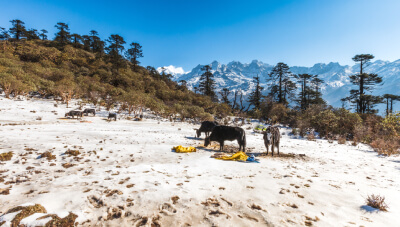
We walk to a prominent viewpoint for the magnificent sunrise over the Kanchenjunga, Jannu, Everest, Lhotse, Makalu and Cho Oyo. Throughout the day, there are ever-changing views: yak herds, silvery pine forests, tiny lakes ringed with grass, and the snow-capped Himalayan range in the background.
A pleasant descent through the woods takes us to Gorkhey (2500m) then we climb up towards Raman.
We pass through numerous villages and cross the Sri Khola over a remarkable suspension bridge.
Pelling by car (9 hours)
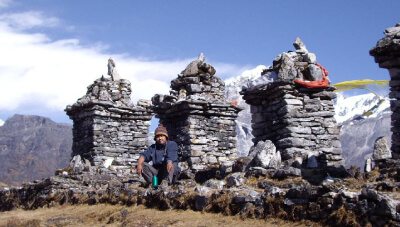
2.5 km from Pelling, we will visit the Pemayangtse monastery. Perched at 2800m, it is one of the oldest and most impressive gompas in Sikkim.
En route, we visit the Tashiding monastery, one of the most isolated in Sikkim, perched on the top of a hill set between two rivers.
We visit the Rumtek monastery, reputed for its religious Tibetan art. Visitors are welcome to attend prayers.
We will enjoy a visit of the amazing Orchid Sanctuary, where we can see a few of the 454 orchid species listed in Sikkim. To complete the day we will visit the Enchey and Do Drul monasteries, and the Tibetology Institute, which houses one of the richest collections of thankas and religious works in the world.
(Hotel B & B)
(Hotel B & B)
Tour & Services End.


An experienced trekking tour operator, with a team of an experienced adventure enthusiast ensure to give our clients well-designed trekking tour packages.
We are certified by major tour and travel associations in India and world like IATA, IATO, TAAI, IMF & MOT (Ministry of Tourism, Govt of India).
TMI has received numerous accolades from its happy customers for its excellent services and best adventure holidays.
We have local office in Ladakh, Uttarakhand, Sikkim, Jammu & Kashmir, & Himachal Pradesh for our customers to find assistance anytime and anywhere.


 +91-9212553109
 Plan Your trip


 Sikkim
 4200 mts
 50 Km
50 Km