Daman and Diu tourism attracts tourists because it is the permanent abode of tranquillity. It’s great for those who enjoy spending their time in leisure, along with some adventure and sightseeing. After arriving here, you immediately feel the calming effect this place has on you. There are many things to do here, besides pondering on its beauty. That is what makes it such an incredible holiday destination.
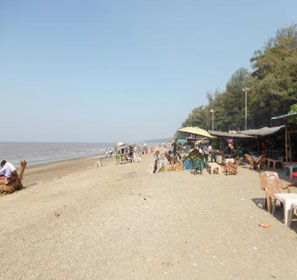
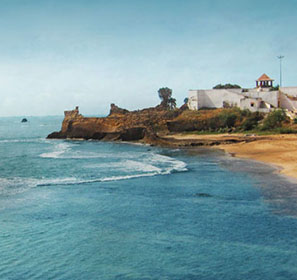
Gorgeous beaches are an essential part of the top tourist attractions of Daman and Diu. It is home to five beaches in all, each as beautiful as the other. One of the most beautiful among the five beaches is the Nagoa Beach. Located in the hamlet of Nagoa in the village of Bucharwada, it is shaped in the form of a semi-circle and offers various activities including swimming and gamboling.
Ghogla Beach is another famous beach located at the entrance to Ghogla village. It is great for those who love listening to the sound of waves and revelling in the sights greeting their eyes. Chakratirth Beach is relatively more crowded and is visited by both domestic and international tourists. Here, the sea seems to merge with the sun, an interesting phenomenon which is both curious and beautiful. Two other famous beaches are Jallandhar and Gomtimata Beach.
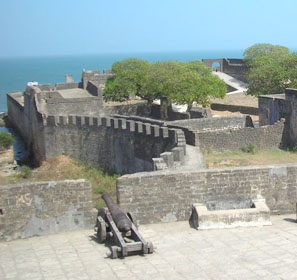
Daman and Diu is also home to two forts, both of which offer excellent sightseeing opportunities and are reminders of its colonial past. The Fortress of Panikotha is an incredible structure built of stone and situated right at the entrance to the creek. At one point in history, it served as an entry post for regulating the entry and exit of merchant ships entering Diu for purposes of trade, especially spices. A special feature of the fort was the defensive system which was operated by means of a thick metallic chain upon the river bed.
Another imposing structure is the Fort of Diu situated on the eastern side of the island. From here, you are treated to amazing views of the sea. The fort, which was built in the 14th century, consisted of a warehouse, residence for the nobles, barracks for the soldiers, prison, church, chapel and a storage place for arms and ammunitions. There are a number of bastions inside the fort, with the oldest of them being St. George. The interiors of the fort, which are carved in stone work, are as impressive as the exteriors. Exploring the fort is nothing less than an adventure.
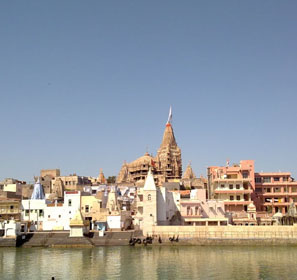
Daman and Dui does not disappoint you in any way, not even when you are looking for a spiritual experience. There are two churches and both of them are located in Diu. One of these, the St. Paul’s Church, is also known as the Church of Immaculate Conception. Built by the Portuguese in the 15th century, it possesses both religious and historical importance. The architecture of the church impresses visitors with its front facade, inside walls which are adorned with shell like motifs and the high vaulted dome. The main attraction is the three altars including the pulpit. It is widely believed that the wood for the altar was purchased from Mozambique, which was another Portuguese colony in Africa.
St. Francis of Assisi Church, built in the 14th century, is another famous church in Daman and Diu. An interesting fact about this temple is that it served as a hospital for 14 years. Situated at close proximity to St. Paul’s Church, it is easily distinguishable by its high tower. A particular attraction of the church is its main altar, which is decorated with beautiful frescoes.
Gangeshwar Temple is one of the sightseeing & tourist attractions which you must visit during your holidays because of its mythological and historical value. It has been mentioned in the Mahabharata as the being the temple where the Pandavas worshipped Lord Shiva.
Located about 3 km from Diu, it occupies a graceful presence on the beach. Its location certain does a lot to add an element of mysticism in its aura. Spend some time here, and you will feel a wave of peace and happiness washing your body.
Daman and Diu also has something in store for those in search of adventure tourism. You can get your fair share of adventure by exploring the Naida Caves. Situated outside a place called Zampa Gateway (which is another tourist attraction), these rock formations are found on the ground level and never fail to surprise visitors. It is widely believed that these caves were once used by prehistoric men.
Your travel experience in Daman and Diu should also include a visit to its museums. There are two museums, Sea Shell Museum and St. Thomas Church Museum. Of these, the Sea Shell Museum is quite unlike any other museum you have ever visited. Its owner, Captain Devjibhai Vira Fulbaria, converted his hobby of collecting sea shells into a museum. There is an amazing variety of sea shell exhibits in the museum, along with different kinds of marine life. All the sea shells have been meticulously sorted and labelled, with the life cycle and anatomy of each specie explained by posters.
The other museum which is a must visit is the St. Thomas Church Museum. Although it is a church just like any other, what makes it different is the various roles it has played throughout its history. It has served as an orphanage, police station, home for the aged, and at once point of time, also housed the Angolan Battalion. The museum which you find inside the church today was inaugurated on 12th October 1992. Inside, you come across a variety of exhibits, from carved wood, old statues and stone inscriptions to other artefacts.
Your Daman and Diu sightseeing tour should also a visit to INS Khukri Memorial. Its history is what makes it so fascinating. It played an active role during the Indo-Pak war of 1971 until it was destroyed by a Pakistani submarine and sank 40 nautical miles off the coast of Diu. The INS Khukri Memorial was inaugurated on 15th December 1999 and honours the valorous spirit of the Indian soldiers.
Those who love water sports will find their vacation to Diu to be very rewarding. You can try out a variety of water sports here, thanks to its many beaches. In the island of Diu, there are two beaches which offer the excitement of water sports. These are Nagoa Beach and Ghogla Beach. The different types of water sports which you can try your hand at are water roller, parasailing, water scooter, scuba diving, desert bike, speed boat, water zorbing ball, hot air balloon, water skiing, banana boating, paramotor flying, bumper boating, dolphin trip and couple ring.
The thick plantations along the coastal areas in the island of Diu is also a popular tourist attraction. Most of these forest areas are found in the Vanakbara, Bucharwada and Ghogla village. Apart from promoting tourism, these dense plantations have also served to maintain the ecological balance of the island. Among the different kinds of trees, the Hyphonea Indica palm tree, also known as Hokka tree, enjoy a dominance. Taking a tour of these plantations makes for some wonderful sightseeing, besides educating visitors on the important role they protecting the ecology and creating the right kind of weather conditions for agro-horticultural development.










 Plan Trip
 Call Us
 Packages
 Home
Home