The Story of the Iranshah: A Fire Older Than Most Nations
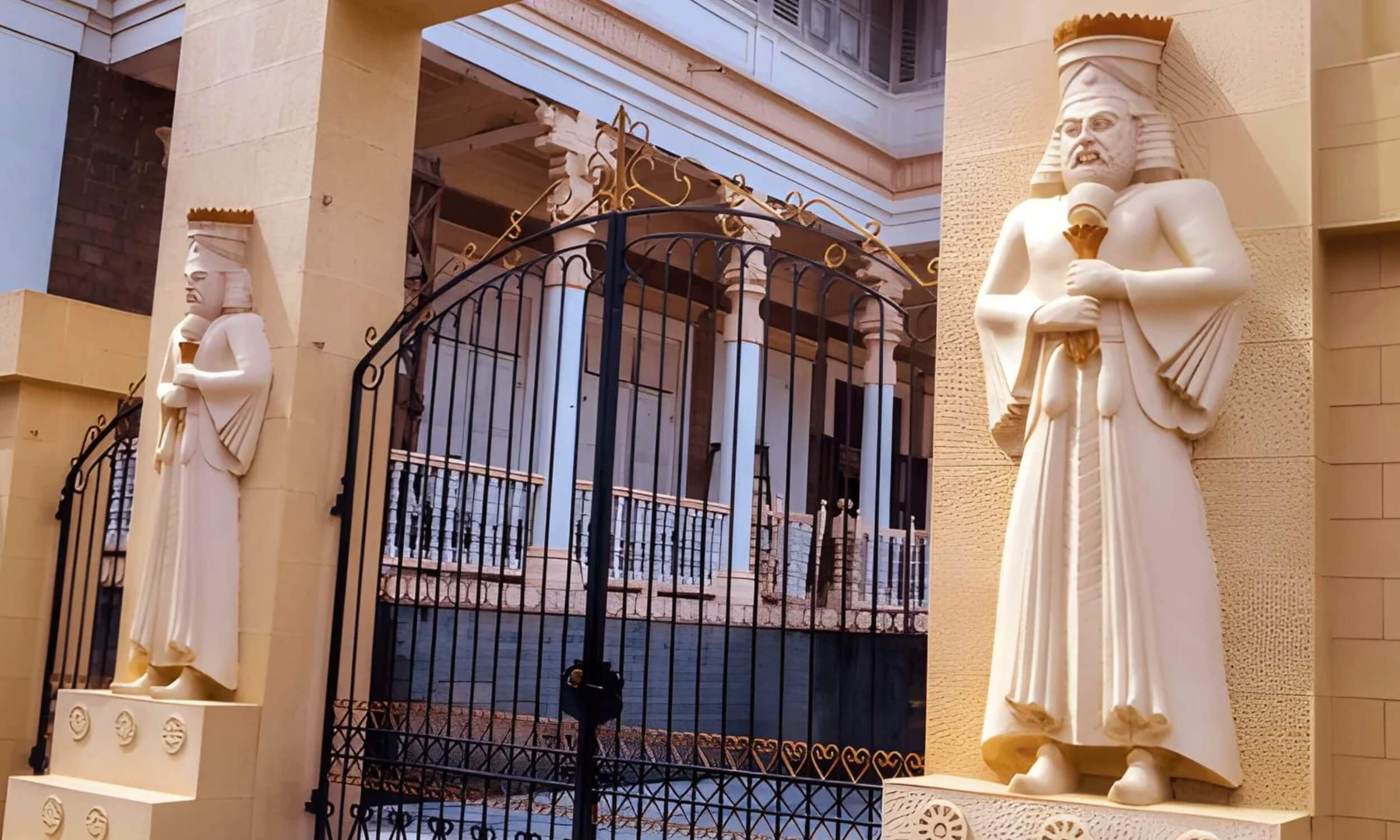
Udvada’s significance begins with one of history’s great migration stories. Between the 8th and 10th centuries, Zoroastrians fleeing persecution in Persia sailed to the Gujarat coast and sought asylum from the local Hindu king, Jadi Rana. Parsi tradition tells the famous reply: the king sent them a bowl of milk filled to the brim, meaning his land was full. The Parsi priests stirred sugar into the milk without spilling a drop, and the refugees were welcomed, sweetening the land without displacing anyone. The community has lived that promise in India ever since.
At Sanjan, the settlers consecrated their sacred fire in 721 CE, using ritual implements carried from Iran. That flame, named Iranshah, “King of Iran,” has never been allowed to go out. When invasion threatened Sanjan in the late 13th century; priests carried the fire into the Bahrot caves in the hills, guarding it there for twelve years, then to Vansda, then to Navsari, where it burned for over three centuries. In 1742 the fire reached Udvada, where it has remained, tended day and night by hereditary priestly families through nine generations and counting.
The Iranshah Atash Behram is the most sacred of the world’s Atash Behrams, the highest grade of Zoroastrian fire. For the Parsi community, a visit here is the pilgrimage of a lifetime; the village has been called the Vatican of Zoroastrianism.
For visitors, one rule stands above all: only Zoroastrians may enter the temple. Non-Parsi travelers can view the handsome white temple building from outside, walk the surrounding lanes, and engage with Parsi history and culture across the rest of the village. Respect the boundary; it is central to the faith’s tradition, and the village’s welcome depends on visitors honoring it.
What to See and Do?
Walk the heritage lanes
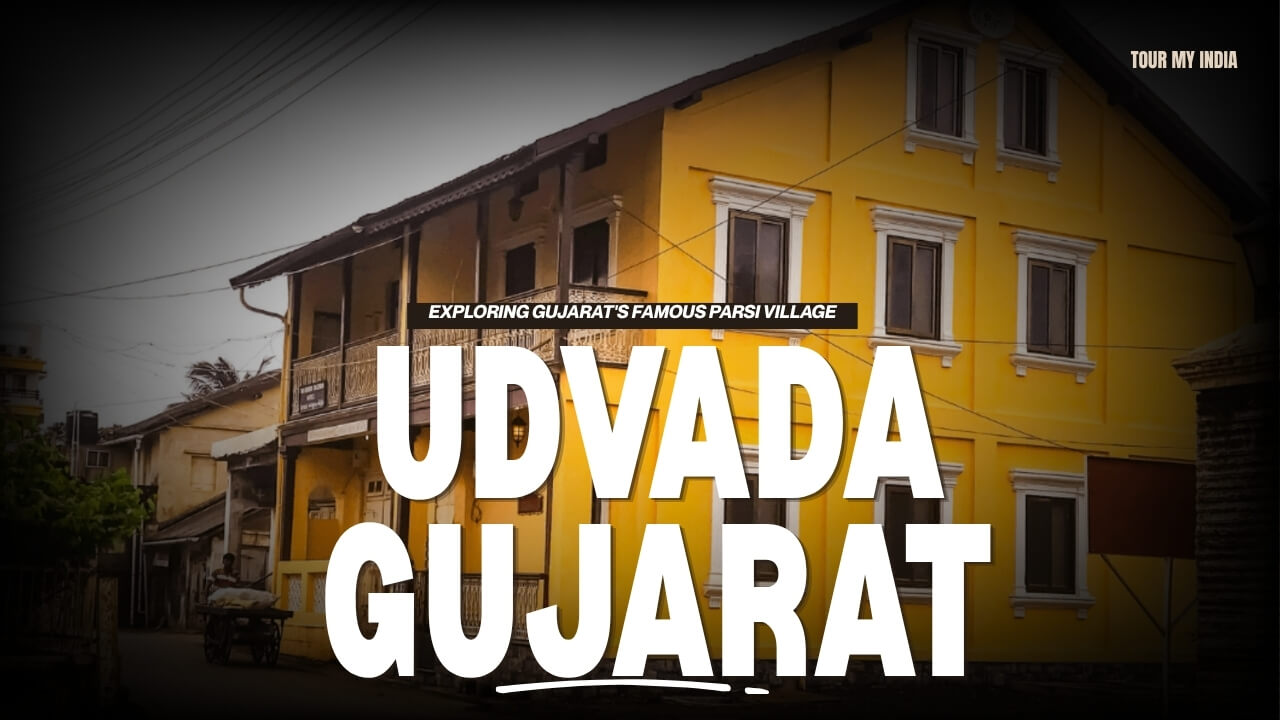
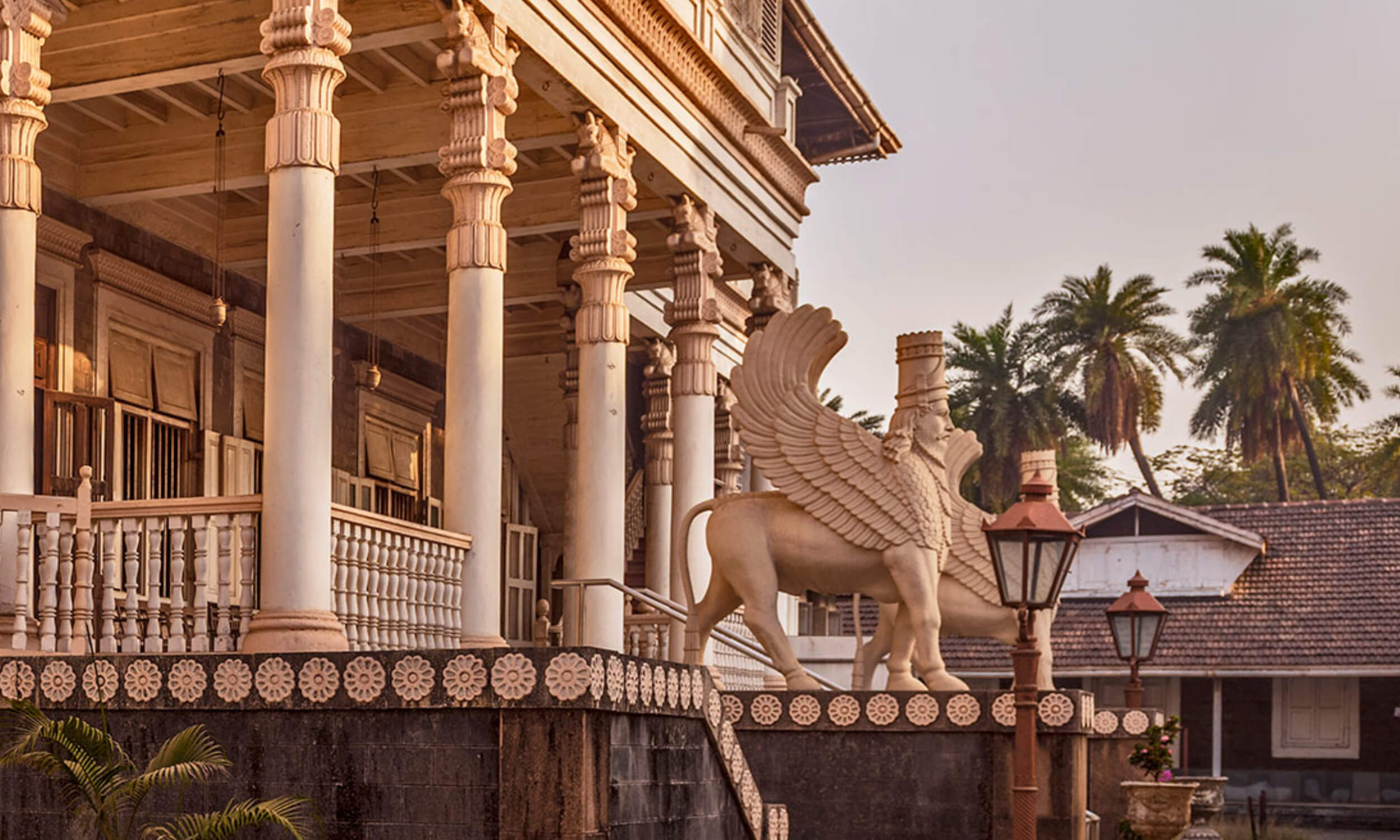
Udvada’s streetscape is a protected time capsule: broad-verandahed Parsi bungalows with carved wooden balconies, high plinths, and shuttered windows, many over a century old. The Gujarat government has recognized Udvada as a heritage village, and its otla-fronted houses are among the finest surviving ensembles of Parsi domestic architecture. Walk early in the morning or at golden hour, photograph the streetscapes freely, and ask before pointing a camera at residents or into homes; this is a living village, not a museum set.
Visit the Zoroastrian heritage museum
Near the temple, Udvada’s Zoroastrian information center and museum introduces the faith, the migration from Persia, and the Iranshah’s journey, the best way for non-Parsi visitors to engage with the tradition the temple itself keeps private.
Try Parsi food
Udvada is a food pilgrimage in its own right. Parsi cuisine, Persian roots crossed with Gujarati produce and a colonial baking streak, is hard to find outside community homes and a handful of Mumbai institutions, and Udvada serves it at the source. The classics to order: dhansak, the slow-cooked lentil-meat signature with caramelized brown rice; salli boti, sweet-spicy mutton under crisp potato straws; patra ni machhi, fish steamed in banana leaf under green chutney; chicken farcha, the Parsi fried chicken; and lagan nu custard, the celebration dessert. At breakfast, look for bhakras and fresh Irani-style bakes with chai.
Family-run establishments, including the old Globe Hotel, Café Farohar, and Ashishvang, serve traditional Parsi meals; portions are homestyle and several dishes are cooked in small batches, so arrive at mealtimes or call ahead where possible. Carrying flavors home is part of the ritual: bhakras, nankhatai, Parsi wedding-style pickles, and spice blends from local kitchens.
Unwind on the coast
Udvada sits by a quiet, undeveloped stretch of the Arabian Sea. The beach is a place for sunset walks rather than swimming or shacks, and that is its charm; it closes a Heritage Day gently.
Time your visit to a festival
If you can, visit during the Iranshah Udvada Utsav, the community festival celebrating Parsi culture with food, music, and heritage events that periodically draws Zoroastrians from around the world to the village in December. Navroz (Parsi New Year, in August) and other community days also bring the village to life, along with pilgrimage crowds.
Best Time to Visit Udvada
October to March is the comfortable window, with cool mornings suited to heritage walks and clear coastal evenings. Summer (April to June) is hot and humid; keep exploration to early and late hours. The monsoon (July to September) turns South Gujarat lush and atmospheric in its own way, though beach time suffers.
How to Reach Udvada?
- By Train: Vapi, about 15 km away on the Mumbai-Ahmedabad main line, is the practical railhead, with frequent trains from Mumbai (around 3 hours), Surat, and Ahmedabad. Udvada has its own small station on the line, though few trains halt there. Autos and taxis run from Vapi to the village.
- By Road: Udvada lies just off NH-48: roughly 15 km from Vapi, 25 km from Daman, 30 km from Valsad, 100 km from Surat, and 180 km from Mumbai, making it a comfortable weekend drive from the city.
- By Air: Surat Airport (about 120 km) and Mumbai (about 180 km) are the gateways.
A Day in Udvada
Arrive in the morning and walk the heritage lanes while the light is soft. See the Iranshah Atash Behram from outside and spend an hour in the museum for the story behind it. Settle into a long Parsi lunch, the day’s centerpiece, then browse the bakeries for bhakras and pickles to carry home. End with sunset on the beach.
With a second day, add Daman’s Portuguese forts and beaches (25 km) or Valsad’s black-sand Tithal Beach (35 km); Dudhni Lake in Dadra and Nagar Haveli makes a scenic add-on for a longer South Gujarat circuit.
Udvada holds one of the world’s quietest wonders: a flame that priests have kept alive through thirteen centuries of history, carried through caves and across kingdoms to a lane in coastal Gujarat. Around it survives a whole way of life, in verandahed bungalows, in recipes served the way they were a century ago, and in a community that famously promised to sweeten the land like sugar in milk. Pair it with Daman and the South Gujarat coast for an unhurried heritage circuit; our Gujarat travel guide covers the wider region, and our travel experts can build a South Gujarat itinerary around it.
Other Interesting Blogs to Read


 +91-9212777225
 Plan Your trip