|
Fair
& Festivals
Bihu
:
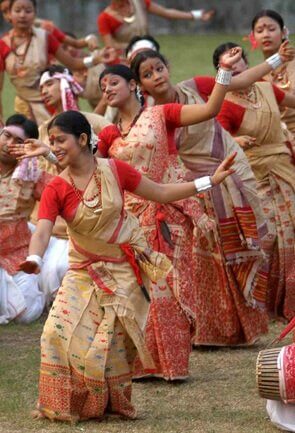
The Bihus are the national festivals of Assam. There are three such
festivals in Assam: in the monthsof Bohaag (Baisakh, the middle
of April), Maagh (the middle of January), and Kaati (Kartik, the
middle of October). The Bihus have been celebrated in Assam from
ancient times. Each Bihu coincides with a distinctive phase in the
farming calendar. The Bohaag Bihu marks the New Year at the advent
of seeding time, the Kaati Bihu marks the completion of sowing and
transplanting of paddies, and the Maagh Bihu marks the end of the
harvesting period. Bohaag Bihu is also called the Rongaali Bihu
or the Festival of Merriment, Maagh Bihu is also called Bhogaali
Bihu or the Festival of Food, Kaati Bihu is also called Kongaali
Bihu or the Festival of the Poor. Of the three Bihu festivals which
are secular and non-religious, the Bohaag Bihuushers in the period
of greatest enjoyment and marks the arrival of Spring. The folk
songs associated with the Bohaag Bihu are called Bihugeets or Bihu
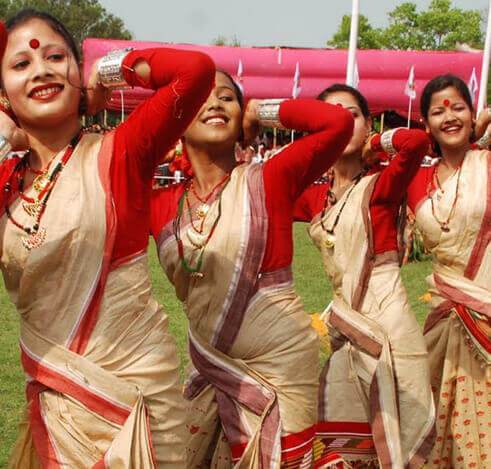
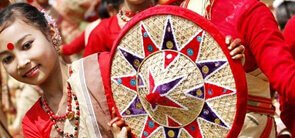
songs. The Bohaag Bihu lasts for several days during which "the
young people in the village may be seen moving about in groups gaily
dressed or forming circles in the midst of which the prettiest girls
dance" (The History of Human Marriage by Edward Western-March)
singing songs of love and romance. Such gatherings are called Mukoli
Bihus (Open Bihus). The songs are very popular among all sections
of the people. The language of the Bihu songs have changed from
generation to generation. The songs are composed in couplets that
rhyme (and are almost always accompanied by a distinctive form of
dancing), and each couplet depicts a different emotion. The language
is simple and suggestive, and the style is neat and clear. Scholars
agree that the songs have no influence of Sanskrit, the ancient
language of religious text and learned commentaries. The Bihu songs
have exercised great influence on Assamese literature. Even the
translator (Madhav Deva,1596 - 1849 AD)of the great Hindu epic Ramayana
and the great hymn composer Sankar Deva (1449-1569AD) could not
escape their influence. At the current time, Mukoli Bihus are not
common any more. In towns and cities, there are well-organized Bihu
fairs where professional or amateurtroupes perform Bihu songs on
stage with accompanying dancing. Bihu Kunwori (The Princess of the
Bihu) contests are held widely. In these contests, young women competein
dancing to the tune of Bihu songs. The best dancer is given the
title of Bihu Kunwori .
Tea
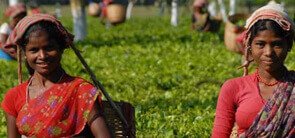
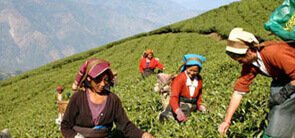
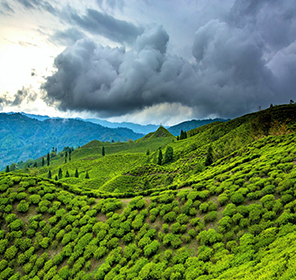
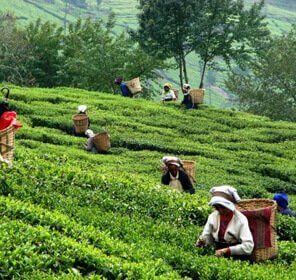
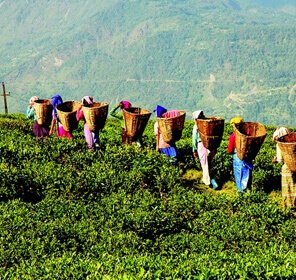
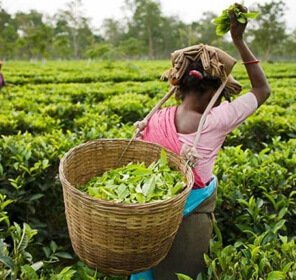
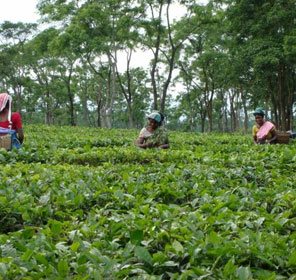
Festival : The Tea festival organised by Assam Tourism
in the month of November is a unique experience. One cannot miss
this festival which offers holidays combining visits to Tea Gardens,
Golf and River Cruises. A visit to the "Guwahati Tea Auction
Center" (GTAC) in Guwahati, the largest in India is a must.
Ambubasi
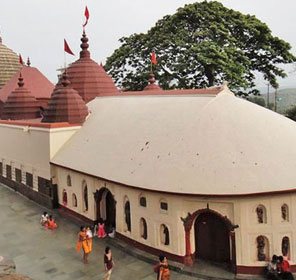
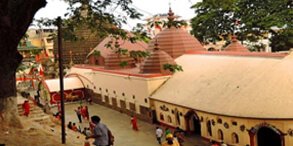
Mela : This festival is organised every year during monsoon
period at the Kamakhya temple of Guwahati. The fair attracts thousands
of devotees from all over the nation. Ambubasi is closely related
to the Tantrik rituals that are performed during this festival.
The legend associated with the fair is that this period comes during
menstrual cycle of Goddess Kamakhya. On the occasion, the temple
remains close for first three days and devotees can worship the
Goddess only on the fourth day.
Jonbeel
Mela : Jonbeel of Jagiroad is host to one of the most spectacular
and popular fairs in Assam. Come winter and tribes & communities
like Tiwa, Karbi, Khasi, Jaintia come down with their products for
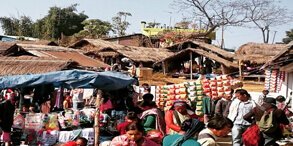
this Mela. This is perhaps the only fair in India where barter system
is still alive. A big market is organised during this fair and people
from various tribes and communities exchange their products. But
before the fair opens fire worship or Agni Puja is performed. Another
interesting feature is that the King of Tiwa tribe collects taxes
from his subjects. Colourful dances and music mark the fair. The
whole atmosphere is swinging with fun and joy. Mutual understanding
and harmonious living is the message of the fair.
Baishagu
: In the month of Baishakh , Baishagu is celebrated. This
festival is riot of colours and merriment. Baishagu begins with
the worship of cow. Second day of the festival coincides with Bohag,
first day of the Assamese almanac. It is from this day that the
actual merriments start. Lord Shiva is worshipped. At the close
of festival community prayer is offered at a particular place called
'Garjasali'.
Rajini
Gabra & Harni Gabra : This essentially a religious
practice before starting the new cultivation. The Dimasa tribe celebrates
the festival. Rajini Gabra starts with Kunang or the village headman
propitiating the family deity by closing the village gate on the
Puja day. In the night, presiding deity is worshipped for protection
and prosperity of the people. This function is called Harni Gabra.
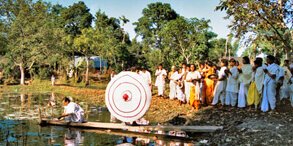
An interesting feature of this festival is that if any outsider
enters the functions after the gates are closed, then the celebrations
are considered spoiled and the intruder has to bear the cost of
starting the functions afresh.
Dosa
Thoi! Long Nai : This is a very important religious dance
performed at the 'Bathou Puja' or worshipping of their God-Shiva.
In this dance the priestess called Deodhani dances with a bowel
on her head in which the blood of a sacrificed fowl is kept. It
is believed that while the Deodhani performs this dance in a condition
of trance lord Bathou (Siva) will snatch away the bowel and drink
the blood.
Ali-Ai-Ligang
: This again is a spring festival celebrated by the Mising
tribe. This is one of the most colourful festivals of Assam. It
is organised in the month of 'Ginmur Polo' (February-March) on the
first Wednesday of the month. 'Ali' means root, 'Ai' means fruit
and 'Ligang' means sow. Hence, it is festival which initiates cultivation.
Fish is essential in the feast and certain taboos like cutting trees,
fishing, ploughing, burning jungles are strictly observed. Young
boys and girls perform this dance.
Rongker
and Chomangkan :- Karbi Anglong, the serene and beautiful abode
of the peace loving Karbis. This Mongoloid tribe migrated to this
region several years ago. They celebrate two festivals Rongker and
Chomangkan. Rongker is essentially a spring festival, which propitiates
different God and Goddess for the welfare of village. The festival
is organised to keep away diseases, natural calamities and ofcourse
for good harvest. On the other hand Chomangkan is an elaborate death
ceremony. There is no fixed time for this ceremony and it is organised
according to convenience of the community. This four day and four
night ceremony is a must for every Karbis.
|