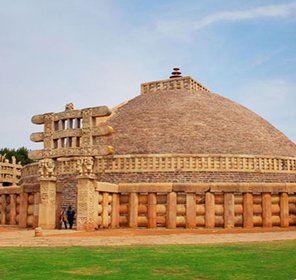
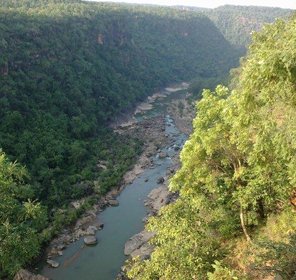
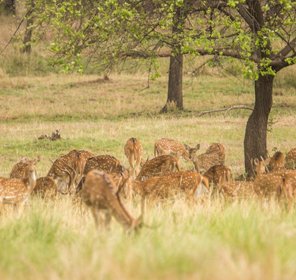
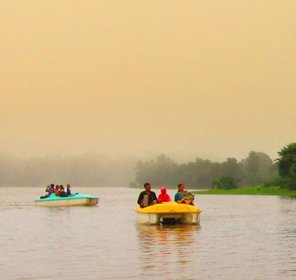
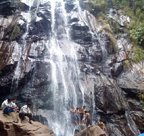
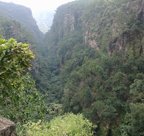
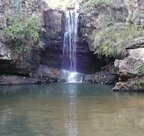
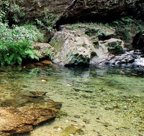
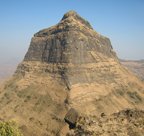
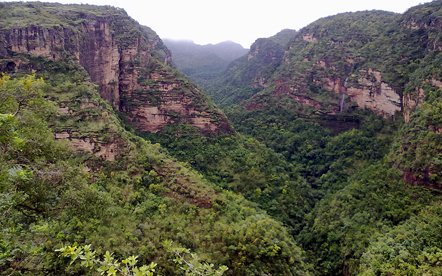
Madhya Pradesh's serene hill station, which happens to be its only one, stands at an altitude of 1067 metres. It is a large plateau, ringed by the lofty hills of the Satpura range. The landscape is characterised by rugged hills, forests and deep ravines. Known as the verdant jewel of the hills, the all - pervading greenery of the region is what strikes the observer. Various hues of green greet the eye - tranquil emerald pools, the green shades that embrace the hills, and the thick, impenetrable forest cover that dominates the region.One of its main attractions, is the splendid view it offers at dusk, when the red sandstone scarp takes on the colour of the sky, in various shades of purple and violet, as the glorious sun sets on Pachmarhi.
Among the few exceptional hill resorts in India, is Pachmarhi in Madhya Pradesh. It is not on the usual beat of hill station buffs and therefore, not over-developed. Though considered a hill station, it does not offer the predictable mountain fare of awesome heights and spectacular scenery, for the Satpuras are low lying weathered hills. Pachmarhi' s appeal is low key. Peace, seclusion and a quiet unobtrusive beauty are its prime attractions.
Pachmarhi has a somewhat fateful history. The year that Rani of Jhansi and her Maratha soldiers declared Mutiny, a rather prosaic English officer who had a way with words, was sent to the dense Satpura jungles to quell a rebellion. After walking for 17 miles, Captain Forsyth of the Bengal Lancers found himself 2000 feet above the sea and a saucer-shaped plateau spread out before him. The vegetation had changed. The dry yellow grass and naked tree stems had given way to dense green undergrowth, moist banks of streams were covered with ferns and mosses and clear brooks refreshed the tired troops.
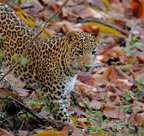
“The village of Puchmurree was still some miles distance, and we hurried along over the now almost level plateau to get shelter as soon as possible, as we had already walked almost seventeen miles and the sun was about to set,” wrote the captain in a book later. At this point in history, the population of tigers, leopards, bear and other carnivores was fairly significant in the dense jungles of Satpura, and we can presume the captain and his troops didn’t want to be supper to them. Even today, one may get an occasional sighting of the cats. Or certainly, the census records their existence.
The captain was obviously taking his notes. He mentions the genus of the trees he encountered a lot of jamun and mango amongst them (they still thrive) and, it must have been the homesickness, he gets annoyingly parochial. “Altogether, the aspect of the plateau was much more that of a fine English park than of any scene I had before come across in India,” he notes. Obviously, he hadn’t been privileged to visit Shimla yet.
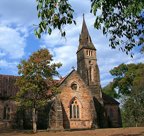
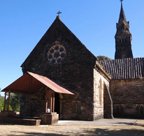
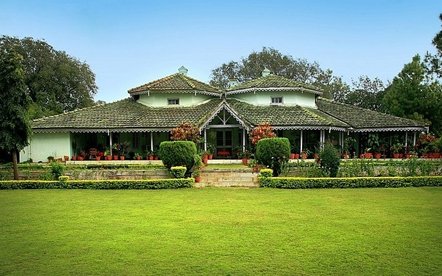
After he went back to the plains and became deputy commissioner, Forsyth suggested that Pachmarhi be used as a sanatorium. And the Brit exodus began. A cantonment was created, churches and bungalows were built, a road network was laid, clubs came up and with them golf, horse racing, polo, tennis, snooker... A hill station was born.











 Hill Stations in Uttarakhand
 Hill Stations in Tamilnadu
 Hill Stations in Maharashtra
 Hill Stations in Gujarat
 Hill Stations in Sikkim
  Hill Stations in Arunachal Pradesh
 Hill Stations in Himachal Pradesh
 Hill Stations in Andhra Pradesh
  Hill Stations in Karnataka
 Hill Stations in Jammu Kashmir
  Hill Stations in West Bengal
  Hill Stations in Rajasthan
 Hill Stations in Telangana
  Hill Stations in Kerala
 Hill Stations in Madhya Pradesh
  Hill Stations in Meghalaya